
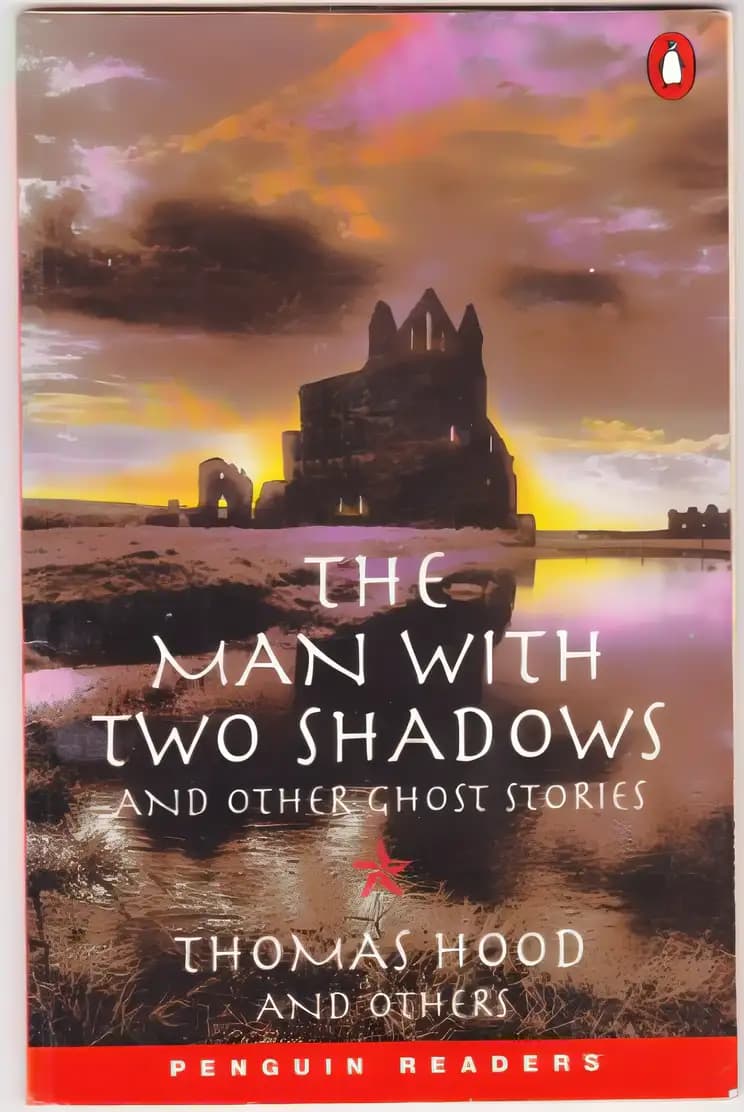
"The Man With Two Shadows" and Other Stories (Penguin Readers: Level 3)
All Aboard Reading Series
What’s inside...
Some people do not really die and things are not always what they seem. In these six mysterious stories, strange things happen. 'Penguin Readers' is a series of simplified novels, film novelizations, and original titles designed to introduce students to the pleasures of reading in English. The series is graded at seven levels of difficulty and includes a range of categories, including 'Contemporary', 'Classics', and 'Originals'. Each book includes vocabulary building exercises, comprehension, discussion, and writing exercises. Some titles also come with accompanying audio cassettes or 'Penguin Readers Factsheets' to provide additional educational material.
Series reading
Non-Sequential
Age
12-18
Length
48 pages
Text complexity
Discussion points
What do you think the man with two shadows felt when he discovered his second shadow?
How do the characters in the stories show bravery or fear?
Can you imagine a different ending for any of the stories? What would it be?
Which story was your favorite, and what lesson did you learn from it?
How do the settings in the stories affect the characters’ actions?
Tip: Role play these questions
While discussing the book, relate the themes to personal experiences to make it more relatable for your child.
Ask your child to draw their favorite scene from the book. Discuss what they've drawn and why they chose that scene.
Encourage your child to think critically about the characters' decisions and brainstorm alternative choices they could have made.
After reading each story, pause to discuss your child’s thoughts and feelings about the plot and characters to deepen comprehension.
Use the stories as a starting point to discuss the importance of understanding and coping with different emotions.
Key lessons
Example Lesson: Understanding the consequences of choices
Explanation: In 'The Man With Two Shadows', the protagonist learns the importance of decisions as each choice casts a different shadow on his life.
Real-World Application: Children can apply this lesson by thinking carefully about their choices, whether it's deciding how to treat others or selecting tasks to focus on.
Example Lesson: The value of honesty
Explanation: Through the characters' interactions, the stories emphasize honesty and how lying can lead to complications or mistrust.
Real-World Application: This lesson teaches children the importance of being truthful in their daily interactions and builds trust in relationships with family and friends.
Example Lesson: Courage to face fears
Explanation: Characters in the stories often face fearful situations, and their journey to overcome these fears is highlighted.
Real-World Application: Children learn to confront their own fears and challenges, understanding that bravery is not the absence of fear, but the ability to move forward despite it.
Example Lesson: Empathy towards others
Explanation: The stories demonstrate how understanding and feeling for other characters' situations lead to kinder outcomes.
Real-World Application: This can encourage children to consider the feelings of others in real life, fostering a more empathetic society.
Example Lesson: Importance of perseverance
Explanation: Many stories showcase characters who succeed after numerous trials, highlighting the importance of not giving up.
Real-World Application: Children are inspired to keep trying in the face of difficulties, whether in academics, sports, or personal goals.