
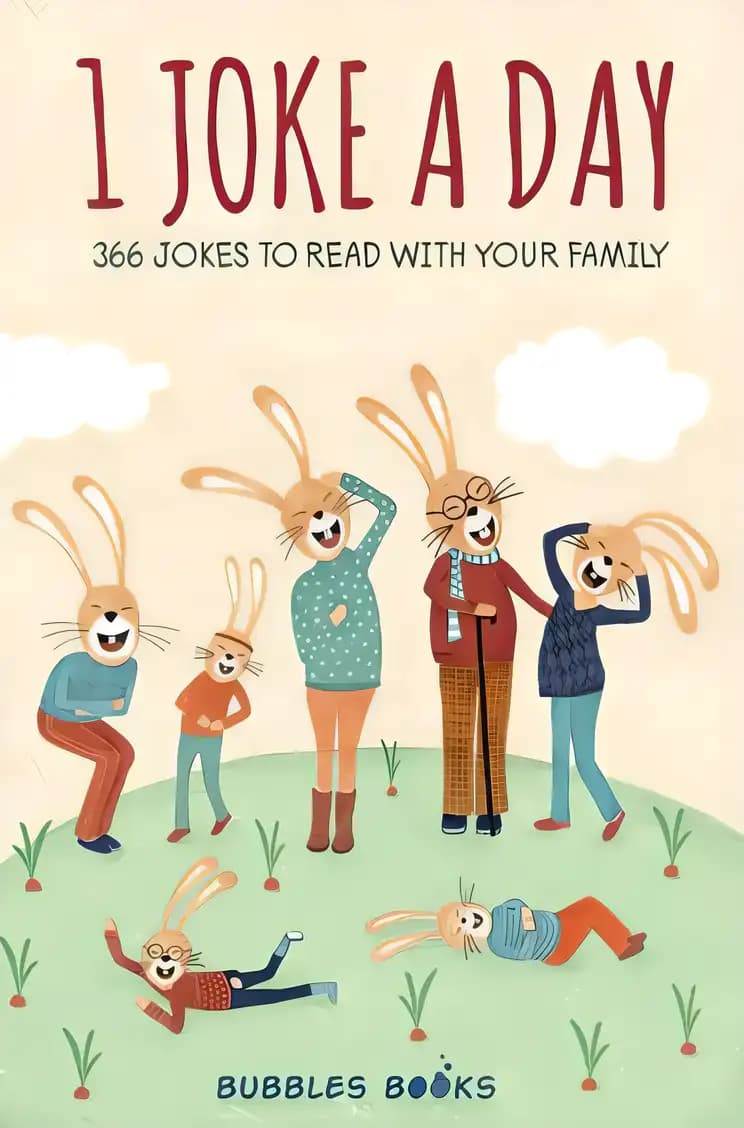
1 Joke a Day: 366 Jokes to Read with Your Family
#1 of 2 in A day without a smile is a day wasted Series
What’s inside...
Kids are the leaders of this great adventure where they can tell short, simple, and fun jokes. With this, the fun begins as family members gather to have laughter-filled moments every day of the year.
Discussion points
What was your favorite joke from today and why did it make you laugh?
How could you change a joke from the book to make it even funnier or to tell it to a friend?
Can you think of a situation where this joke could be used to cheer someone up?
What do you think makes a joke funny, and can you try to create your own using similar elements?
If you could pick any joke from the book to share at a family gathering, which one would it be and why?
Tip: Role play these questions
Encourage your child to think about the structure of the jokes and what makes them funny, aiding in their understanding of language and creativity.
Discuss the jokes together and share what each of you found funny, fostering a shared bonding experience through humor.
Use the jokes as a nightly routine, where the child picks their favorite joke of the day to share at dinner or bedtime, promoting consistency and anticipation.
After reading a joke, ask your child to draw or act out the joke. This helps in further understanding and retaining the humor, while integrating arts into everyday learning.
Connect the jokes to real-life situations or personal family stories, making the reading experience more relevant and memorable.
Key lessons
Example Lesson: Understanding humor and social cues
Explanation: Each joke in '1 Joke a Day: 366 Jokes to Read with Your Family' provides a playful context to discuss different interpretations and responses to humor, enhancing a child’s ability to comprehend social cues.
Real-World Application: Children can utilize these skills in school or playground settings to better navigate social interactions, enhancing their ability to bond with peers.
Example Lesson: Language and wordplay
Explanation: The jokes make use of puns, homophones, and other language features, exposing children to linguistic creativity and flexibility.
Real-World Application: This encourages children to experiment with words and expressions in their own communications, aiding their vocabulary growth and confidence in language use.
Example Lesson: Consistency and daily habits
Explanation: By introducing a joke for each day, the book encourages daily reading habits, which is an essential foundation for consistent learning and development.
Real-World Application: The discipline of daily reading fosters lifelong learning habits, helping children manage time and prioritize educational activities.
Example Lesson: Empathy and emotional intelligence
Explanation: Understanding jokes often requires a level of empathy and perspective-taking. This book provides an opportunity for children to engage with different emotional responses elicited by humor.
Real-World Application: This skill helps children in real-life scenarios where understanding others' emotions and viewpoints is crucial for building relationships and resolving conflicts.
Example Lesson: Bonding through shared experiences
Explanation: Reading jokes together promotes a shared enjoyment and bonding experience between children and caregivers, reinforcing social bonds.
Real-World Application: This shared activity can extend beyond reading, encouraging more family interactions and cooperative play that are vital for emotional security and development.