
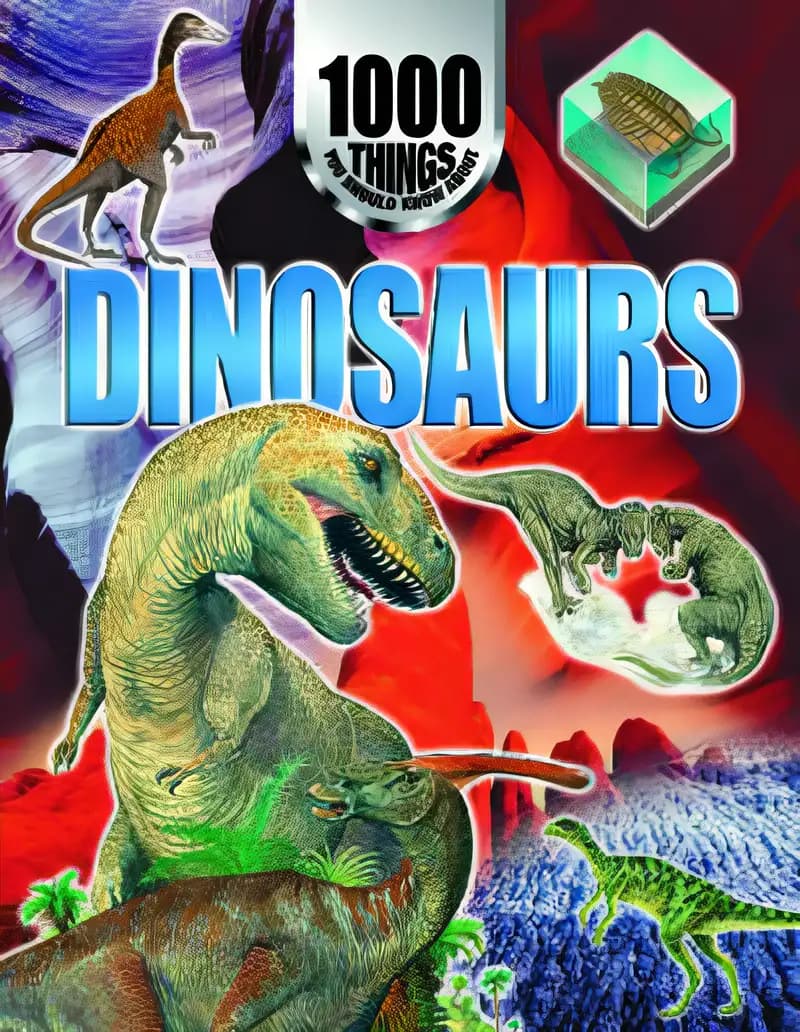
1000 Things You Should Know About Dinosaurs (1000 Things You Should Know)
1000 Things You Should Know Series
on Goodreads (24)
What’s inside...
Presents a collection of facts about dinosaurs, presented in 100 illustrated topic panels, each with ten key facts. This is an amazing guide to the world of dinosaurs. Short, sharp facts combine with hundreds of pictures and illustrations to deliver information with punch. You'll find all the things you ever wanted to know, plus so much more, in one fascinating book. Key subject areas are clearly highlighted; finding information is effortlessly simple with the use of buttonlike icons. Compact and easy to use, this really is the complete reference resource for the fact hungry.
Series reading
Non-Sequential
Age
8-12
Length
64 pages
Text complexity
Discussion points
What do you think it was like when dinosaurs roamed the earth?
If you could meet any dinosaur from the book, which one would it be and why?
How do you think dinosaurs communicated with each other?
What can we learn about today’s animals by studying dinosaurs?
Which dinosaur from the book would you most like to learn more about?
Tip: Role play these questions
Start by letting your child pick their favorite dinosaur from the book and explain why it caught their attention.
Use the vivid illustrations in the book to help bring the discussions to life, comparing the sizes, colors, and habitats of the dinosaurs.
Encourage your child to imagine creative stories about a day in the life of their favorite dinosaur, incorporating facts they’ve learned.
Link the discussion to broader scientific concepts, such as extinction, evolution, and the environment, making them relatable to the child’s everyday life.
Pose hypothetical questions to spark critical thinking, like how different the world would be if dinosaurs had not become extinct.
Key lessons
Example Lesson: Value of Curiosity and Learning
Explanation: The book encourages children to explore the fascinating world of dinosaurs, igniting their curiosity about prehistoric life and natural history.
Real-World Application: This curiosity can lead children to explore other scientific topics and ask questions about the world around them, fostering a lifelong love of learning.
Example Lesson: Understanding Extinction and Environmental Preservation
Explanation: By learning about the extinction of dinosaurs, children are introduced to concepts of environmental change and the importance of caring for our planet.
Real-World Application: This can translate into everyday actions like recycling, conserving water, and learning more about endangered species and conservation efforts.
Example Lesson: Importance of Research and Evidence
Explanation: The book presents information based on archaeological findings and scientific research, showing children how knowledge is built on evidence and studies.
Real-World Application: Children can apply this understanding to their educational pursuits, learning to value evidence-based conclusions and developing critical thinking skills.
Example Lesson: Time Concepts and Historical Perspective
Explanation: Discussing events from millions of years ago helps children grasp the concept of time and how history shapes our understanding of the present.
Real-World Application: This helps children develop a sense of time management and the ability to relate historical events to their own lives, enhancing their comprehension of the world around them.