
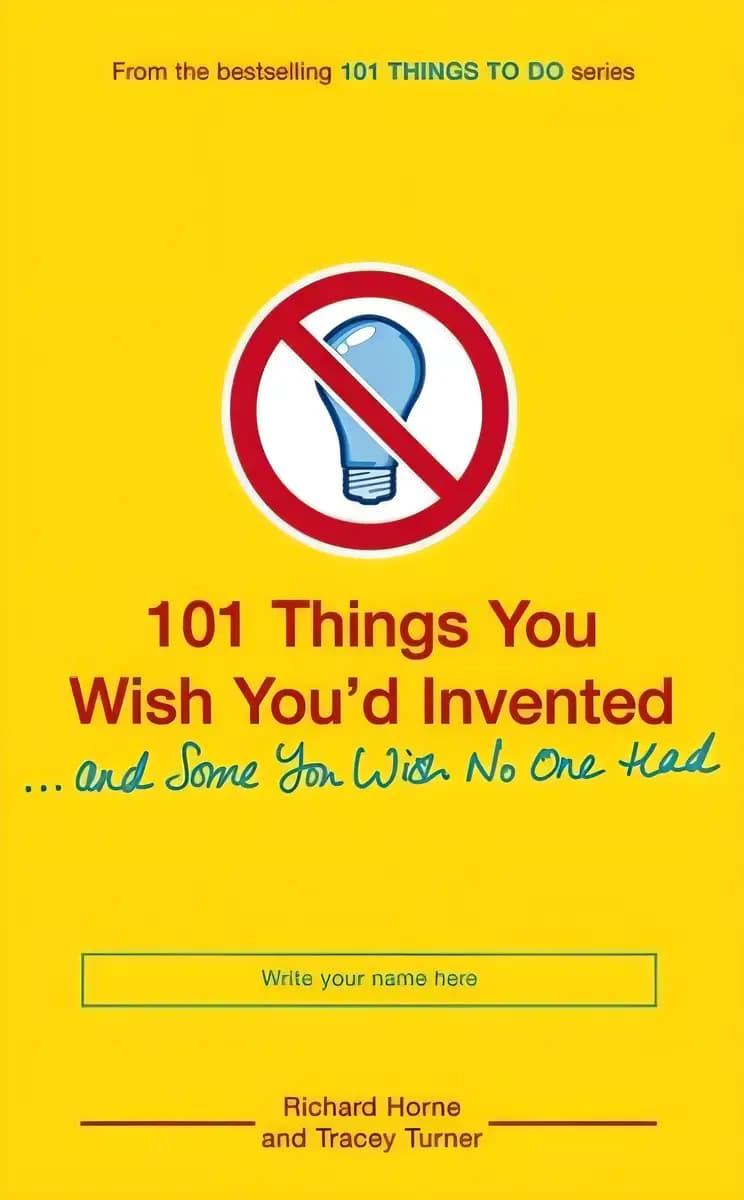
101 Things You Wish You'd Invented and Some You Wish No One Had
#1 in 101 Things Series
What’s inside...
Marvel at the sheer brilliance of invention, from glass to underpants, the noble compass to the humble pencil. Not forgetting, of course, the undeniably indispensable banana suitcase. Filled with fascinating details about everything from the most common everyday object to inventions which changed society, it will also distinguish the strokes of genius from discoveries of sheer chance, or millennia of evolution. And reveal the real reason why Alfred Nobel had to establish a peace prize (tut, tut). Expand your knowledge of man's accomplishments in the most compelling - and irreverent - way possible.
Discussion points
Which invention from the book did you find the most interesting, and why?
Can you think of an invention that could make your daily life easier? What would it be?
If you could meet any inventor from the book, who would it be and what would you ask them?
How do you think the world would be different if a particular invention had never been created?
What are some qualities that inventors seem to share? Do you see any of those qualities in yourself?
Tip: Role play these questions
Encourage your child to express their ideas by asking open-ended questions about the inventions and inventors.
Relate the inventions discussed in the book to everyday objects around your home to make the concepts more tangible.
Discuss the positive and negative impacts of various inventions to enhance critical thinking skills.
Celebrate creativity by brainstorming with your child about their own invention ideas, fostering an inventive mind-set.
After reading, encourage your child to draw or build a model of their favorite invention from the book to deepen their understanding and engagement.
Key lessons
Example Lesson: Innovation and creativity
Explanation: The book showcases various inventions, highlighting the creative thinking and problem-solving skills of inventors.
Real-World Application: Encourages children to think outside the box and apply their imagination to solve problems or create new things in their daily activities and school projects.
Example Lesson: Impact of inventions on society
Explanation: By discussing inventions that both positively and negatively affected the world, the book provides a nuanced view of technological progress.
Real-World Application: Teaches children to consider the broader implications of their actions and ideas on their community and environment.
Example Lesson: Perseverance in the face of failure
Explanation: Some stories in the book highlight inventors who faced failures and setbacks before ultimately succeeding.
Real-World Application: Inspires children to persist in their endeavors, be it academic challenges or personal goals, understanding that failure is often a step towards success.
Example Lesson: Ethical considerations in innovation
Explanation: The book covers some inventions that raise ethical questions, prompting discussions about morality in innovation.
Real-World Application: Encourages children to think critically about ethics and to consider the moral implications of their decisions, particularly in science and technology projects.
Example Lesson: Learning from history
Explanation: Through the exploration of historical inventions, the book connects past innovations with modern technology.
Real-World Application: Helps children understand the importance of history in shaping current technologies and inspires them to learn from past achievements and mistakes.