
31 Ways to Change the World
on Goodreads (60)
What’s inside...
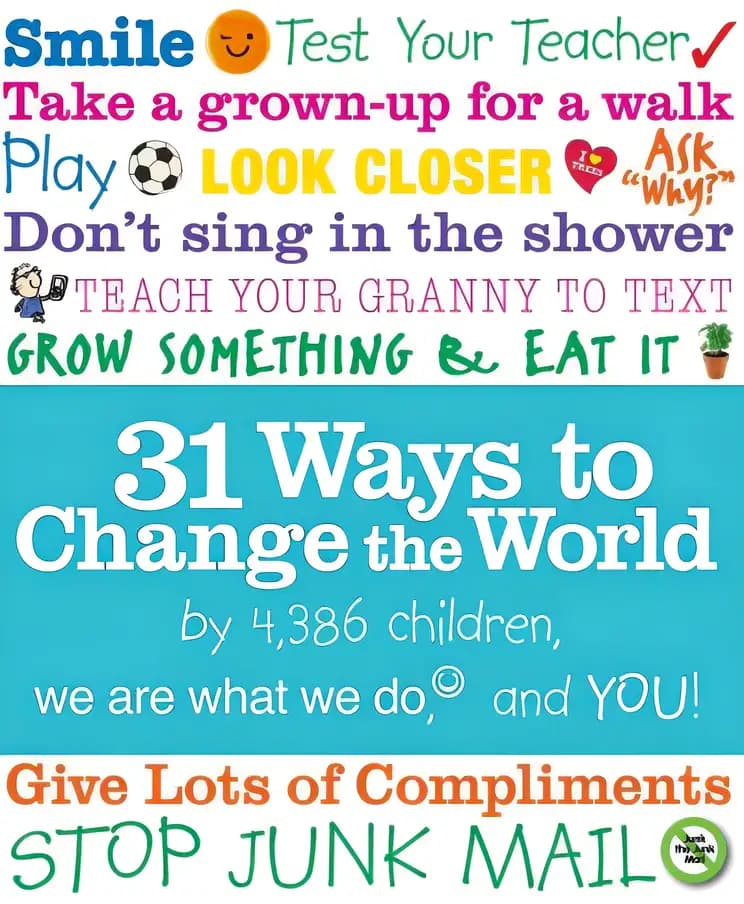
Children have lots of ideas for changing the world - and here are thirty-one fun and simple ways to get started. Small actions multiplied by lots of people equals big change! That's the driving belief behind the social change movement We Are What We Do - and it infuses this lively, motivating book packed with action steps for younger readers. Incorporating the suggestions of thousands of children, tips range from stirring (stand up for something) to silly (walk your dad); from earth-friendly (don't charge your phone overnight) to eye-opening (where is that Waldo?); from social (teach your granny to text) to downright surprising (speak soccer!). These thirty-one creative, original ideas are contributed by kids for kids - and each is guaranteed to have a clear and positive impact. Of course, the book would not be complete without a final question to the reader: what's the one thing you would do to change the world? Back matter includes an author's note and information about how to get involved.
Age
8-12
Length
80 pages
Text complexity
Discussion points
Which of the 31 ways to change the world do you find most interesting or important, and why?
How can you apply one of these ideas in your daily life or at school?
Can you think of another way we might help make the world a better place?
How do you feel when you help others or make a positive change?
Tip: Role play these questions
Begin the conversation with a positive note about change and how even small actions can make a big difference.
Allow your child to express their thoughts freely, and show genuine interest in their ideas.
Relate the concepts in the book to your child’s personal experiences to make the discussion more relatable.
Encourage your child to come up with a plan on how they might implement one of the 31 ways in their own life.
Key lessons
Example Lesson: The power of small actions
Explanation: The book illustrates how small, everyday actions can make a big impact on the world. Each page suggests simple acts like turning off lights or using both sides of the paper.
Real-World Application: Children can learn to become more conscious of their daily habits and understand that their actions contribute to a larger societal impact.
Example Lesson: Empathy and kindness
Explanation: One of the suggested actions in the book is to smile or say hello to someone new, which encourages understanding and acceptance of others.
Real-World Application: Children can practice this by making an effort to include others at school, whether in group activities or during breaks, fostering a more inclusive environment.
Example Lesson: Responsibility for the environment
Explanation: The book promotes environmental awareness through simple tips like refusing plastic bags and planting flowers for bees.
Real-World Application: Kids can take initiative in their homes or schools by participating in recycling programs or starting a small garden, thus actively contributing to environmental preservation.
Example Lesson: Community involvement
Explanation: Suggestions such as using local shops and services foster a sense of community and support for local businesses.
Real-World Application: Children can accompany their parents to local markets or help choose local products, helping them understand the importance of community support.