
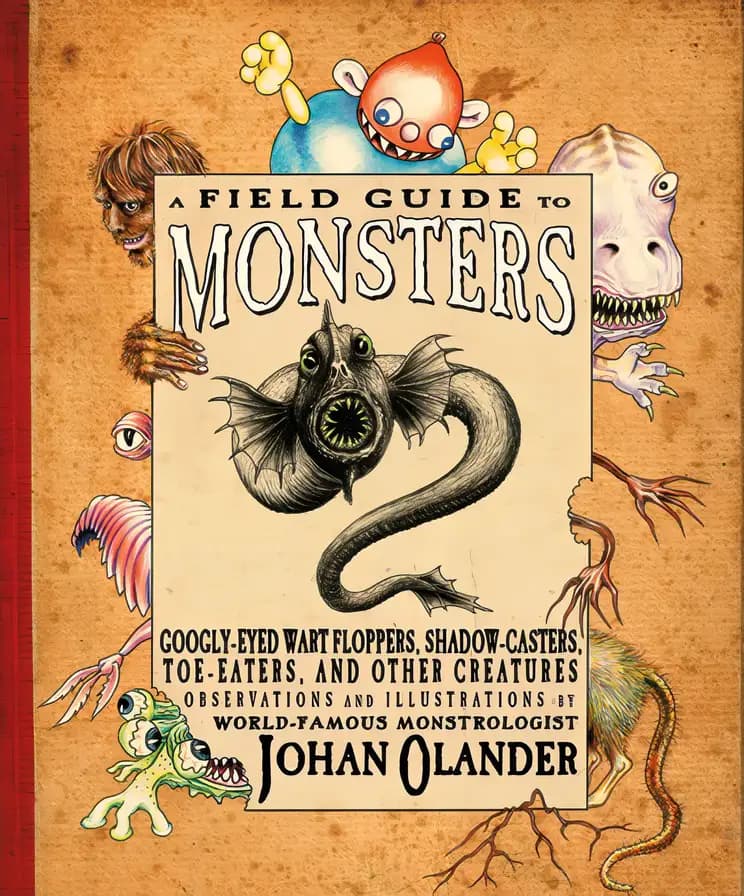
A Field Guide to Monsters: Googly-Eyed Wart Floppers, Shadow-Casters, Toe-Eaters, and Other Creatures
What’s inside...
In this delightfully gruesome collection, renowned monstrologist Johan Olander guides you through the world between reality and fantasy, where the creatures of your worst nightmares appear—even in your sock drawer! With this essential field guide, you'll learn about monster habitats, life cycles, and how to avoid the most dangerous creatures, see historical evidence of monster sightings, read about chilling monster encounters, and find out how you can become a monstrologist, too. A Field Guide to Monsters profiles more than twenty-five previously undocumented monsters. Olander will stretch your imagination to new limits with his impressive research, colorful observations, and eye-popping ink-and-digital artwork that reveal a madness unsurpassed.
Age
8-12
Length
64 pages
Text complexity
Discussion points
What would you do if you met a Googly-Eyed Wart Flopper? How would you react?
Which monster in the book was your favorite and why?
How do you think the Toe-Eaters got their name? Can you come up with a funny story about it?
If you could create your own monster, what special abilities would it have?
Why do you think monsters are often portrayed as scary? Can you think of any friendly monsters?
Tip: Role play these questions
Encourage your child to describe each monster's appearance and behavior. This helps in enhancing their descriptive vocabulary and creativity.
Discuss the emotions that different monsters might evoke. This is a good exercise for emotional recognition and empathy skills development.
Invite your child to draw their favorite monster or even create a new one. This combines reading comprehension with creative expression.
Use the book as a tool to explore the concept of fear in a controlled and safe environment, discussing what makes something scary and how to face fears.
Key lessons
Example Lesson: Embracing Diversity
Explanation: The book showcases a variety of monsters, each with unique characteristics and traits, demonstrating that differences are what make each creature special.
Real-World Application: Children can learn to appreciate and respect individual differences among their peers, fostering a more inclusive environment at school and in social settings.
Example Lesson: The Power of Imagination
Explanation: Through the fantastical elements and creatures in the book, children are encouraged to use their imagination to explore limitless possibilities.
Real-World Application: This lesson can encourage children to engage in creative thinking and problem-solving, both in academic tasks and recreational activities.
Example Lesson: Courage to Face Fears
Explanation: As the book introduces various monsters that might seem scary at first, it also portrays how understanding unfamiliar things can make them less frightening.
Real-World Application: This lesson teaches children to confront and manage their fears in real life, helping them cope with new or intimidating situations.
Example Lesson: Importance of Curiosity
Explanation: The guide format of the book prompts questions and exploration about each monster, highlighting the value of asking questions and learning more about the world.
Real-World Application: Fostering curiosity can aid children in their educational pursuits and encourage lifelong learning.
Example Lesson: Developing Observation Skills
Explanation: Children are encouraged to notice the details about each monster, from physical characteristics to behaviors, enhancing their attention to detail.
Real-World Application: Improved observation skills can help children excel in academic settings, particularly in subjects like science and art.