
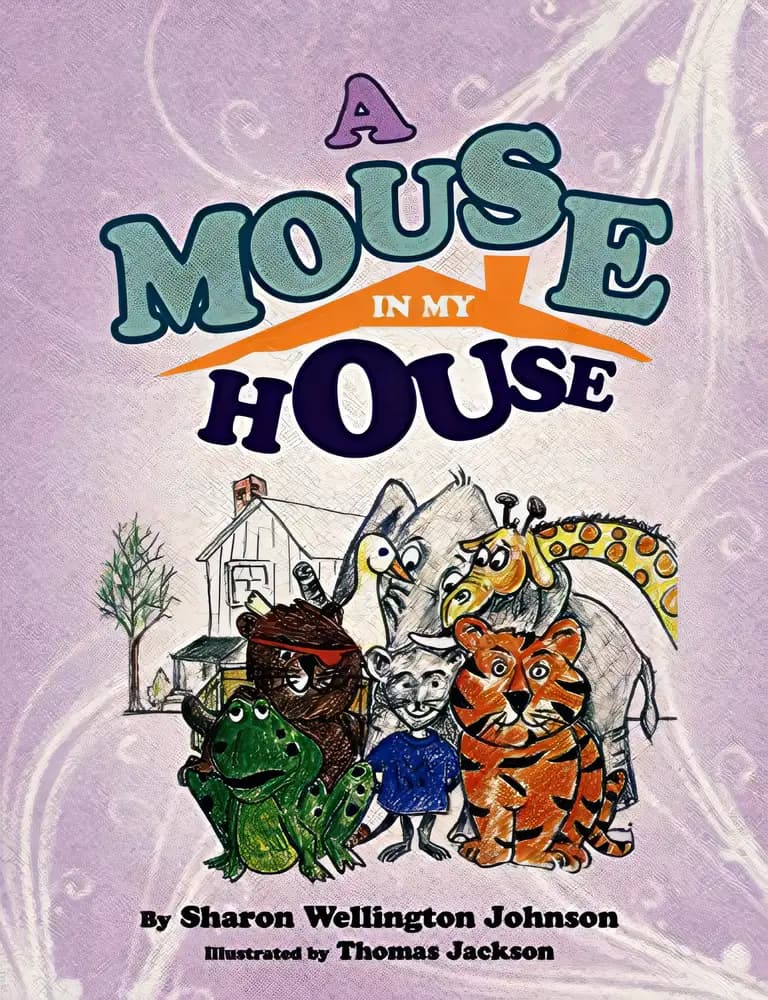
A Mouse in My House
What’s inside...
The book 'A Mouse in My House' by Sharon Wellington-Johnson tells the story of a homeowner who discovers a mouse living in their house. The narrative likely follows the interactions between the homeowner and the mouse, detailing the humorous and possibly heartwarming events that ensue as they attempt to coexist. The book may explore themes of unexpected companionship, the challenges of sharing space with a wild animal, and the lessons learned from this unusual situation. It could also touch on the importance of empathy and understanding towards all creatures. As the story unfolds, both the mouse and the homeowner might influence each other's lives in meaningful ways. Additionally, 'A Mouse in My House' is a rhyming story about an elusive mouse. All the animals think the worst of him because they don't know the mouse. They only imagine what the mouse is like, without ever meeting or getting to know the mouse. The anticipation of having a mouse in the house is very disturbing to the animals as each look for the little fellow. In the end, when they finally see the mouse, they decide he's okay and they all become best friends.
Age
3-7
Length
24 pages
Text complexity
Discussion points
How do you think the mouse feels being in a big, unfamiliar house?
What would you do if you found a mouse in our house?
Why do you think the mouse came into the house?
How can the mouse and the people in the house learn to live together?
What are some ways we can help animals in need?
Tip: Role play these questions
Encourage empathy by asking your child to imagine themselves in the mouse's situation.
Discuss the importance of kindness and helping others, relating it to the mouse's perspective in the story.
Use expressive facial expressions and voice modulation while reading to make the story more engaging and to highlight emotions.
After reading, relate the story to your child’s experiences by discussing any similar encounters with small animals or unexpected guests.
Key lessons
Example Lesson: Empathy
Explanation: In 'A Mouse in My House,' the protagonist learns to understand and share the feelings of a scared mouse trying to find shelter.
Real-World Application: Children can apply this lesson by learning to appreciate the feelings and perspectives of others, fostering kinder interactions with peers.
Example Lesson: Problem-solving
Explanation: Throughout the story, the characters face challenges they must overcome, such as finding a safe space for the mouse.
Real-World Application: This encourages children to think critically and creatively when faced with their own challenges at home or school.
Example Lesson: Responsibility
Explanation: The protagonist takes responsibility for the well-being of the mouse, ensuring its safety and comfort.
Real-World Application: Children learn the importance of taking responsibility for their actions and caring for others, including pets and siblings.
Example Lesson: Courage
Explanation: The protagonist shows bravery in helping a mouse, despite initially being afraid.
Real-World Application: This can inspire children to face their own fears and stand up for what they believe is right, regardless of challenges.
Example Lesson: Friendship
Explanation: The book demonstrates the value of unexpected friendships that arise from compassion and kindness.
Real-World Application: Children learn to be open to making diverse friends and the joy that such friendships can bring to their lives.