
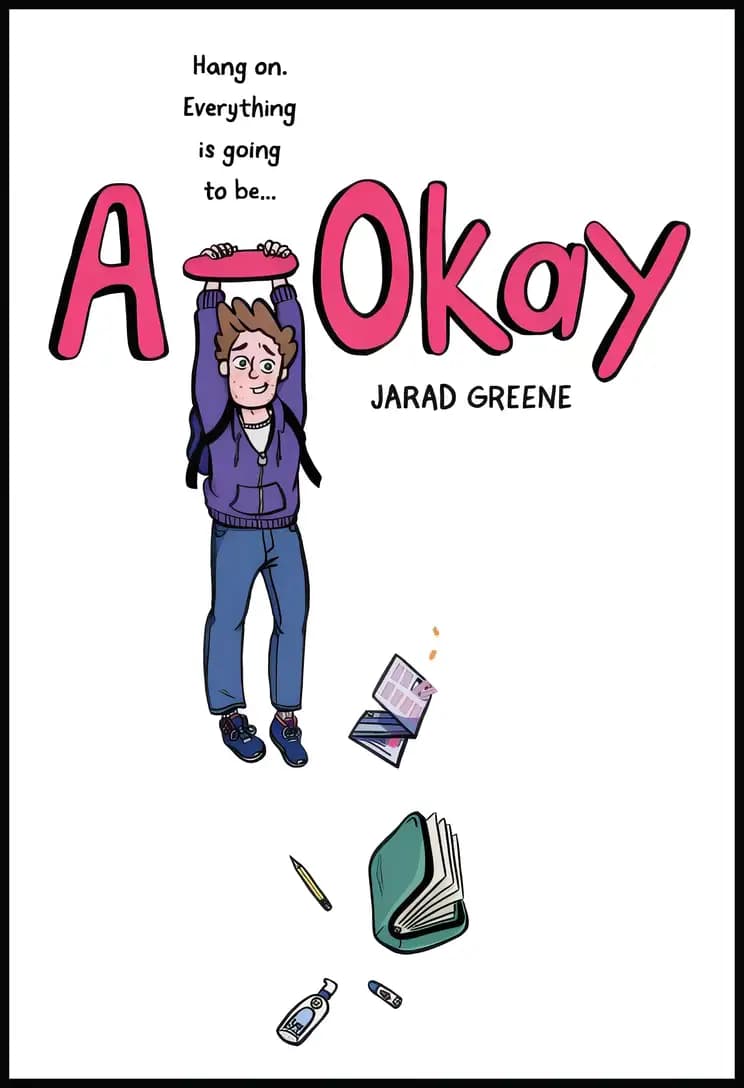
A-Okay
#1 of 2 in A-Okay Series
on Goodreads (1,139)
What’s inside...
A-Okay by Jarad Greene is a semi-autobiographical middle grade graphic novel that explores the challenges of adolescence through the lens of acne and identity. The protagonist, Jay, starts eighth grade with a few pimples but soon faces a severe acne problem. He is prescribed a powerful medication with serious side effects, but remains hopeful for clear skin. Meanwhile, Jay struggles with shifting friendships, feeling disconnected at school, and understanding his own feelings towards his classmates, Mark and Amy. As Jay navigates the complexities of eighth grade, he learns to stay optimistic and believe that everything will be okay.
Character compass
Jay
Discussion points
How did the main character's experiences with allergies make you feel?
Can you think of a time when you felt different from others like the character did? What happened?
What ways did the character show bravery throughout the book?
What did you learn about friendship from the story?
If you could give the main character advice, what would you say?
Tip: Role play these questions
Before starting the book, ask your child what they know about allergies and share some basic facts to set the context.
Pause at key moments in the story to ask your child how they think the character feels or what they might do next.
Relate the book’s situations to personal experiences your child might have had to deepen their connection to the story.
After reading, encourage your child to draw a picture or write a short story about how they might help a friend in a similar situation as the character.
Reinforce the positive messages from the book by recognizing and praising your child’s acts of bravery and kindness.
Key lessons
Example Lesson: Resilience in the face of adversity
Explanation: In 'A-Okay', the main character, Ace, goes through various challenges, including dealing with new braces and navigating social dynamics at school.
Real-World Application: Children learn that facing and overcoming personal and social challenges is a part of life, helping them develop resilience.
Example Lesson: Empathy and Understanding
Explanation: As Ace interacts with his classmates, the book explores themes of empathy by showing how understanding others' feelings and viewpoints fosters better relationships.
Real-World Application: This lesson teaches children to be considerate and understand different perspectives, which is crucial in building positive interactions in school and other social settings.
Example Lesson: Importance of Self-Care
Explanation: Ace learns to manage his personal health issues responsibly, highlighting the importance of self-care and personal responsibility.
Real-World Application: Children are encouraged to take responsibility for their own health and well-being, lessons that are vital as they grow.
Example Lesson: Developing Friendship
Explanation: The book shows Ace developing new friendships and dealing with conflicts, which emphasizes the value of friendships and how to nurture them.
Real-World Application: It reinforces the idea that friendships require effort and understanding, teaching children how to be good friends in their own lives.