
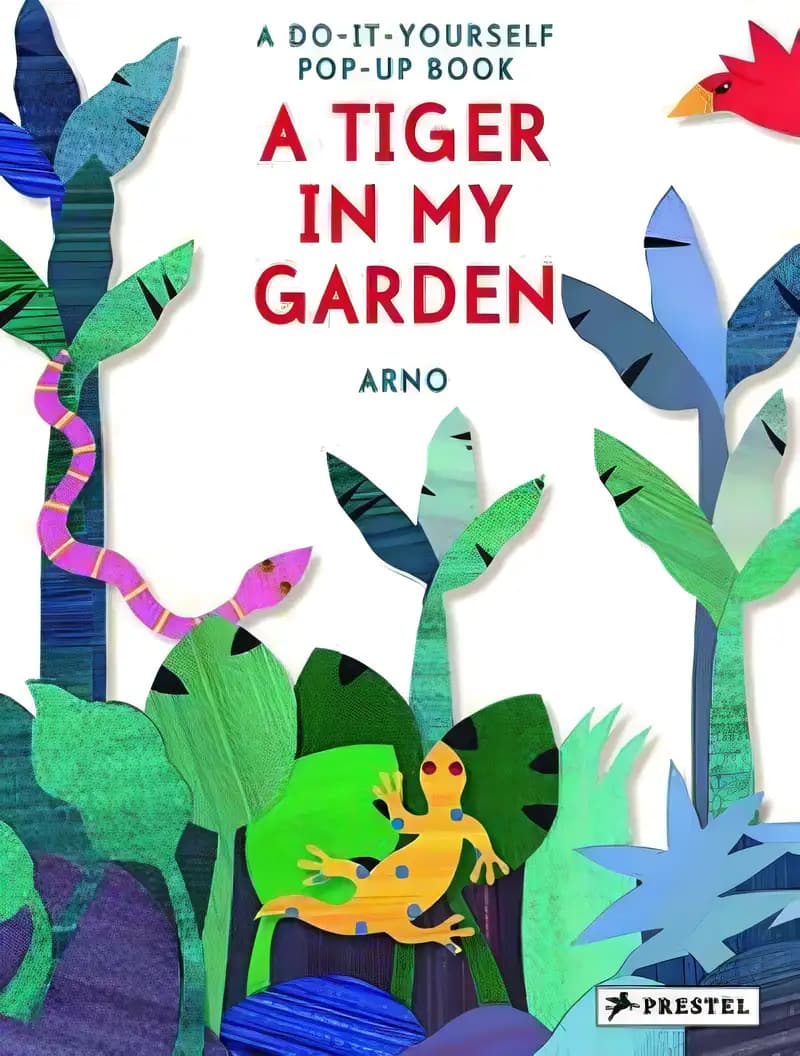
A Tiger in My Garden: A Do-It-Yourself Pop-Up Book
on Goodreads (6)
What’s inside...
Children can create their own pop-up book using a DIY kit inspired by Derek Jarman's garden. The kit includes pre-cut shapes and step-by-step instructions to craft magical gardens such as French, Japanese, Arabian, tropical, and dreamlike ones, all explored by a mysterious tiger. Brief texts educate on the different garden types. This engaging activity not only results in a beautiful pop-up book but also potentially equips children with skills to design their own pop-up creations.
Age
7-10
Length
32 pages
Text complexity
Discussion points
What would you do if you found a tiger in our garden? How would you feel?
Can you think of other magical things that could pop up in our garden? What would they be?
How do you think the tiger felt being in the garden? Would you invite him to stay?
Why do you think the author chose a tiger to appear in the garden? What other animals could have been interesting?
What did you learn about taking care of a garden or nature from this book?
Tip: Role play these questions
Utilize expressive reading: Change your tone and pitch when the tiger appears versus when the garden is described to stimulate your child’s imagination.
Encourage creativity: After reading, ask your child to draw their own garden and the magical creatures they imagine could live there.
Connect themes to daily life: Discuss how we can make our own garden inviting for helpful creatures by planting flowers or creating small habitats.
Focus on feelings: Talk about how different scenarios in the book made your child feel, promoting emotional intelligence and empathy.
Predictive pauses: Before turning pages, ask your child what they think will happen next, enhancing their anticipatory and narrative skills.
Key lessons
Example Lesson: Creativity and Imagination
Explanation: The pop-up aspect of 'A Tiger in My Garden' engages children by allowing them to interact with the story in a tactile way, encouraging them to imagine and create their own adventures.
Real-World Application: Children can apply this lesson by using everyday objects in their environment to create their own stories or art projects, enhancing their creative thinking skills.
Example Lesson: Problem Solving
Explanation: Throughout the book, characters encounter various challenges that they must overcome, which teaches children the importance of thinking critically and finding solutions.
Real-World Application: Kids can draw parallels to real-life situations where they need to think on their feet or come up with creative solutions to overcome obstacles they face in school or at home.
Example Lesson: Responsibility
Explanation: The interactive nature of the book requires children to handle the pop-up elements carefully, fostering a sense of responsibility and care.
Real-World Application: This lesson translates to children taking care of their personal belongings, understanding the value of keeping things intact and respecting property.
Example Lesson: Appreciation of Nature
Explanation: By incorporating elements of a garden and an outdoor adventure, the book helps children develop a love and appreciation for nature and outdoor activities.
Real-World Application: Encourages children to explore their own gardens or local parks, fostering an interest in environmental conservation and outdoor play.