
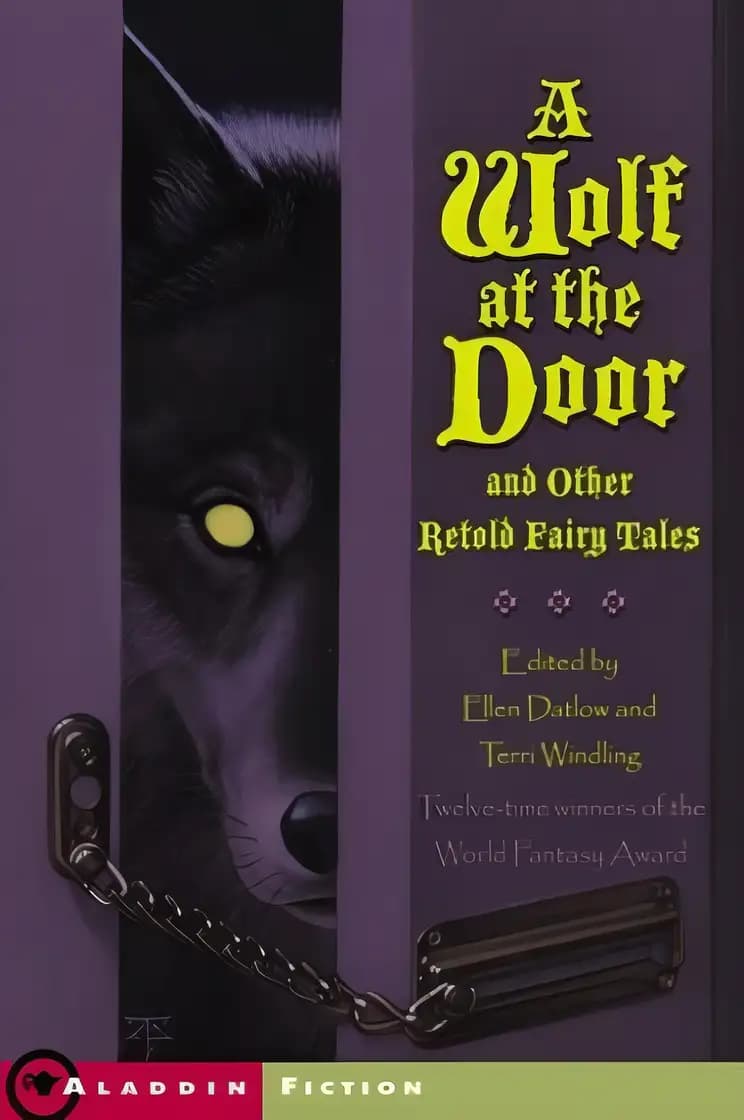
A Wolf at the Door: and Other Retold Fairy Tales
on Goodreads (1,506)
What’s inside...
Gathers a collection of old fairy tales made new by various fantasy and science fiction authors. These are not your mother's fairy tales... Did you ever wonder how the dwarves felt after Snow White ditched them for the prince? Do you sometimes wish Cinderella hadn't been so helpless and petite? Prepare to see fairy tales from a completely new angle!
Age
9-13
Length
166 pages
Text complexity
Discussion points
How do you think the characters felt when faced with challenges, and why?
What would you do if you were in the place of one of the retold fairy tale characters?
How do the stories in this book differ from the original fairy tales you know?
What lessons can we learn from the choices that the characters make?
Which story was your favorite, and what did you like most about it?
Tip: Role play these questions
Ask open-ended questions to encourage critical thinking and personal connection to the stories.
Relate the themes and moral lessons from the book to real-life situations your child might encounter.
Discuss the different outcomes in these retold tales versus the traditional versions, exploring the creative twists together.
Encourage your child to imagine alternative endings for the stories, promoting creativity and deeper understanding.
After reading, create a family activity where everyone picks their favorite fairy tale from the book and acts it out or draws scenes.
Key lessons
Example Lesson: The importance of wisdom and caution
Explanation: In the retellings, characters often face dilemmas that require them to be cautious and wise in their decisions. Their choices lead to various consequences, highlighting the importance of thoughtful consideration.
Real-World Application: Children can apply this by thinking through their decisions and considering possible outcomes before acting, whether it's choosing how to deal with a school assignment or resolve a conflict with a friend.
Example Lesson: Values of kindness and generosity
Explanation: Several stories depict characters who display kindness and generosity, often resulting in positive outcomes for both the giver and receiver.
Real-World Application: This encourages children to be kind and generous in their daily interactions, fostering a supportive and friendly environment at school or at home.
Example Lesson: The repercussions of deceit and greed
Explanation: Characters who engage in deceitful or greedy behaviors often face negative consequences, teaching readers about the moral implications of such actions.
Real-World Application: Children learn to value honesty and integrity, understanding that deceit and greed can lead to undesirable outcomes in real-life situations like friendships or team activities.
Example Lesson: The power of resilience and perseverance
Explanation: Some tales showcase characters who overcome great obstacles through resilience and perseverance, teaching readers the value of determination and hard work.
Real-World Application: This lesson can inspire children to persist in their goals, whether in academics, sports, or personal hobbies, despite challenges they may face.
Example Lesson: The impact of empathy and understanding
Explanation: Characters who demonstrate empathy and understanding often achieve better resolutions and connections with others, emphasizing the importance of emotional intelligence.
Real-World Application: Children can learn to empathize with peers and family members, leading to better relationships and a deeper understanding of others’ emotions and perspectives.