
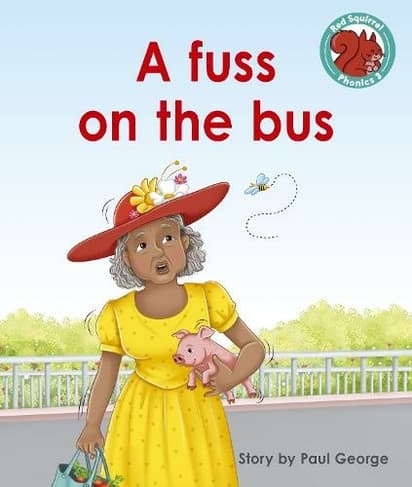
A fuss on the bus: Red Squirrel Phonics Level 3 Set 2
Red Squirrel Phonics Series
illustrations by
What’s inside...
This delightful book for young readers explores the humorous happenings of a group of animals as they ride the bus to school. Chaos ensues when a squirrel can't find its acorn, leading to a series of fun and educational adventures.
Series reading
Non-Sequential
Age
6-8
Length
16 pages
Text complexity
Discussion points
What do you think made the squirrel feel like causing a fuss on the bus?
How do you think the other animals on the bus felt during the fuss?
If you were on the bus, what would you have done to help calm things down?
What are some ways we can avoid making a fuss when we are upset?
Can you think of a time when you felt like the squirrel and what helped you feel better?
Tip: Role play these questions
Use expressive reading to convey the emotions of the squirrel and other characters, making the story come alive.
Ask your child to guess what might happen next in the story before turning the page, to keep them engaged and thinking critically.
Encourage your child to relate the story to their own experiences, discussing any similarities or differences they feel.
Praise your child for thoughtful responses and insights into the characters' feelings and actions, reinforcing their empathy and understanding.
Discuss the moral of the story and its application in real-life situations to deepen the impact of the reading experience.
Key lessons
Example Lesson: Patience
Explanation: The characters in 'A fuss on the bus' learn to wait their turn and exhibit patience as they navigate the journey on the bus.
Real-World Application: Children can apply this lesson by practicing waiting their turn in classroom activities or while playing games with friends, fostering a smoother and more cooperative environment.
Example Lesson: Cooperation
Explanation: Throughout the story, the characters must work together to solve problems during the bus ride, demonstrating the importance of cooperation.
Real-World Application: This lesson helps children understand the value of collaborative efforts in group projects at school or in team sports.
Example Lesson: Problem Solving
Explanation: The book showcases characters encountering and resolving conflicts or obstacles, which highlights effective problem-solving strategies.
Real-World Application: Children learn to approach challenges logically and creatively, whether it's resolving disputes with peers or tackling difficult tasks at school.
Example Lesson: Understanding Emotions
Explanation: The story addresses managing and understanding different emotions as characters react to the unfolding events on the bus.
Real-World Application: This encourages children to be mindful of their feelings and the feelings of others, promoting empathy and emotional intelligence in real-world interactions.