
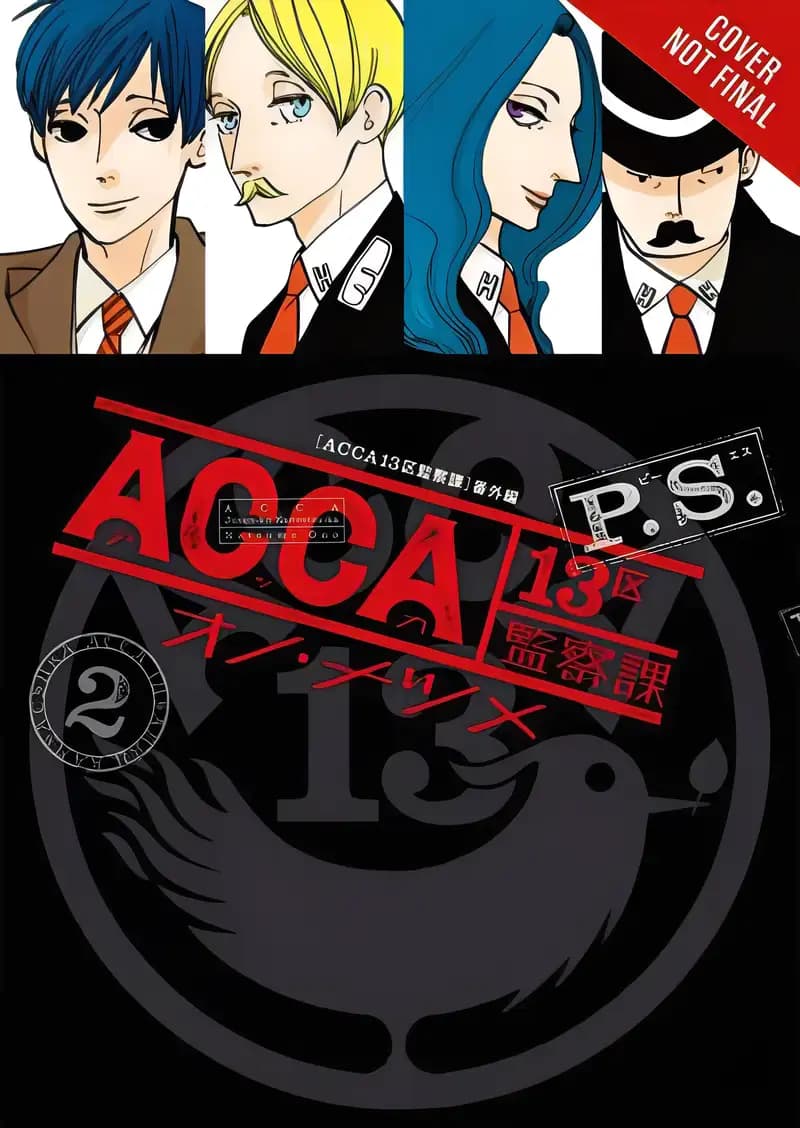
ACCA 13-Territory Inspection Department P.S. Vol. 2
#2 of 2 in ACCA 13-Territory Inspection Department Series
What’s inside...
Smoke and mirrors. Fake names and a web of lies. The men of the organization will be forever clad in a cloak of deception-except now. Just once, the truth of that fateful night will be revealed...
Discussion points
What do you think motivates Jean to do his job so diligently in the Inspection Department?
How do the different districts in the story compare to our own community?
If you were in charge of a district, what rules would you implement and why?
What are some ways that characters in the book show teamwork or collaboration?
How do you think the story would change if it was set in the present day?
Tip: Role play these questions
Encourage your child to think critically about the various social and political structures presented in the story. Ask them to draw parallels between the fictional world and real life, prompting them to consider how governance and authority play roles in their own lives. Foster an environment of curiosity by exploring the intricate artwork and asking your child what detailed scenes they find most intriguing and why. Discuss the character traits that help Jean and other characters succeed or face challenges, linking these observations to personal experiences or aspirations.
Key lessons
Example Lesson: Importance of Responsibility
Explanation: In 'ACCA 13-Territory Inspection Department P.S. Vol. 2', the protagonist Jean Otus exemplifies responsibility through his role in overseeing the peace in the 13 states. His dedication reflects the importance of carrying out duties diligently.
Real-World Application: Children can apply this lesson by taking charge of their assignments and chores, understanding that their actions contribute to the overall well-being of their family and classroom.
Example Lesson: Value of Integrity
Explanation: Jean Otus consistently demonstrates integrity, particularly in a setting that sometimes involves corruption and intrigue. His commitment to honesty and ethical behavior highlights the impact of integrity in maintaining trust and order.
Real-World Application: This can teach children to always be truthful and fair in their interactions, helping them build trust and respect within their peer groups.
Example Lesson: Teamwork
Explanation: Throughout the series, Jean collaborates with various characters to maintain national stability, showcasing how teamwork fosters effective problem-solving and success.
Real-World Application: Children can learn to work collaboratively in group settings, such as in school projects, sports, or family tasks, emphasizing that collective effort often leads to better outcomes.
Example Lesson: Critical Thinking
Explanation: The series presents various complex scenarios where Jean has to analyze and strategize, demonstrating the importance of critical thinking and decision-making skills.
Real-World Application: This encourages children to think critically when confronted with challenges, whether it's resolving conflicts with friends or tackling difficult school assignments.