
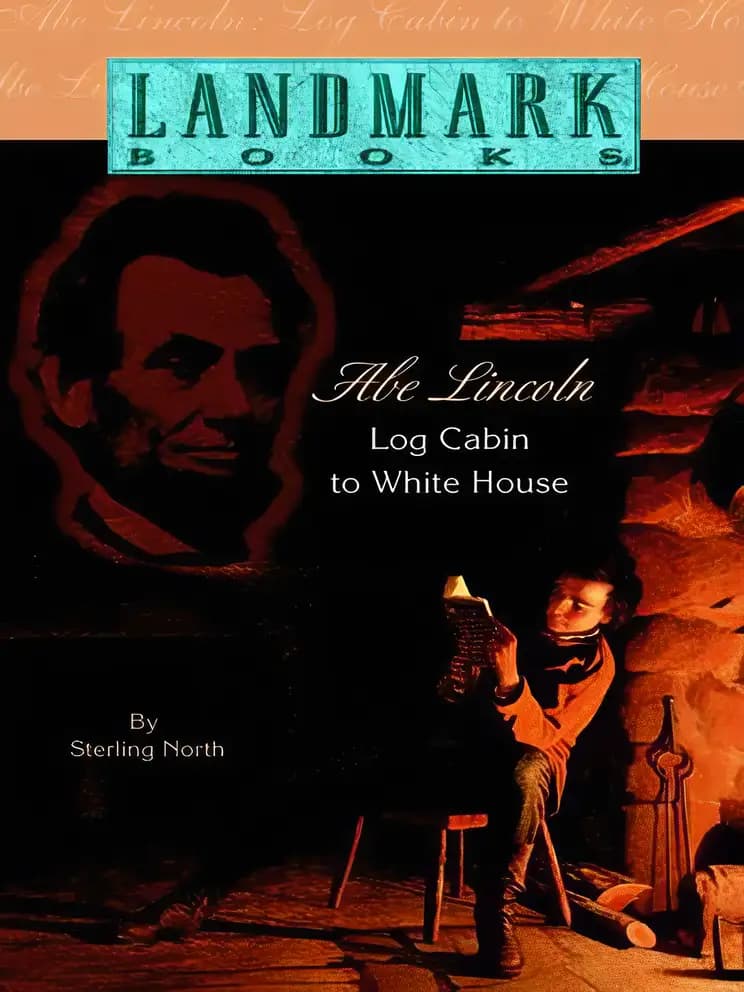
Abe Lincoln (Landmark Books)
#61 in Landmark Books Series
on Goodreads (150)
What’s inside...
Abraham Lincoln was born to a poor family on the American frontier. He was a hard worker, but he wanted more than a farmer's life. As he learned about the issues of his day, Abe longed to be a lawmaker himself, so he ran for the state legislature. Soon the farm boy would become the brilliant orator and admired president who finally proclaimed freedom for all Americans. Focusing on Lincoln's childhood and early manhood, this book explores the people and events that shaped one of America's greatest presidents.
Character compass
Abraham Lincoln
Mary Todd Lincoln
Thomas Lincoln
Sarah Bush Johnston Lincoln
Stephen A. Douglas
Discussion points
What are some qualities that made Abraham Lincoln a great leader?
How did Lincoln's actions change the course of American history?
Why is it important to stand up for what you believe in, like Lincoln did with his views on slavery?
How do you think America would be different if Abraham Lincoln had not been president?
What did you learn about handling difficult situations from Lincoln's story?
Tip: Role play these questions
Encourage your child to think critically by asking them to draw parallels between Lincoln’s leadership and what they see in leaders today.
Foster empathy by discussing the hardships Lincoln faced and asking your child how they would feel in similar situations.
Highlight the historical context by researching together more about the era in which Lincoln lived and how it compares to the present day.
Boost your child’s confidence in expressing opinions by asking what they would have done differently if they were in Lincoln’s shoes.
Key lessons
Example Lesson: Perseverance and overcoming adversity
Explanation: Abe Lincoln's life story is a testament to persevering through difficulties, from his humble beginnings to becoming one of the most significant leaders in American history.
Real-World Application: Children can learn the importance of determination and hard work in their studies and personal endeavors, understanding that challenges can be overcome with persistence.
Example Lesson: Honesty and integrity
Explanation: Abe Lincoln was nicknamed 'Honest Abe' for his strong moral principles and transparency, which were evident throughout his career and personal life.
Real-World Application: This teaches children the value of being truthful and fair in their interactions with others, promoting trust and respect in their relationships.
Example Lesson: Leadership and responsibility
Explanation: Lincoln demonstrated leadership and responsibility, especially during the Civil War, making tough decisions for the greater good.
Real-World Application: Children can apply these qualities in group activities and peer interactions, learning to take initiative and consider the welfare of others.
Example Lesson: Equality and justice
Explanation: Abe Lincoln was an advocate for equality and played a crucial role in the abolition of slavery, emphasizing justice for all individuals.
Real-World Application: This lesson encourages children to treat everyone fairly, regardless of differences, fostering a sense of justice and equality in their community.
Example Lesson: Learning through self-education
Explanation: Despite having little formal education, Lincoln was a self-taught man who valued learning and knowledge, which contributed greatly to his success.
Real-World Application: This highlights the importance of curiosity and self-driven learning for children, encouraging them to explore new ideas and gain knowledge independently.