
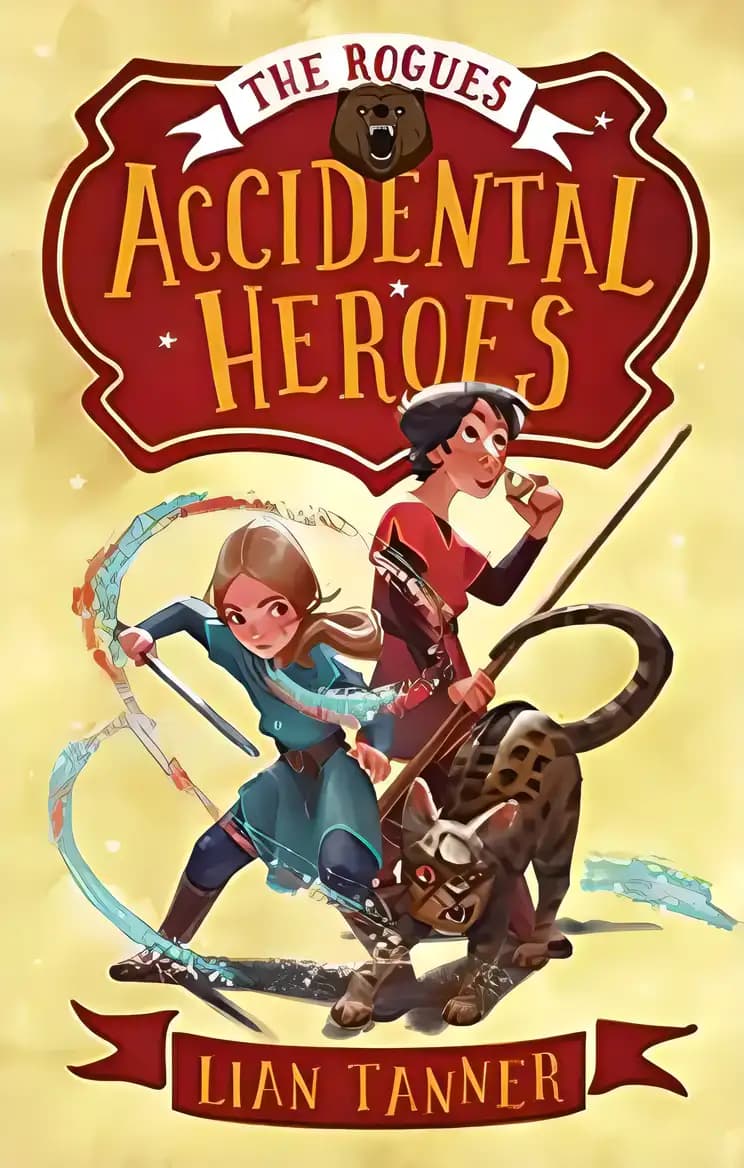
Accidental Heroes (The Rogues, Book 1)
#1 in The Rogues Series
on Goodreads (137)
What’s inside...
In 'Accidental Heroes (The Rogues, Book 1)' by Lian Tanner, Duckling, a girl with a mysterious past, and Pummel, a boy training to be a champion, embark on an unexpected adventure in a world filled with magic and danger. As they navigate treacherous situations and confront powerful enemies to save their city, they discover their hidden strengths and the true meaning of heroism. The novel explores themes of courage, friendship, and serendipity in becoming heroes in a time of need. In the city of Berren, strange things happen, such as people disappearing and trees sprouting overnight. Despite the disbelief in magic, Duckling and Pummel get entangled in Lord Rump's schemes and a plot to kill the heir to the Faithful Throne. They must learn to use the magic that no one believes in to protect the Young Margrave and save themselves from a terrible fate.
Character compass
Duckling
Sooli
Pummel
Collejo
Lord Pompis
Ánade
Discussion points
What qualities do you think make a character a hero? Can anyone become a hero?
How do the characters in the book handle mistakes or failures? What can we learn from them?
Why is teamwork important in the story? Can you think of a time when you had to work with others to solve a problem?
How do the characters change from the beginning to the end of the book? What causes these changes?
What would you have done differently if you were in the protagonist's place in any of the challenges?
Tip: Role play these questions
Use open-ended questions that prompt deeper thinking and personal connections, which helps enhance comprehension and critical thinking skills.
Relate themes or situations from the book to real-life experiences that your child may have faced to make the content more relatable and memorable.
Encourage your child to imagine alternative endings or plot twists, which helps develop creative thinking and storytelling skills.
Discuss the moral and ethical questions presented in the story to nurture empathy and moral reasoning in your child.
Key lessons
Example Lesson: The importance of teamwork
Explanation: In 'Accidental Heroes,' the diverse group of characters must collaborate to overcome obstacles and solve problems, demonstrating that teamwork is crucial to achieving common goals.
Real-World Application: Children can apply this lesson by participating in group activities at school or in sports, learning to cooperate and value each other's strengths.
Example Lesson: Courage in the face of adversity
Explanation: The protagonists face various challenges throughout their journey, showing bravery despite their fears. This highlights the lesson that courage is not the absence of fear, but the determination to confront it.
Real-World Application: This lesson can encourage children to tackle their fears and challenges, whether it's trying out for a school play, standing up against a bully, or learning a new skill.
Example Lesson: The value of integrity
Explanation: Characters in the story make choices that reflect their moral compass, teaching readers about the importance of honesty and ethical behavior.
Real-World Application: Kids are reminded to stay true to their values and make ethical decisions, whether it’s being honest in tests and games, or being trustworthy in relationships with friends and family.
Example Lesson: Accepting differences
Explanation: The book portrays a team of heroes who are diverse in many ways - skills, personalities, and backgrounds. It celebrates their differences, teaching that diversity can be a strength rather than a weakness.
Real-World Application: Children learn to appreciate and respect people who may look, think, or act differently from them, fostering a more inclusive environment at school and in the community.
Example Lesson: Learning from mistakes
Explanation: Throughout the book, characters often learn and grow more from their failures than their successes. This imparts the message that mistakes are valuable learning opportunities.
Real-World Application: This can help children understand that it’s okay to make mistakes and encourage them to see these moments as chances to learn and grow instead of reasons to give up.