
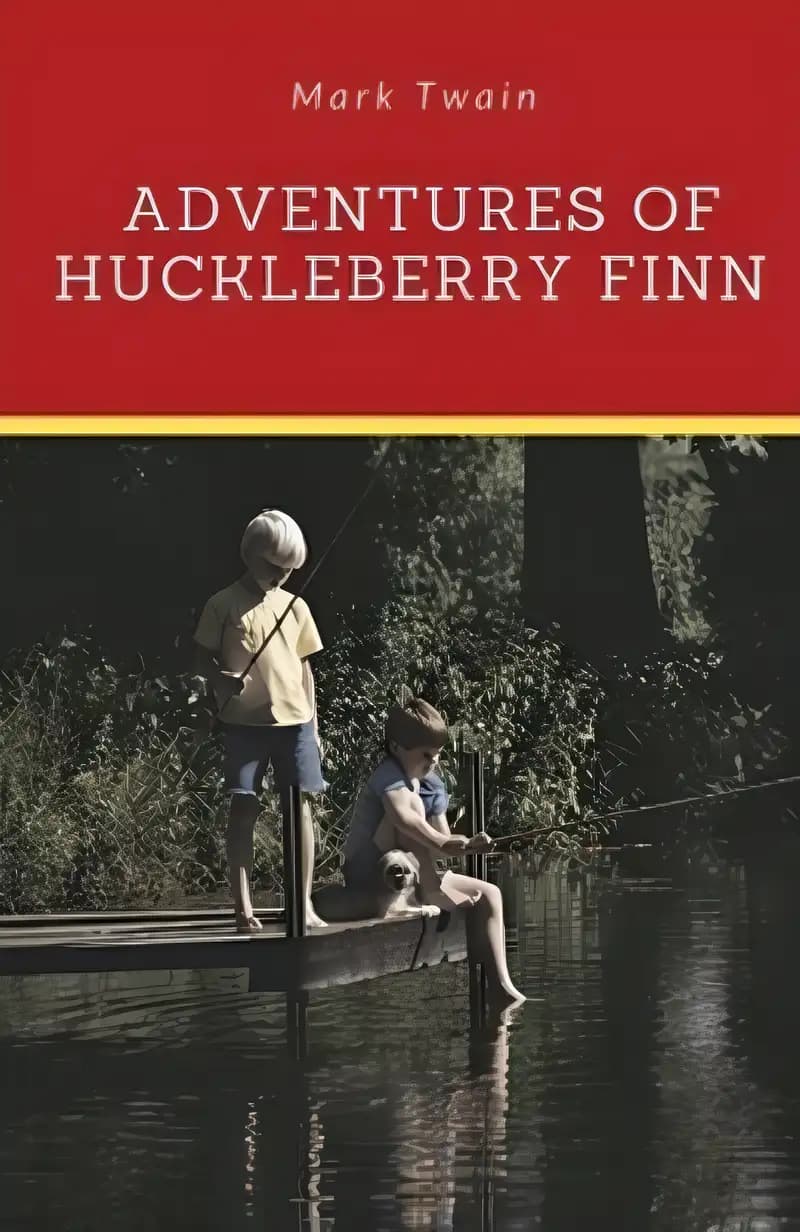
Adventures of Huckleberry Finn: A novel by Mark Twain told in the first person by Huckleberry "Huck" Finn, the narrator of two other Twain novels (Tom ... sequel to The Adventures of Tom Sawyer.
#2 in Adventures of Tom and Huck Series
on Goodreads (1,302)
What’s inside...
Adventures of Huckleberry Finn is a novel by Mark Twain, first published in the United Kingdom in December 1884 and in the United States in February 1885. Commonly named among the Great American Novels, the work is among the first in major American literature to be written throughout in vernacular English, characterized by local color regionalism. It is told in the first person by Huckleberry 'Huck' Finn, a friend of Tom Sawyer and narrator of two other Twain novels (Tom Sawyer Abroad and Tom Sawyer, Detective). It is a direct sequel to The Adventures of Tom Sawyer. The book is noted for its colorful description of people and places along the Mississippi River. Set in a Southern antebellum society that had ceased to exist about twenty years before the work was published, Adventures of Huckleberry Finn is an often scathing satire on entrenched attitudes, particularly racism.
Character compass
Huckleberry Finn
Buck Grangerford
Tom Sawyer
Jim
Widow Douglas
Judge Thatcher
Miss Watson
Aunt Sally Phelps
Colonel Grangerford
Uncle Silas Phelps
Duke
King
Pap Finn
Jim Upton
Mark Twain
Discussion points
How do Huck's adventures challenge his views on right and wrong? What moments in the story do you think were turning points for him?
How does Huck's relationship with Jim evolve throughout the novel? What do you think caused these changes?
Mark Twain uses different dialects to tell his story. How did this affect your understanding or enjoyment of the book?
The river plays a significant role in Huck's journey. What do you think the river symbolizes? Can you think of any times when the river influenced the events in the story?
How would you have reacted in some of the situations Huck faced? Do you agree with his decisions?
Tip: Role play these questions
Encourage your child to put themselves in Huck's shoes. This will help them engage with the character's dilemmas and choices more deeply.
Discuss the historical context of the story, particularly the themes of race and society. This can provide a richer understanding of the characters' motivations and conflicts.
Highlight the use of dialect and language in the story. Ask your child how this impacts their perception of the characters and their environment.
Use a map to trace Huck and Jim's journey along the Mississippi River. This can help contextualize the story's setting and make the narrative more relatable.
Focus on the moral questions raised in the book. Encourage your child to express their opinions and consider different perspectives on the issues presented.
Key lessons
Example Lesson: Empathy and Understanding
Explanation: Through Huck's interactions with Jim, a runaway slave, readers see the development of a deep bond rooted in compassion and understanding, despite societal prejudices.
Real-World Application: Children can learn to appreciate and respect people's experiences different from their own, promoting inclusivity and empathy in their daily interactions.
Example Lesson: Questioning Societal Norms
Explanation: Huck frequently questions the rules and expectations imposed by society and often decides to follow his moral compass instead.
Real-World Application: This encourages children to think critically about right and wrong and to stand up for what they believe in, even when it goes against the crowd.
Example Lesson: The importance of Friendship
Explanation: The novel highlights the adventures and trials Huck and Jim face together, showcasing the strength and support friends offer each other during difficult times.
Real-World Application: Children learn the value of building trusting and supportive friendships and the impact those relationships can have on overcoming challenges.
Example Lesson: Growth through Adversity
Explanation: Huck's journey down the river is filled with various challenges that test his character and skills, leading to personal growth and maturity.
Real-World Application: This can inspire children to see challenges as opportunities to learn and grow, fostering resilience and adaptability in their own lives.
Example Lesson: Independence and Self-Reliance
Explanation: Throughout the book, Huck demonstrates a remarkable degree of independence and self-reliance, making decisions and solving problems on his own.
Real-World Application: Children are encouraged to develop their decision-making skills and confidence in their abilities, preparing them for autonomous thinking and action.