
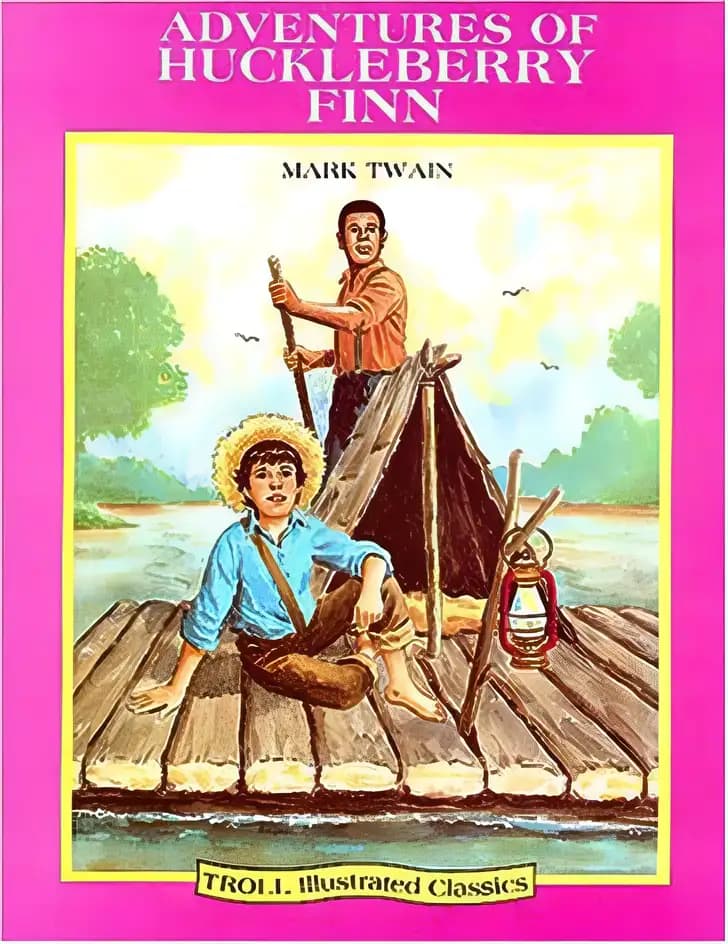
Adventures of Huckleberry Finn
Troll Illustrated Classics. Series
on Goodreads (5,984)
What’s inside...
The adventures of a boy and a runaway slave as they float down the Mississippi on a raft. When the unabridged format is too long and the picture book format is too short, Illustrated Classics are just right.
Series reading
Non-Sequential
Age
9-10
Length
48 pages
Text complexity
Character compass
Huckleberry Finn
Tom Sawyer
Jim
Miss Watson
Widow Douglas
Uncle Silas Phelps
Aunt Sally Phelps
Duke
King
Pap Finn
Discussion points
What do you think Huck learned about friendship and loyalty during his adventures?
How did Huck's view of right and wrong change throughout the story?
Why is it important to sometimes question the rules society sets?
What can we learn from Huck and Jim’s relationship about treating others with respect and kindness?
How do the different characters Huck meets on his journey influence his understanding of the world?
Tip: Role play these questions
Begin by sharing your own thoughts on the book’s themes and ask your child to share their perspective.
Encourage empathy by asking your child how they would feel in Huck’s situation during various parts of the book.
Link discussions to current events or personal family values to make the conversation relevant to your child’s world.
Praise your child for their insights and encourage them to ask questions to deepen their understanding.
Use examples from the book to discuss the importance of critical thinking and making moral decisions.
Key lessons
Example Lesson: Empathy and Understanding
Explanation: Throughout 'Adventures of Huckleberry Finn', the protagonist encounters diverse characters, each with unique perspectives and life circumstances. Huckleberry learns to understand and empathize with these different viewpoints, especially in his interactions with Jim, the runaway slave.
Real-World Application: Children can apply this lesson by learning to appreciate and empathize with people from varied backgrounds and experiences in their own lives, promoting inclusivity and understanding.
Example Lesson: The Importance of Moral Integrity
Explanation: Huckleberry Finn faces numerous moral dilemmas and, throughout the story, learns to follow his conscience rather than the societal norms of his time. His decisions, particularly in helping Jim, highlight his development of a personal moral code.
Real-World Application: This teaches children the importance of following their inner moral compass and making decisions based on what they feel is right, not just what they are told.
Example Lesson: The Value of Friendship
Explanation: The bond between Huckleberry and Jim is central to the narrative, showcasing the strength and loyalty in their friendship despite societal rules and expectations. This relationship demonstrates the power of genuine companionship.
Real-World Application: Children learn the importance of developing strong, supportive friendships and being loyal to friends in difficult times.
Example Lesson: Critical Thinking and Questioning Authority
Explanation: Huckleberry often questions the rules and decisions imposed by the adult figures around him. This aspect of his character encourages critical thinking and challenging of the status quo.
Real-World Application: This encourages children to think critically about the world around them and to question authority when necessary, helping them develop into independent and thoughtful adults.
Example Lesson: Adaptability and Resourcefulness
Explanation: Throughout his adventures, Huckleberry demonstrates a great deal of adaptability and resourcefulness in overcoming obstacles and handling unexpected situations.
Real-World Application: Highlighting the importance of being adaptable and resourceful can help children navigate challenges and solve problems creatively in their everyday lives.