
on Goodreads (1)
What’s inside...
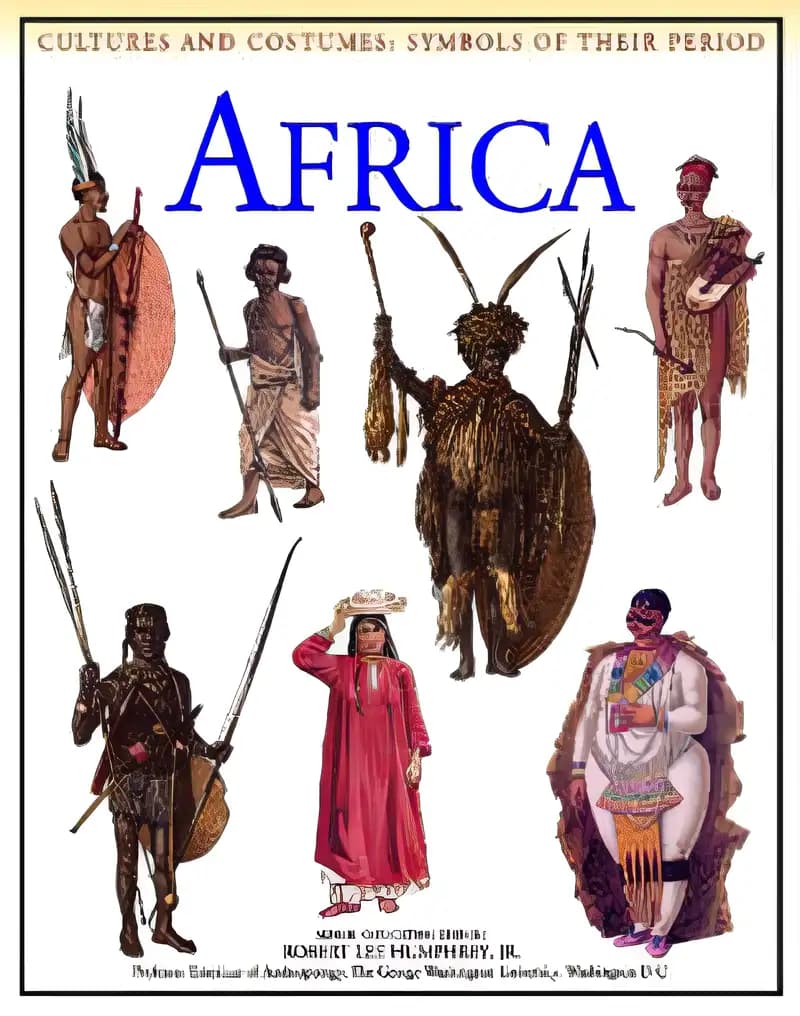
This series of books introduces readers to the intricate relationship between a people's clothing and their ideas, traditions, and beliefs. Readers will learn about cultures throughout history through the costumes that they wore. The book also discusses the history of various costumes worn in Africa.
Series reading
Non-Sequential
Age
11-12
Length
64 pages
Text complexity
Discussion points
What did you learn about the different animals and environments in Africa?
How do the stories and pictures make you feel about the continent of Africa?
What are some ways people in Africa live differently or similarly to us?
Can you think of any ways we can help protect the animals and nature in Africa from where we live?
What was your favorite part of the book and why?
Tip: Role play these questions
Use a world map or globe to locate Africa and discuss its vast landscapes and diverse cultures before reading.
Encourage your child to express their thoughts and feelings about the story and illustrations, validating their responses.
Compare and contrast your child's daily life with the lives of children in different parts of Africa as depicted in the book.
Post-reading, engage in a creative activity such as drawing their favorite African animal or making a simple craft related to the book’s themes.
Encourage empathy and global awareness by discussing the importance of understanding and respecting different cultures and environments.
Key lessons
Example Lesson: Cultural Appreciation
Explanation: Through vivid storytelling and beautiful illustrations, 'Africa' introduces children to the diverse cultures, languages, and traditions of the continent.
Real-World Application: Children can embrace and respect different cultures in their community, fostering inclusivity and understanding.
Example Lesson: Geographical Knowledge
Explanation: The book explores various landscapes and climates across Africa, from the Sahara Desert to tropical rainforests.
Real-World Application: This lesson can spark curiosity about the world, encouraging children to learn more about geography and environmental science.
Example Lesson: Importance of Wildlife Conservation
Explanation: Charlotte Greig discusses the unique wildlife of Africa and the importance of preserving these natural habitats.
Real-World Application: Children can become more environmentally conscious, understanding their role in protecting endangered species and ecosystems.
Example Lesson: Historical Insight
Explanation: The book covers significant historical events and figures throughout Africa’s history, providing a foundational understanding.
Real-World Application: Kids can apply this knowledge in school projects, enhancing their academic performance and historical comprehension.
Example Lesson: Community and Unity
Explanation: Stories within the book emphasize the principles of community support and unity across different African cultures.
Real-World Application: This can teach children the value of teamwork and cooperation in their own lives, whether at school or in extracurricular activities.