
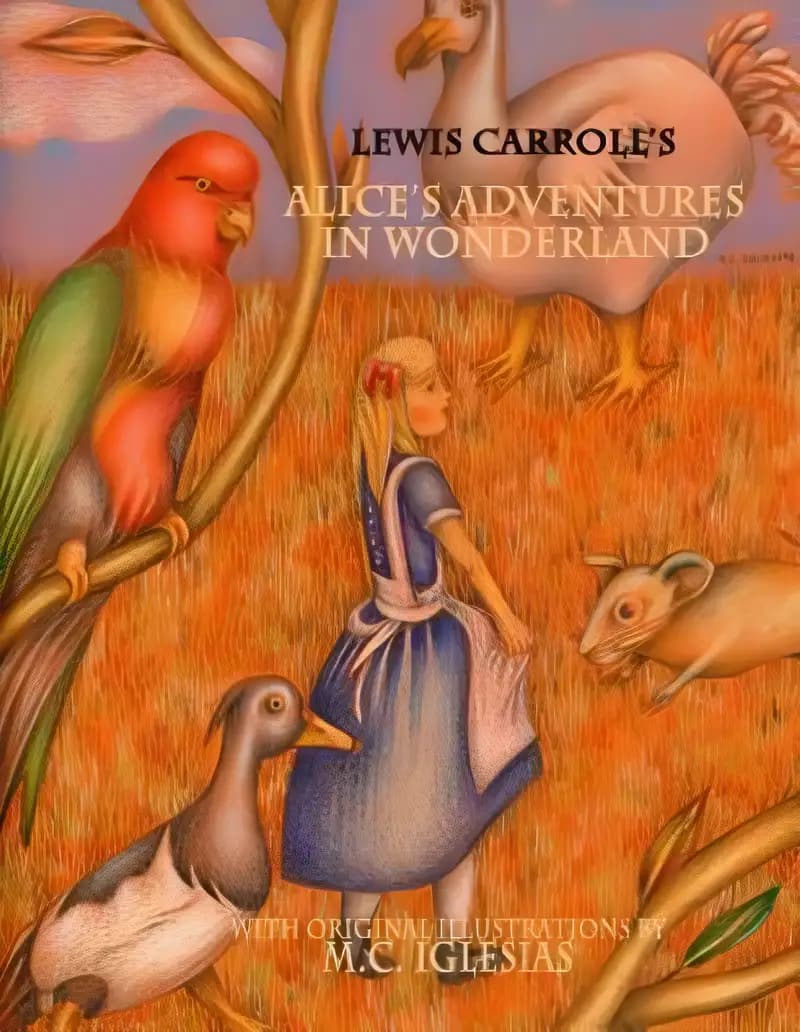
Alice's Adventures in Wonderland: With Original Illustrations by M.C. Iglesias (Classic Fairy Tales Book 1)
#1 of 7 in Alice's Adventures in Wonderland Series
illustrations by
on Goodreads (410,160)
What’s inside...
In this refreshed edition of Lewis Carroll's classic 'Alice's Adventures in Wonderland', illustrator M.C. Iglesias brings a unique and colorful twist to the whimsical tale. Featuring the full, original text of the story, including various poems, the book is enriched with 15 unique, full-color illustrations representing key episodes of Alice's journey. This high-quality edition is fully in color, with glossy covers and a large format to enhance the visual experience. About the Illustrator: M.C. Iglesias is an award-winning illustrator, scholar, and author with an academic background in medieval and early modern thought. Born in Argentina and educated at Yale University and Complutense University of Madrid, she has displayed her artwork internationally and has a diverse range of publications.
Character compass
Alice
The Mad Hatter
White Rabbit
Cheshire Cat
Queen Of Hearts
Discussion points
What do you think Alice felt when she fell down the rabbit hole? Can you describe how you might feel in a similar situation?
Why do you think the characters in Wonderland behave so differently from people in the real world?
If you could have a tea party like Alice, what kind of funny or interesting characters would you invite and why?
Alice grows and shrinks throughout the story after eating or drinking certain things. How do you think that changes the way she sees the world around her?
What lesson do you think Alice learned by the end of her adventures in Wonderland?
Tip: Role play these questions
Encourage your child to imagine being in Alice’s shoes, which builds empathy and enhances their understanding of character emotions.
Pose questions that relate Wonderland's scenarios to real-life situations your child might encounter, fostering deeper connections to the story.
Discuss the peculiar behaviors of Wonderland’s characters. This can lead to a conversation about the importance of understanding and celebrating differences in others.
Invite your child to draw or describe what their own version of Wonderland would look like as a fun way to engage with the book’s themes of curiosity and exploration.
Key lessons
Example Lesson: Curiosity and Exploration
Explanation: Alice's journey begins with her following a curious rabbit, symbolizing a quest for knowledge and adventure. Her explorations in Wonderland encourage children to ask questions and explore the world around them.
Real-World Application: Children can be encouraged to engage in new activities, ask questions, and learn about different subjects, fostering a lifelong love for learning.
Example Lesson: The Importance of Resilience
Explanation: Throughout her adventures, Alice faces numerous challenges and confusing situations but manages to navigate them with perseverance and adaptability.
Real-World Application: This teaches children the value of resilience in overcoming obstacles in school or social settings, emphasizing that persistence is key to success.
Example Lesson: The Power of Imagination
Explanation: Alice's exploration of Wonderland showcases the limitless possibilities of imagination, as she encounters fantastical characters and bizarre scenarios.
Real-World Application: Children learn to use their imagination as a tool for creative problem-solving and entertainment, which can be applied in imaginative play, academic tasks, and social interactions.
Example Lesson: Understanding Consequences
Explanation: Alice makes decisions that lead to various consequences in Wonderland, teaching her to think critically about her choices.
Real-World Application: This can help children understand that their actions have consequences and encourage them to think before acting, both in personal and academic decisions.