
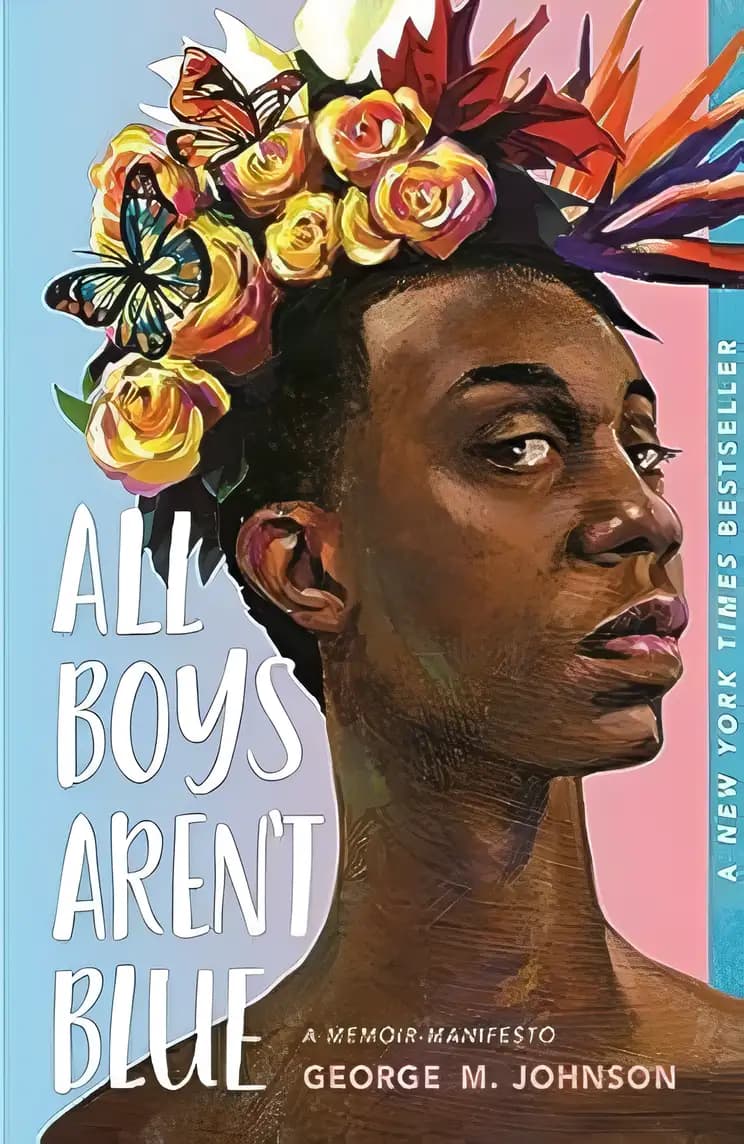
All Boys Aren't Blue: A Memoir-Manifesto
on Goodreads (42,341)
What’s inside...
In a series of personal essays, prominent journalist and LGBTQIA+ activist George M. Johnson explores his childhood, adolescence, and college years in New Jersey and Virginia. From the memories of getting his teeth kicked out by bullies at age five, to flea marketing with his loving grandmother, to his first sexual relationships, this young-adult memoir weaves together the trials and triumphs faced by Black queer boys. Both a primer for teens eager to be allies as well as a reassuring testimony for young queer men of color, All Boys Aren't Blue covers topics such as gender identity, toxic masculinity, brotherhood, family, structural marginalization, consent, and Black joy. Johnson's emotionally frank style of writing will appeal directly to young adults.
Age
16-19
Length
304 pages
Text complexity
Character compass
George M. Johnson
Garfield
Mom
Nanny
Discussion points
How did the stories and experiences shared by the author resonate with you or challenge your views on identity and acceptance?
What can we learn from George's relationship with his family and how can we apply those lessons to our own family dynamics?
In what ways do the themes of courage and resilience appear throughout the book and why are they significant?
How does the book enhance your understanding of gender and sexual identity?
Can you identify any moments in the book where you felt empowered or hopeful? What triggered those feelings?
Tip: Role play these questions
Start by sharing your own thoughts and feelings about the book to create an open environment for discussion.
Encourage your child to express their thoughts without judgment, reinforcing that all perspectives are valid.
Link discussions to personal experiences or current events to make the conversation more relatable and impactful.
Highlight the importance of empathy and understanding diverse experiences, stressing how this understanding can lead to more inclusive behaviors.
Ask follow-up questions to delve deeper into your child's thoughts and feelings, demonstrating genuine interest in their opinions.
Key lessons
Example Lesson: Empathy and Understanding
Explanation: Through personal narratives about growing up as a Black queer youth, George M. Johnson highlights the challenges and triumphs that shaped them, fostering a deep sense of empathy and understanding in readers.
Real-World Application: Children can apply this lesson by learning to appreciate and respect the diverse backgrounds and experiences of their peers, which can enhance social interactions and reduce bullying.
Example Lesson: The Importance of Self-Identity
Explanation: The author's journey to self-acceptance is a central theme, showcasing the importance of embracing one's true identity despite societal pressures or expectations.
Real-World Application: Young readers are encouraged to explore, understand, and accept their own identities, which is crucial for their mental and emotional development.
Example Lesson: Resilience in Adversity
Explanation: Johnson shares how they navigated various adversities, including racism and homophobia, using these experiences to cultivate resilience and advocate for themselves and others.
Real-World Application: Children learn to face challenges with courage and resilience, understanding that adversity can be a catalyst for personal growth and strength.
Example Lesson: The Power of Supportive Communities
Explanation: Throughout the memoir, the role of family, friends, and mentors in Johnson's life illustrates the vital support systems that help individuals thrive despite difficulties.
Real-World Application: This lesson underscores the importance of building strong, positive relationships and seeking support when needed, fostering a supportive community among peers.