
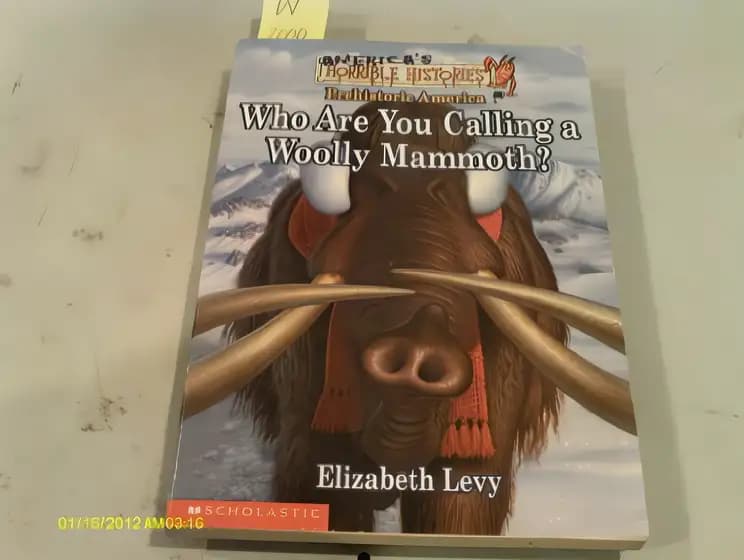
America's Horrible Histories #01: Who Are You Calling A Woolly Mammoth (America's Funny But True History)
#1 in America's Funny But True History Series
What’s inside...
Introduces the animals that lived in North America before the arrival of the first people, and discusses the disappearance of the dinosaurs, the Ice Age, and early humans and their effect on the continent's animal life.
Discussion points
What do you think life was like for people living during the time of woolly mammoths?
Which part of the book was the most surprising to you, and why?
How do you think the people felt when they encountered a woolly mammoth for the first time?
If you could ask a woolly mammoth one question, what would it be?
What did you learn about America’s history that you didn't know before?
Tip: Role play these questions
To foster a deeper connection with the book’s content, use visual aids like pictures or videos of woolly mammoths and their habitats. This can help bring the story to life. Encourage your child to compare their daily life with that of the characters in the book; this can lead to insightful observations and a greater appreciation of historical contexts. Lastly, applaud your child’s curiosity and praise their efforts to understand complex historical themes.
Key lessons
Example Lesson: Understanding historical perspectives
Explanation: This book humorously uncovers various historical events and figures, allowing children to see history through a playful and engaging lens.
Real-World Application: Children can learn to appreciate different historical viewpoints and understand that history can be viewed from multiple perspectives.
Example Lesson: Importance of asking questions
Explanation: The narrative encourages curiosity about the past by presenting intriguing questions about historical facts and myths.
Real-World Application: This can foster a habit of inquiry in children, prompting them to ask questions in their daily lives to gain deeper understanding and knowledge.
Example Lesson: Critical thinking
Explanation: By debunking popular myths and presenting true historical facts, the book teaches children to differentiate between fact and fiction.
Real-World Application: This skill is vital in everyday decision making and can help children critically evaluate information they encounter in media and conversations.
Example Lesson: Value of humor in learning
Explanation: The book uses humor to make the learning process enjoyable and memorable.
Real-World Application: Understanding that learning can be fun may increase a child’s enthusiasm for educational pursuits and encourage a lifelong love of reading.