
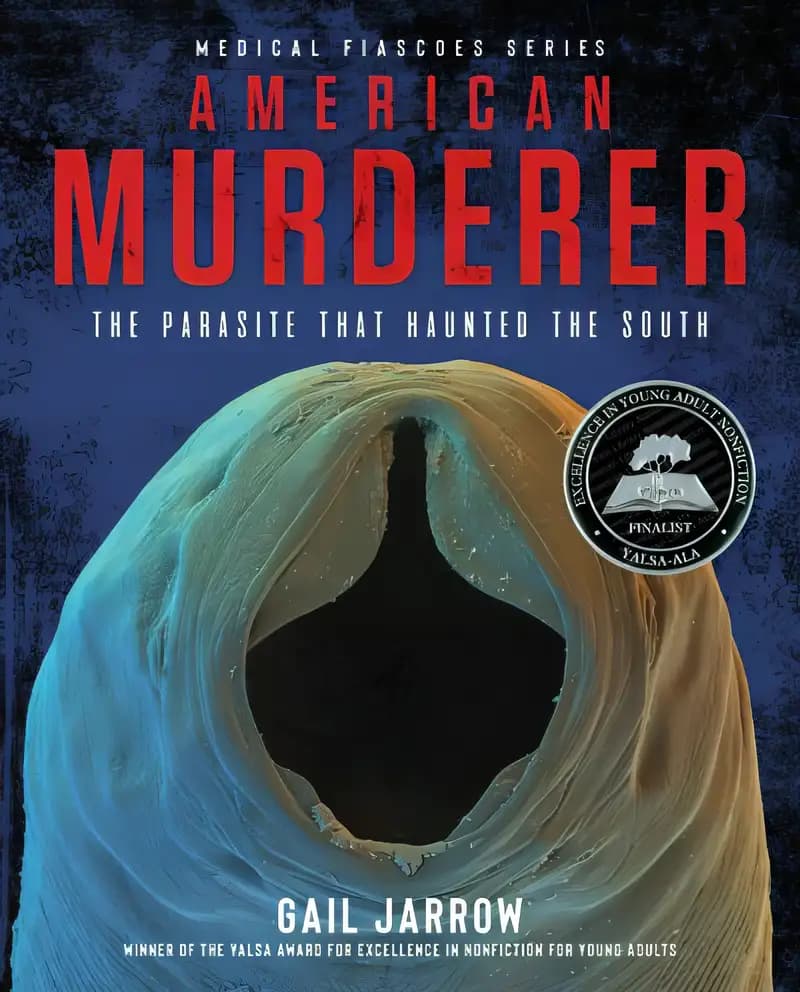
American Murderer: The Parasite that Haunted the South (Medical Fiascoes)
#3 in Medical Fiascoes Series
on Goodreads (502)
What’s inside...
Included on NPR's 2022 'Books We Love' List and a finalist for the 2023 YALSA Award for Excellence in Nonfiction, this ALSC Notable Children's Book delves into the medical mystery of hookworms, the 'American Murderer,' in the American South during the 19th and early 20th centuries. Part of Gail Jarrow's Medical Fiascoes series, the book explores how these bloodsucking parasites entered bodies through bare feet and wreaked havoc on health, leading to widespread fatigue and illness. Zoologist Charles Stiles, working with one of the initial public health organizations, discovered the true cause and helped curb the epidemic by promoting the use of shoes and sanitation practices. Hookworm remains a global health issue, making this historical account both relevant and intriguing for readers interested in medicine, science, and history.
Discussion points
How do you think the community's response to the parasite affected the spread of the disease?
What impact did the medical advancements mentioned in the book have on society at that time?
Why is it important for scientists and doctors to work together during a medical crisis?
What emotions do you think people felt during this epidemic and why?
How can we apply the lessons learned from this historical event to today's public health issues?
Tip: Role play these questions
Encourage your child to think critically about the connection between history and science by discussing the societal impacts of medical crises. Use the questions to explore the emotional and ethical dimensions of the events described in the book. Highlight the importance of teamwork in solving large-scale problems, and relate these lessons to current events to make them more relevant. Pause frequently to allow your child to form and express their opinions, fostering a deeper understanding and engagement with the book’s themes.
Key lessons
Example Lesson: The importance of scientific research
Explanation: The book details the historical battle against hookworm in the American South, highlighting how scientific research led to understanding and controlling the disease.
Real-World Application: Children can apply this lesson by developing respect and curiosity for science and research, understanding its impact on community health and safety.
Example Lesson: Responsibility in public health
Explanation: The narrative explains how public health campaigns and personal hygiene were crucial in combating the spread of hookworm.
Real-World Application: This teaches children the significance of personal responsibility in maintaining hygiene to prevent disease, promoting behaviors like handwashing and cleanliness.
Example Lesson: The value of perseverance
Explanation: The book showcases the relentless efforts of health officials and researchers who worked to eradicate hookworm despite numerous challenges.
Real-World Application: Children learn to value persistence in the face of obstacles, whether in their personal goals or collective endeavors.
Example Lesson: Awareness of historical medical practices
Explanation: By exploring past medical fiascoes and the evolution of treatments, the book offers insights into how medical practices have developed over time.
Real-World Application: This can encourage children to appreciate advancements in modern medicine and be open to learning and asking questions about medical and historical developments.
Example Lesson: Empathy for suffering
Explanation: The book conveys the hardships faced by those afflicted with the disease, which was widespread and debilitating.
Real-World Application: This narrative can foster empathy in children, helping them understand and be compassionate towards the suffering and challenges of others.