
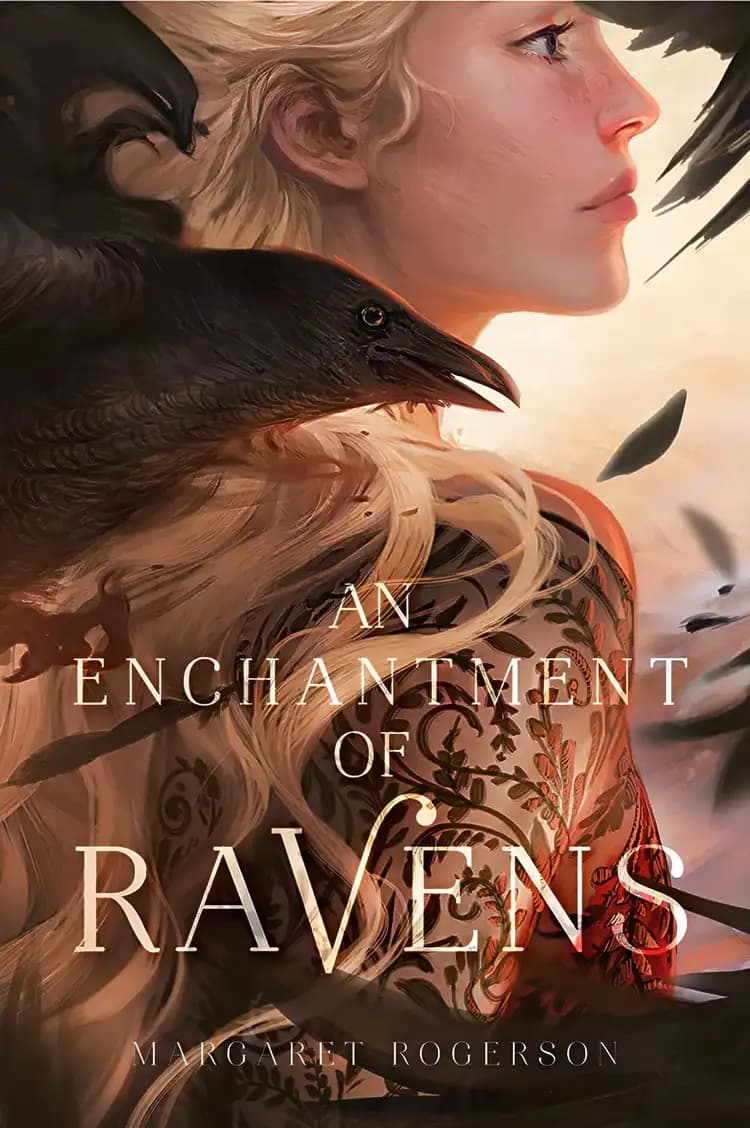
An Enchantment of Ravens
on Goodreads (102,924)
What’s inside...
Every enchantment has a price. With a flick of her paintbrush, Isobel creates stunning portraits for a dangerous set of clients: the fair folk. These immortal creatures cannot bake bread or put a pen to paper without crumbling to dust. They crave human Craft with a terrible thirst, and they trade valuable enchantments for Isobel’s paintings. But when she receives her first royal patron—Rook, the autumn prince—Isobel makes a deadly mistake. She paints mortal sorrow in his eyes, a weakness that could cost him his throne, and even his life. Furious, Rook spirits Isobel away to his kingdom to stand trial for her crime. But something is seriously amiss in his world, and they are attacked from every side. With Isobel and Rook depending upon each other for survival, their alliance blossoms into trust, perhaps even love . . . a forbidden emotion that would violate the fair folks’ ruthless laws, rendering both their lives forfeit. What force could Isobel's paintings conjure that is powerful enough to defy the ancient malice of the fairy courts? Isobel and Rook journey along a knife-edge in a lush world where beauty masks corruption and the cost of survival might be more frightening than death itself.
Age
13-14
Length
304 pages
Text complexity
Character compass
Isobel
Rook
Gadfly
Discussion points
What do you think about the idea of artists creating portraits for the fair folk in exchange for enchantments? How would you feel if you were in that situation?
Isabella and Rook's journey takes them through various magical lands. Which part of their adventure did you find most exciting or intriguing?
How do the characters in the book show courage and creativity? Can you think of a time when you showed courage like Isabella?
Rook faces a significant transformation throughout the story. How do you think he changes and what causes these changes?
What did you learn about the power of art and its value from Isabella's experiences?
Tip: Role play these questions
Encourage your child to express their thoughts and feelings about the book by asking them which character they relate to the most and why.
Explore the themes of the book together by discussing the moral choices the characters make and what your child would have done in their place.
Link discussions to your child's life by asking them to draw parallels between the book's events and their personal experiences or challenges.
Prompt your child to think about the artistic elements of the story, such as the vivid descriptions of magical realms, and ask what visuals stood out to them the most.
Foster empathy by discussing the different perspectives and emotions of characters in the story and asking your child how they think each character felt during key moments.
Key lessons
Example Lesson: Understanding the value of self-expression and creativity
Explanation: The protagonist, Isobel, is a talented portrait artist who captures the emotions of the faerie subjects in her paintings, which is highly unusual since faeries cannot express emotions themselves. This highlights the importance and power of creative self-expression.
Real-World Application: Children can be encouraged to explore and express their own emotions and ideas through various forms of art, be it drawing, painting, or writing, fostering their emotional intelligence and creative skills.
Example Lesson: Recognizing the importance of honesty
Explanation: In the story, Isobel's honesty in portraying the faeries as they truly are, including their flaws, leads to significant consequences but also brings about genuine relationships. This teaches the value of being truthful.
Real-World Application: Children learn that honesty is essential in building trust and forming strong, authentic relationships. Teaching them to be honest in their dealings ensures they develop integrity.
Example Lesson: Understanding the consequences of decisions
Explanation: Isobel makes a pivotal decision that affects not just her fate but also that of the faerie prince, Rook. This aspect of the story emphasizes the impact and consequences that personal choices can have.
Real-World Application: Teaching children that their choices have consequences that affect them and others, helps them develop a sense of responsibility and consideration for the impact of their actions.
Example Lesson: The importance of bravery and resilience
Explanation: Throughout the book, Isobel faces numerous challenges and dangers but her resilience and courage in the face of adversity are apparent. She stands firm in her values and fights for what she believes is right.
Real-World Application: Encouraging children to stand up for what they believe in and to face challenges with courage can be pivotal in their development into confident and resilient individuals.
Example Lesson: Appreciating the beauty and complexity of nature
Explanation: The vivid descriptions of the landscapes and environments in the faerie world highlight the beauty and complexity of nature and its ecosystems.
Real-World Application: Children can be encouraged to explore and appreciate the natural world around them, promoting a sense of environmental responsibility and a lifelong love for nature.