
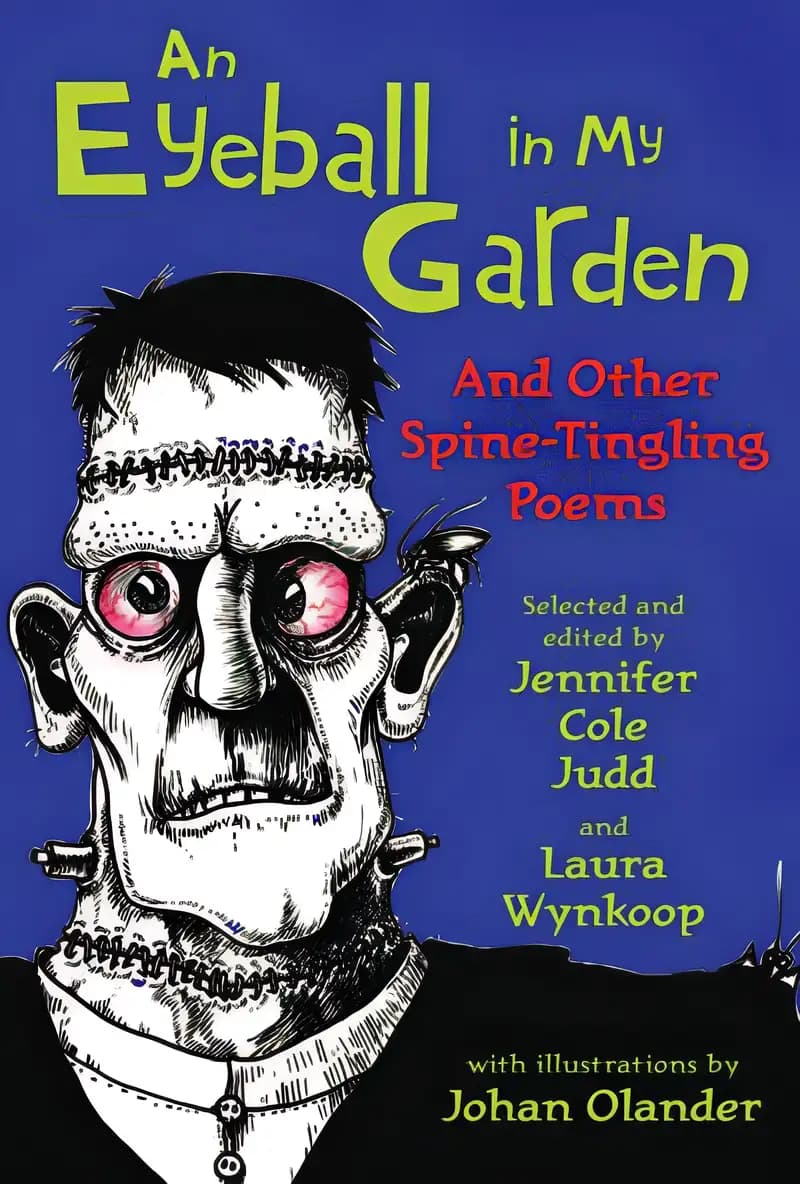
An Eyeball in My Garden: And Other Spine-Tingling Poems
What’s inside...
This haunted sonnet presents a collection of eerie and spooky tales, featuring a variety of creepy creatures such as spiders, mummies, and the Boogeyman. With a mix of terror and humor, readers are drawn into a shadowy world where nightmares lurk and surprises await on every page, casting a spell on those who dare to read it.
Age
8-12
Length
64 pages
Text complexity
Discussion points
What feelings did you experience while reading these spine-tingling poems? Did any poem make you feel particularly brave or scared?
Which poem was your favorite and why? What images or characters stood out to you in that poem?
If you could create a spooky creature from one of the poems, what would it look like and what powers would it have?
How do the illustrations enhance the mood of the poems? Can you describe how the pictures make the stories come alive?
If you could write your own spine-tingling poem, what would it be about? What scary or funny elements would you include?
Tip: Role play these questions
Encourage imaginative thinking by asking your child to draw their favorite creature from the book and explain why they chose it.
Use expressive reading to enhance the spooky atmosphere of the poems. Change your tone and pace to match the mood of each poem.
Discuss the emotions each poem evokes. This not only aids in emotional development but also helps your child express and manage diverse feelings.
After reading, ask your child to invent an additional verse or character to add to their favorite poem, encouraging creative thinking and storytelling.
Relate the themes of the poems to everyday situations to help your child connect the fantastical elements to real-world experiences.
Key lessons
Example Lesson: Embracing Creativity
Explanation: Through its engaging and eerie poems, 'An Eyeball in My Garden' inspires children to use their imagination and explore creative forms of expression.
Real-World Application: Children can apply this lesson by engaging in creative writing or storytelling activities, enhancing their ability to think outside the box in real-world scenarios.
Example Lesson: Understanding and Managing Fear
Explanation: The book includes spooky themes that allow children to confront and understand their fears in a safe and controlled environment.
Real-World Application: This lesson helps children face and overcome their everyday fears, such as fear of the dark or of trying new activities, by teaching them that fears can be managed and often aren’t as scary as they seem.
Example Lesson: Appreciation for Poetry and Literature
Explanation: Presenting poetry in a fun and engaging way, this book encourages an interest in literature and different forms of writing.
Real-World Application: Children learn to appreciate literary arts, which can improve their reading skills and encourage them to explore other literary works as they grow.
Example Lesson: Building Vocabulary
Explanation: The diverse range of poems introduces children to new words and phrases in a context that fosters understanding and retention.
Real-World Application: As children encounter new vocabulary, they can use these words in their daily conversations and writing, improving their language skills and confidence in communication.