
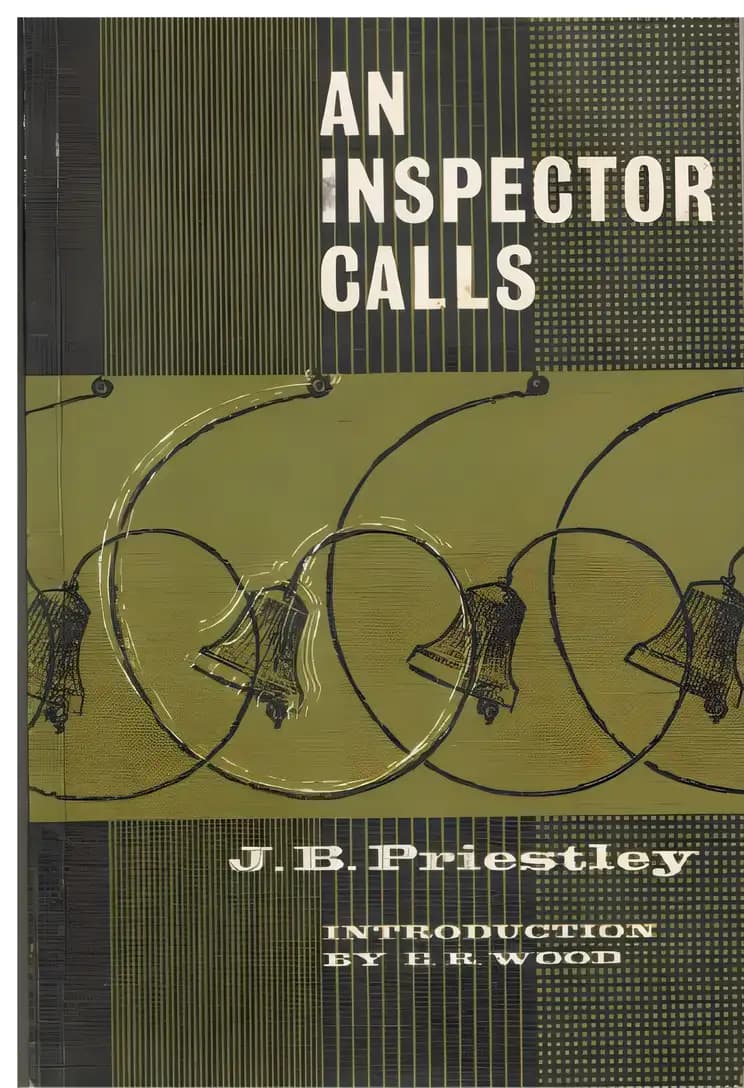
An Inspector Calls (Hereford Plays)
Hereford Plays Series
on Goodreads (42,754)
What’s inside...
One of a series presenting a wide choice of 20th-century drama. The books offer scene-by-scene analysis, structured questions and assignment suggestions for GCSE. This play is set in an English industrial city, where a young girl commits suicide and an eminently respectable British family is subject to a routine inquiry in connection with the death. An inspector calls to interrogate the family, and during the course of his questioning, all members of the group are implicated lightly or deeply in the girl's undoing. The family, closely knit and friendly at the beginning of the evening, is shown up as selfish, self-centered or cowardly, its good humor turning to acid, and good fellowship to dislike, before the evening is over. The surprising revelation, however, is in the inspector...
Series reading
Non-Sequential
Age
12-15
Length
94 pages
Text complexity
Character compass
Inspector Goole
Sheila Birling
Eric Birling
Sybil Birling
Gerald Croft
Arthur Birling
Discussion points
What do you think motivated Inspector Goole to investigate the family?
How do the characters' actions in the story affect their relationships with each other?
What lessons can we learn about responsibility and accountability from the play?
Do you think the ending of the play was fair for all the characters? Why or why not?
How might the story be different if it took place in today's world?
Tip: Role play these questions
Encourage your child to think about how each character contributes to the central theme of social responsibility.
Discuss the historical context of the play and how societal expectations have evolved since then.
Ask your child to consider alternative choices the characters could have made and predict possible outcomes.
Use the inspector's inquiries as a model to guide your child to ask probing questions about the plot and characters.
Reinforce the importance of thinking critically about the consequences of one's actions, as depicted in the play.
Key lessons
Example Lesson: Responsibility for one's actions
Explanation: The story showcases how each character's actions impact others, emphasizing the importance of personal accountability.
Real-World Application: Children can learn to think about the consequences of their actions and how they affect others around them.
Example Lesson: Empathy and understanding
Explanation: The play delves into various social issues, prompting characters (and readers) to show empathy towards people from different backgrounds.
Real-World Application: Encourages children to be more understanding and considerate towards their peers who might be facing challenges unknown to them.
Example Lesson: The significance of social responsibility
Explanation: The narrative underlines the impact of societal actions on individual lives, advocating for a more socially responsible behavior.
Real-World Application: Kids can learn the importance of contributing positively to their community and the broader society.
Example Lesson: The consequences of dishonesty
Explanation: The play reveals the negative outcomes of deceit through the characters' lives, stressing honesty.
Real-World Application: This can help children understand the value of truthfulness and the potential repercussions of lying.
Example Lesson: Importance of critical thinking
Explanation: The story challenges the audience to question the status quo and think critically about various moral dilemmas.
Real-World Application: Children are encouraged to question and analyze rather than accept things at face value, enhancing their problem-solving skills.