
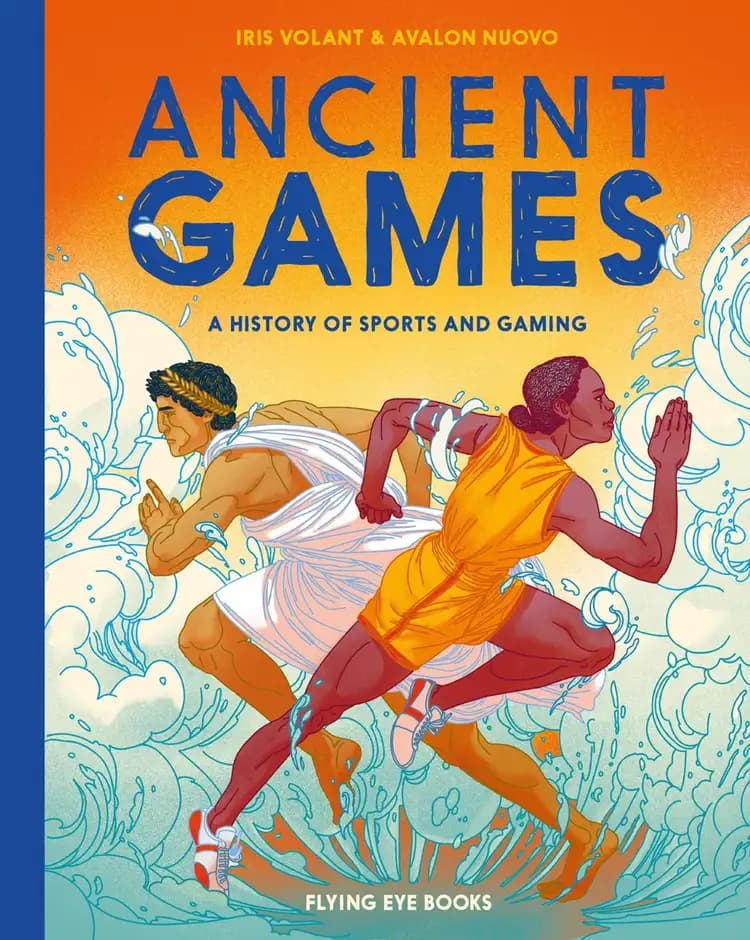
Ancient Games: A History of Sports and Gaming
What’s inside...
From the birth of the Olympics to the deadly sports of the Mayans, discover the history of various games that have entertained people for thousands of years in this richly illustrated and informative guide. Released just before the Summer 2020 Olympic Games, it provides a comprehensive introduction to the history of sports, board games, and more, catering to children who are avid fans of facts and sports. Part of The Ancients series from Flying Eye Books, this guide immerses children in the illustrated histories of significant ancient activities.
Age
8-12
Length
64 pages
Text complexity
Discussion points
What similarities do you notice between the ancient games mentioned in the book and the games you play today?
Why do you think people in ancient times played games, and how do you think it affected their communities?
If you could create your own game using inspiration from one of the ancient games you learned about, what would it look like?
How do you think games can help us learn about different cultures and their histories?
Which ancient game would you like to try playing and why?
Tip: Role play these questions
Encourage your child to compare and contrast the games they play with those discussed in the book, fostering a connection between the past and present.
Discuss the role of games in community and teamwork, emphasizing the social aspects and what we can learn from them.
Inspire creativity by having them design a game based on ancient rules or concepts, which can lead to a fun and educational project.
Use the book as a gateway to explore more about different cultures, fostering curiosity and expanding global awareness.
Ask open-ended questions to encourage deeper thinking and to understand what aspects of the book they found the most interesting or surprising.
Key lessons
Example Lesson: Teamwork and collaboration
Explanation: The book details various ancient games that required teams to work together to achieve victory, emphasizing the importance of cooperation.
Real-World Application: Children can apply these principles during group activities at school or in sports, learning to collaborate with others to reach common goals.
Example Lesson: Respect for rules and fairness
Explanation: The narrative covers the integral role of rules in ancient sports, teaching readers about the value of fairness and abiding by guidelines.
Real-World Application: Kids can integrate this lesson in their everyday play by ensuring they follow the rules of the games they play and respect others' turns and rights.
Example Lesson: Cultural appreciation
Explanation: By exploring the origins and customs of sports from various civilizations, the book exposes young readers to multiple cultures and the rich histories behind commonly played games.
Real-World Application: This broadens children's horizons and fosters a sense of appreciation and respect for diverse cultures they encounter in school and in their communities.
Example Lesson: Competitive spirit and sportsmanship
Explanation: Children learn about the balance between competing to win and demonstrating good sportsmanship, both highlighted in ancient sporting anecdotes.
Real-World Application: This lesson is applicable in competitive situations where children learn to strive for success while also respecting their competitors and handling both victory and defeat graciously.
Example Lesson: Physical and mental health benefits of active play
Explanation: The book discusses how ancient games kept individuals physically active and mentally alert, showing the holistic benefits of engaging in sports.
Real-World Application: Encourages children to participate in physical activities which can boost their physical health and mental well-being, reducing screen time and promoting a healthy lifestyle.