
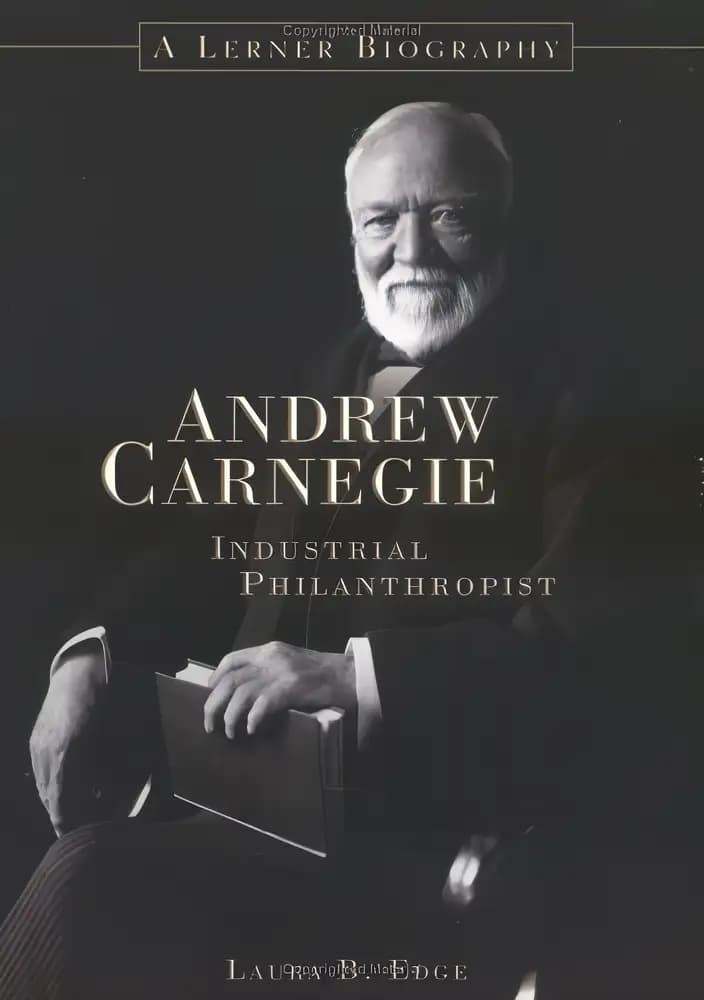
Andrew Carnegie: Industrial Philanthropist
A Lerner biography Series
on Goodreads (26)
What’s inside...
Chronicles the rags-to-riches tale of a Scottish immigrant who used most of the millions he earned as a steel tycoon to set up a fund for the advancement of science, education, and peace.
Series reading
Non-Sequential
Age
10-12
Length
128 pages
Text complexity
Character compass
Andrew Carnegie
Discussion points
How did Andrew Carnegie's early life influence his later actions as a philanthropist?
What are some ways Andrew Carnegie contributed to society with his wealth?
Why do you think it's important for wealthy individuals to give back to the community?
Can you think of a modern-day philanthropist who reminds you of Andrew Carnegie?
How can we apply Carnegie's principles of philanthropy in our daily lives?
Tip: Role play these questions
Encourage your child to think critically about the concept of philanthropy by relating it to their own experiences of sharing and caring. Discuss the impact of giving on both the giver and the receiver. Highlight the historical context of Carnegie’s era to help them understand the different challenges and opportunities compared to today. Use current examples of philanthropy to make the discussion more relevant and relatable. Ask open-ended questions to invite deeper thinking and personal reflection.
Key lessons
Example Lesson: Importance of Generosity
Explanation: The story highlights Andrew Carnegie's philanthropic endeavors, showcasing how he used his wealth to fund libraries and educational initiatives.
Real-World Application: Children can learn to value sharing and giving back to their community, understanding that even small acts of kindness can make a big difference.
Example Lesson: Value of Education
Explanation: Andrew Carnegie's commitment to building libraries reveals his belief in education as a tool for empowerment and success.
Real-World Application: This can motivate children to take their education seriously and appreciate their access to learning resources, inspiring them to pursue knowledge persistently.
Example Lesson: Perseverance
Explanation: Carnegie's journey from a poor immigrant to a successful industrialist is a testament to his perseverance in the face of challenges.
Real-World Application: Children can learn the importance of persistence and hard work in achieving goals, helping them to overcome obstacles in their own lives.
Example Lesson: Responsibility of Wealth
Explanation: The book illustrates Carnegie’s belief that the wealthy have a moral obligation to use their resources for the greater good.
Real-World Application: This lesson can teach children about ethical responsibility and the impact of responsible decision-making on society at large.