
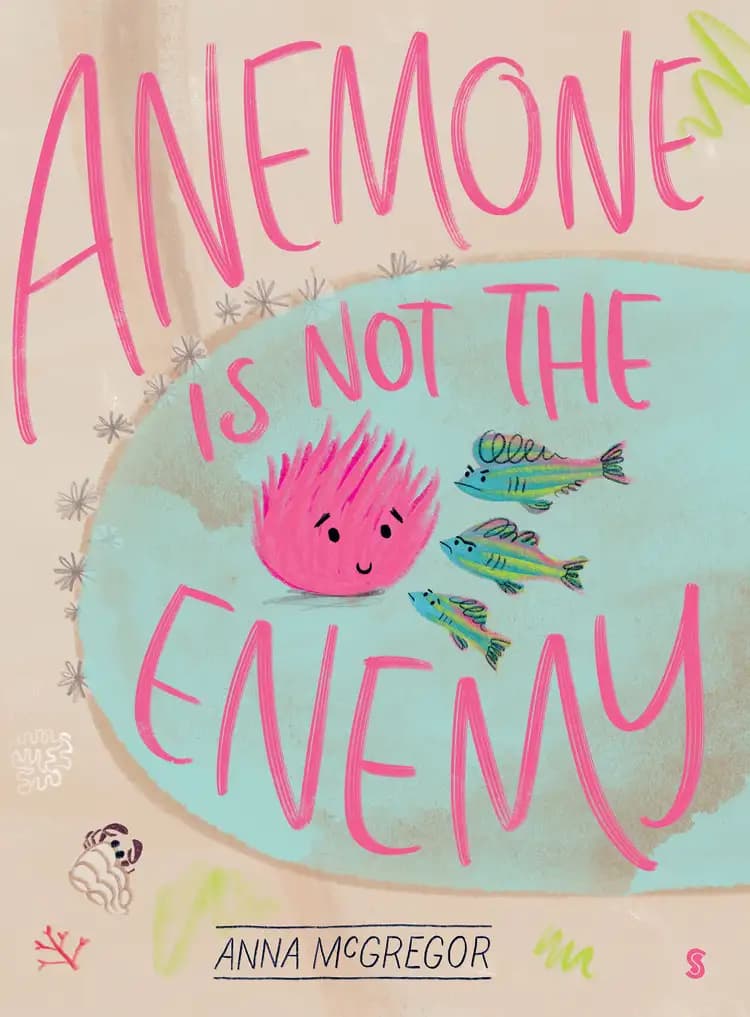
Anemone Is Not The Enemy
on Goodreads (209)
What’s inside...
Anemone lives alone in the rock pool. The tide comes in and the tide goes out. All Anemone wants is a friend, but friends are hard to make when you accidentally sting everyone who comes near you. Perhaps Clownfish has a solution to the problem ...
Age
4-5
Length
32 pages
Text complexity
Character compass
Anemone
Clownfish
Discussion points
What do you think Anemone feels when others are scared of her? How would you feel in her place?
Can you think of a time when you misunderstood someone's intentions? What happened?
What does this story teach us about friendship and misunderstandings?
How did Anemone try to solve her problem? What would you have done differently?
Why is it important to communicate clearly with others? Can you give an example?
Tip: Role play these questions
Start the conversation by asking your child to describe the characters and the setting, helping them recall and verbalize the story details.
Encourage your child to express their feelings about the characters' predicaments and ask them to relate those situations to their own experiences.
Highlight the moral of the story by discussing Anemone's situation and the importance of understanding and communication in resolving conflicts.
Use follow-up questions like 'What do you think happens next?' to stimulate your child’s imagination and predict outcomes, fostering critical thinking.
Acknowledge your child’s responses with attentive listening and affirmative nods or words to create a supportive environment that encourages them to share more.
Key lessons
Example Lesson: Empathy and Understanding Others
Explanation: The story features Anemone, who is misunderstood by other sea creatures because they get stung when they touch her. This narrative helps children grasp the concept of seeing things from others' perspectives.
Real-World Application: Children can learn to be more considerate and understanding when interacting with peers who may seem different or difficult at first.
Example Lesson: Problem-Solving
Explanation: Anemone tries different methods to avoid hurting her friends, showcasing persistence and creative problem-solving.
Real-World Application: This encourages children to think creatively and persistently when faced with their own challenges, whether at school or at home.
Example Lesson: Importance of Communication
Explanation: Throughout the book, Anemone and other characters learn the importance of communicating clearly to solve misunderstandings.
Real-World Application: Children learn the value of discussing their problems and expressing their feelings to others clearly and respectfully.
Example Lesson: Accepting Differences
Explanation: Anemone is eventually accepted and understood by her friends despite her differences, emphasizing inclusivity and acceptance.
Real-World Application: Promotes the importance of accepting and celebrating individual differences among friends and classmates.
Example Lesson: Resilience
Explanation: Despite the setbacks, Anemone remains hopeful and continues to seek solutions, which demonstrates resilience.
Real-World Application: Teaches children the value of resilience and not giving up when facing their own adversities.