
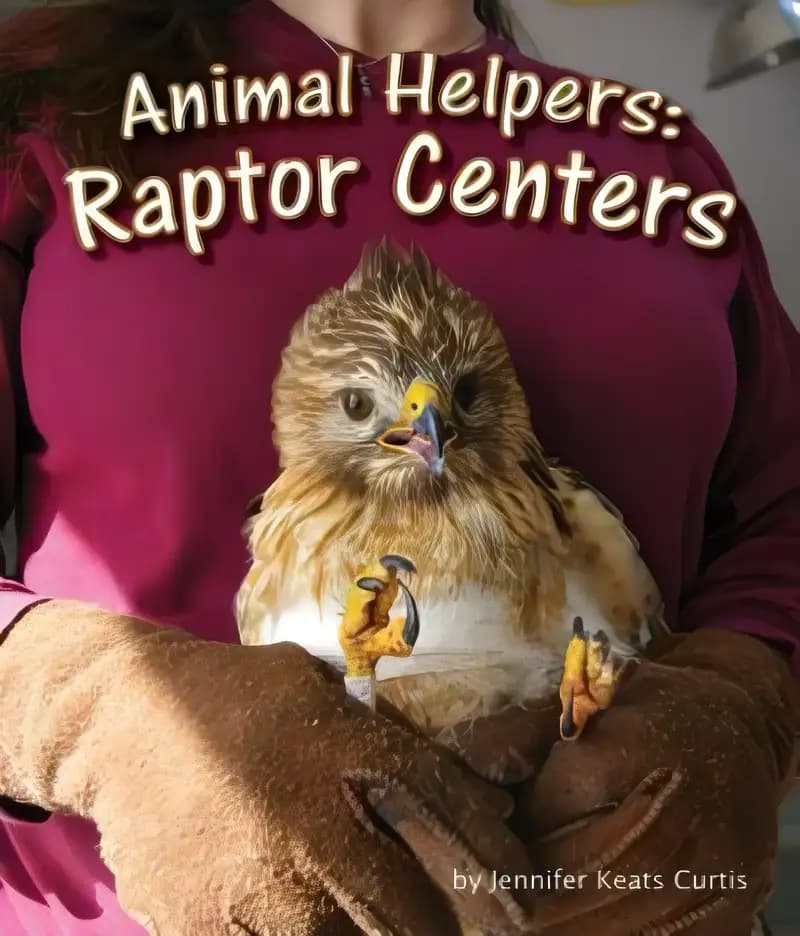
Animal Helpers: Raptor Centers
on Goodreads (19)
What’s inside...
Even powerful birds of prey can get sick or hurt. When that happens, animal helpers at raptor centers come to the rescue! Dedicated staff treats injured, sick, and orphaned animals. They return the birds to their native environment or find forever homes at education and raptor centers for those that can't survive in the wild. Follow along in this photographic journal as staff and volunteers come together to care for these remarkable birds.
Why read this book
- Explores fascinating world of raptor rehabilitation.
- Educates on wildlife conservation and ecosystem importance.
- Encourages empathy towards animals and nature.
- Engaging content for aspiring young environmentalists.
Age
8-12
Length
32 pages
Text complexity
Discussion points
Why do you think raptors need special centers to help them?
How do the workers at the raptor centers care for the injured birds?
What have you learned about the different types of raptors mentioned in the book?
Can you think of ways we can help protect raptors in our environment?
What feelings did you experience while reading about the raptors' journeys to recovery?
Tip: Role play these questions
Encourage your child to reflect on the importance of wildlife conservation and how centers play a crucial role.
Ask your child to describe their favorite raptor from the book and discuss its unique characteristics.
Discuss the teamwork involved in a raptor center and relate it to teamwork in your child's life, such as family or school projects.
Use the book's illustrations to engage younger children, pointing out colors, shapes, and actions depicted.
After reading, encourage your child to draw a picture of a raptor or write a short story about what they think a day in a raptor center looks like.
Key lessons
Example Lesson: Empathy and Compassion
Explanation: The book highlights how raptor centers care for injured birds, showcasing the dedication and empathy of the workers.
Real-World Application: Children learn the importance of caring for and empathizing with all living creatures, fostering a nurturing attitude towards animals in their daily interactions.
Example Lesson: Responsibility towards wildlife conservation
Explanation: Through its narrative, the book educates about the role of raptors in the ecosystem and the impact of human activities on wildlife.
Real-World Application: This lesson encourages children to be more environmentally conscious and responsible, promoting activities like recycling or participating in local conservation projects.
Example Lesson: The value of teamwork
Explanation: The book depicts various professionals working together at the raptor center to rehabilitate the birds.
Real-World Application: Children can apply this by collaborating with peers in group tasks at school or in community projects, understanding that teamwork can achieve greater outcomes.
Example Lesson: Scientific curiosity and learning
Explanation: Readers are introduced to the science behind caring for raptors and the medical attention they require.
Real-World Application: This can inspire children to explore science-related activities or studies, increasing their interest in biology and environmental science.
Example Lesson: Problem-solving skills
Explanation: The book presents various challenges faced by the raptor centers, such as treating injuries and ensuring successful releases back into the wild.
Real-World Application: This encourages children to think critically and develop problem-solving skills, which they can use in overcoming challenges in their own lives.