
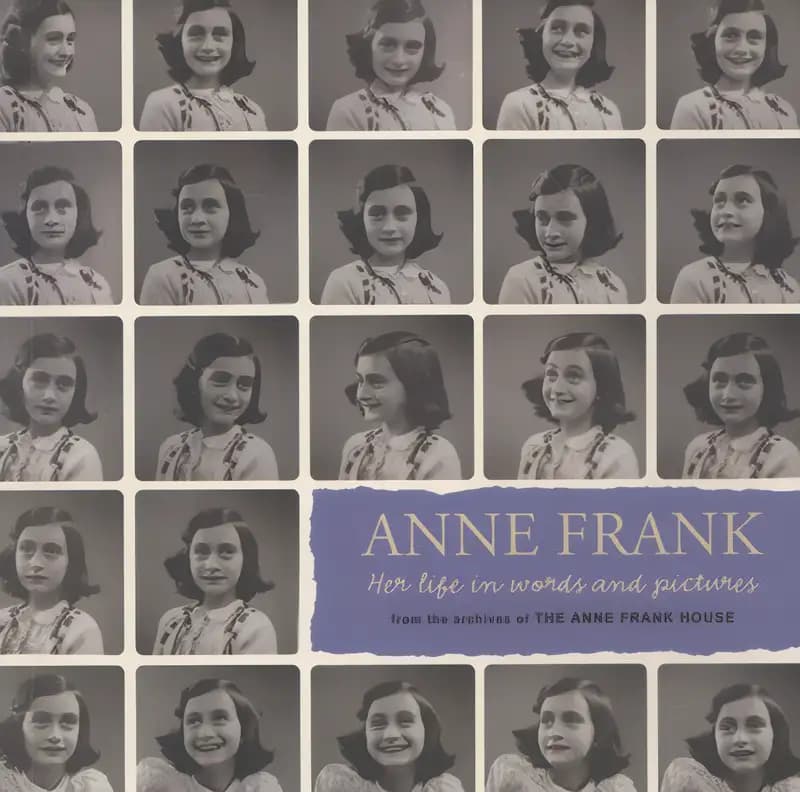
Anne Frank: Her life in words and pictures from the archives of The Anne Frank House
on Goodreads (2,358)
What’s inside...
Anne Frank: Her Life in Words and Pictures from the Archives of The Anne Frank House, by Menno Metselaar, is a poignant book that provides a detailed account of Anne Frank's life. Through a combination of narrative, excerpts from Anne's famous diary, and historical photographs from the archives of The Anne Frank House, the book paints a vivid picture of the young Jewish girl who became an icon of the Holocaust. It covers her early years in Frankfurt, the family's move to Amsterdam to escape Nazi persecution, their life in hiding in the Secret Annex, and the tragic end of Anne and her family's lives in concentration camps. The book also includes reflections on Anne's legacy and the impact of her diary on the world, serving as a powerful reminder of the human cost of war and discrimination.
Age
9-12
Length
216 pages
Text complexity
Character compass
Anne Frank
Miep Gies
Auguste Van Pels
Margot Frank
Edith Frank
Fritz Pfeffer
Peter Van Pels
Hermann Van Pels
Otto Frank
Discussion points
What feelings did you experience while reading about Anne Frank's life?
How do you think Anne's experiences during the war might have shaped her views and feelings?
Why is it important to remember and discuss stories like Anne Frank's today?
If you were in Anne’s situation, what would you have done similarly or differently?
What can Anne's story teach us about courage and hope?
Tip: Role play these questions
Encourage empathy by asking your child to imagine themselves in Anne's place, discussing how they might feel in similar situations.
Highlight the historical context of Anne Frank's life, explaining the challenges she faced in a way that's appropriate to the child’s age. This helps deepen their understanding of the story.
Connect discussions of the book to current events or personal experiences to make the themes more relevant and relatable.
Acknowledge difficult emotions that may arise and provide a safe space for your child to express their thoughts and feelings about the story's heavier elements.
Praise your child’s insights and responses to encourage an ongoing dialogue about the book’s themes of resilience and hope.
Key lessons
Example Lesson: Empathy and understanding
Explanation: Through Anne's personal reflections and experiences, children see the world through her eyes, understanding the hardships and fears she faced.
Real-World Application: Children can apply empathy by considering how their classmates might feel in difficult situations and offering friendship and support.
Example Lesson: Resilience in adversity
Explanation: Anne's ability to maintain hope and spirit during the harsh conditions of hiding encourages resilience.
Real-World Application: This can inspire children to remain positive and persistent despite challenges in their own lives, such as tackling tough school subjects or resolving conflicts with peers.
Example Lesson: Importance of self-expression
Explanation: Anne's diary serves as a powerful example of how writing can serve as an outlet for processing emotions and experiences.
Real-World Application: Children can be encouraged to keep journals or engage in creative writing to express their feelings and thoughts, enhancing their emotional and mental well-being.
Example Lesson: The impact of history on individuals
Explanation: The book provides a personal perspective on the broader historical events of World War II, showing how these events deeply affected individuals and families.
Real-World Application: This lesson can help children understand the significance of history and its effects on real people, thereby fostering a deeper interest in learning history at school and understanding current events.
Example Lesson: The power of perspective
Explanation: Through Anne's detailed observations, readers learn to see situations from multiple viewpoints.
Real-World Application: This lesson can encourage children to consider different perspectives before making decisions or forming opinions, promoting open-mindedness and critical thinking.