
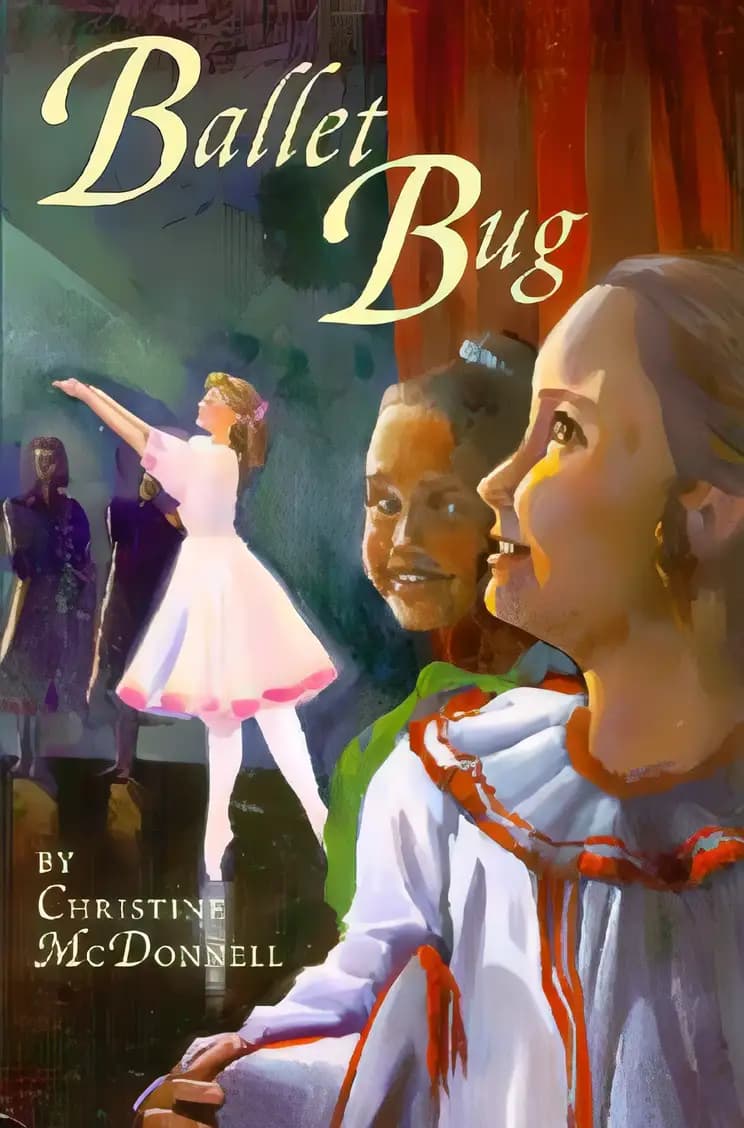
Ballet Bug
What’s inside...
When Bea becomes interested in ballet, she starts taking classes, auditions for The Nutcracker, and makes a new best friend, but also must cope with some nasty classmates and a possible conflict between playing hockey and dancing. With the help of her friend Margaret, Bea is able to fulfill her dreams of becoming a ballerina as she signs on for lessons, learns all the steps, and successfully wins the role as the star performer in the Nutcracker. Reprint.
Age
8-12
Length
96 pages
Text complexity
Discussion points
How did the story of the Ballet Bug make you feel?
What did you learn about ballet and determination from the book?
Who was your favorite character, and why?
If you were a character in the book, what would you have done differently?
What does this story teach us about following our passions?
Tip: Role play these questions
Before starting the book, discuss with your child what they already know about ballet or any other form of dance.
Pause at climactic points to predict what might happen next, encouraging critical thinking.
Emphasize the perseverance shown by the characters, relating it to a scenario in your child’s life to solidify understanding.
After reading, encourage your child to express which parts of the story they connected with the most and why.
Consider exploring more about ballet together, maybe even attending a ballet performance to deepen their appreciation and understanding of this art form.
Key lessons
Example Lesson: Perseverance
Explanation: In 'Ballet Bug', the protagonist faces challenges in learning dance steps but continues to practice tirelessly.
Real-World Application: Children learn the importance of persisting through difficulties to achieve their goals, helpful in academics and personal hobbies.
Example Lesson: Creativity
Explanation: The main character uses imaginative solutions to improve her dancing skills.
Real-World Application: Encourages children to think creatively in problem-solving situations at school or in play.
Example Lesson: Teamwork
Explanation: Throughout the book, the characters work together during rehearsals and performances, showcasing effective collaboration.
Real-World Application: Teaches children the value of cooperation and working harmoniously in group settings like sports or school projects.
Example Lesson: Self-expression
Explanation: The book shows characters expressing themselves through dance, highlighting the importance of arts in personal expression.
Real-World Application: Children learn to explore and express their feelings and thoughts through artistic pursuits, enhancing emotional intelligence.
Example Lesson: Resilience
Explanation: Facing initial setbacks in ballet, the characters learn to bounce back and improve.
Real-World Application: Helps children understand that setbacks are part of learning processes and that resilience is key to overcoming them.