
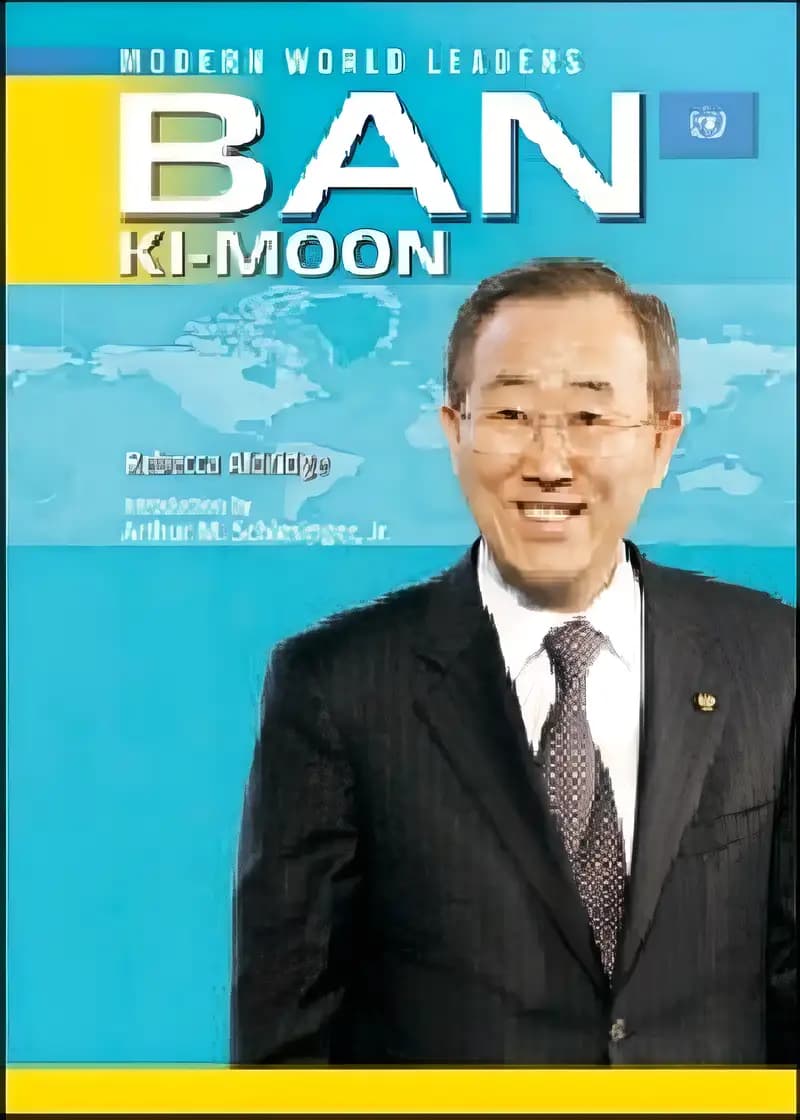
Ban Ki-Moon: United Nations Secretary-General (Modern World Leaders)
World leaders Series
on Goodreads (10)
What’s inside...
As a child in South Korea, Ban Ki-moon wrote a letter to the U.N. secretary-general regarding the Hungarian uprising against Russia. A few years later in the United States, he met President John F. Kennedy. From then on, Ban desired to work for peace, an aspiration that led him to become South Korea's foreign minister in 2004, at a time when tensions between North Korea and its neighbors were heated. Two years later, he ascended to the position of U.N. secretary-general. Ban has worked to show the benefits of diplomatic approaches in solving conflict, and has called for the world's citizens to change their habits to curb global warming. To restore people's trust in the battered organization, he has set standards for other U.N. staff. In Ban Ki-moon, read how his further success in these areas will attempt to keep the U.N. relevant in an increasingly complex world.
Series reading
Non-Sequential
Age
12-17
Length
128 pages
Text complexity
Character compass
Ban Ki-Moon
Discussion points
What qualities do you think made Ban Ki-Moon a good leader for the United Nations?
How can Ban Ki-Moon's efforts to address global issues inspire us to make changes in our own community?
Why is it important for countries around the world to work together, as seen in the United Nations?
What are some challenges Ban Ki-Moon faced and how did he overcome them?
If you were the Secretary-General of the United Nations, what global issue would you want to tackle first and why?
Tip: Role play these questions
Start by sharing what you understand about the United Nations and its goals to provide context before diving into discussions about Ban Ki-Moon's role.
Encourage your child to think critically about leadership by discussing what decisions they would make if they were in Ban Ki-Moon's position.
Relate the discussions to current events or issues that are relevant to your child’s world to help them connect with the material.
Praise their thoughts and inputs to motivate deeper thinking and engagement with the subject matter.
Utilize the book’s content to have a broader conversation about cultural diversity and international cooperation, emphasizing the importance of understanding and empathy.
Key lessons
Example Lesson: Leadership and Responsibility
Explanation: The book illustrates Ban Ki-Moon's role as the UN Secretary-General, showcasing his leadership in addressing global issues and promoting peace.
Real-World Application: Children can learn the importance of taking initiative and being responsible in their own lives, whether it be in school projects or family matters.
Example Lesson: Global Awareness
Explanation: Ban Ki-Moon's efforts to tackle international problems such as climate change and poverty are highlighted, helping children understand worldwide interconnectivity.
Real-World Application: This encourages children to be mindful of different cultures and global issues, fostering a sense of empathy and global citizenship.
Example Lesson: Importance of Diplomacy
Explanation: The book covers Ban Ki-Moon’s diplomatic approaches to solving conflicts, emphasizing communication and negotiation.
Real-World Application: Children can apply these principles by learning to resolve conflicts with peers through discussion and understanding, rather than confrontation.
Example Lesson: Perseverance in Adversity
Explanation: Ban Ki-Moon faced various challenges during his tenure, and his perseverance is a central theme in the book.
Real-World Application: This lesson can inspire children to persist in their efforts despite difficulties, whether in academics, sports, or personal goals.
Example Lesson: Advocacy for Human Rights
Explanation: The narrative includes Ban Ki-Moon's advocacy for human rights, showcasing his commitment to justice and equality.
Real-World Application: It teaches children the importance of standing up for what is right and advocating for the rights of others in their communities.