
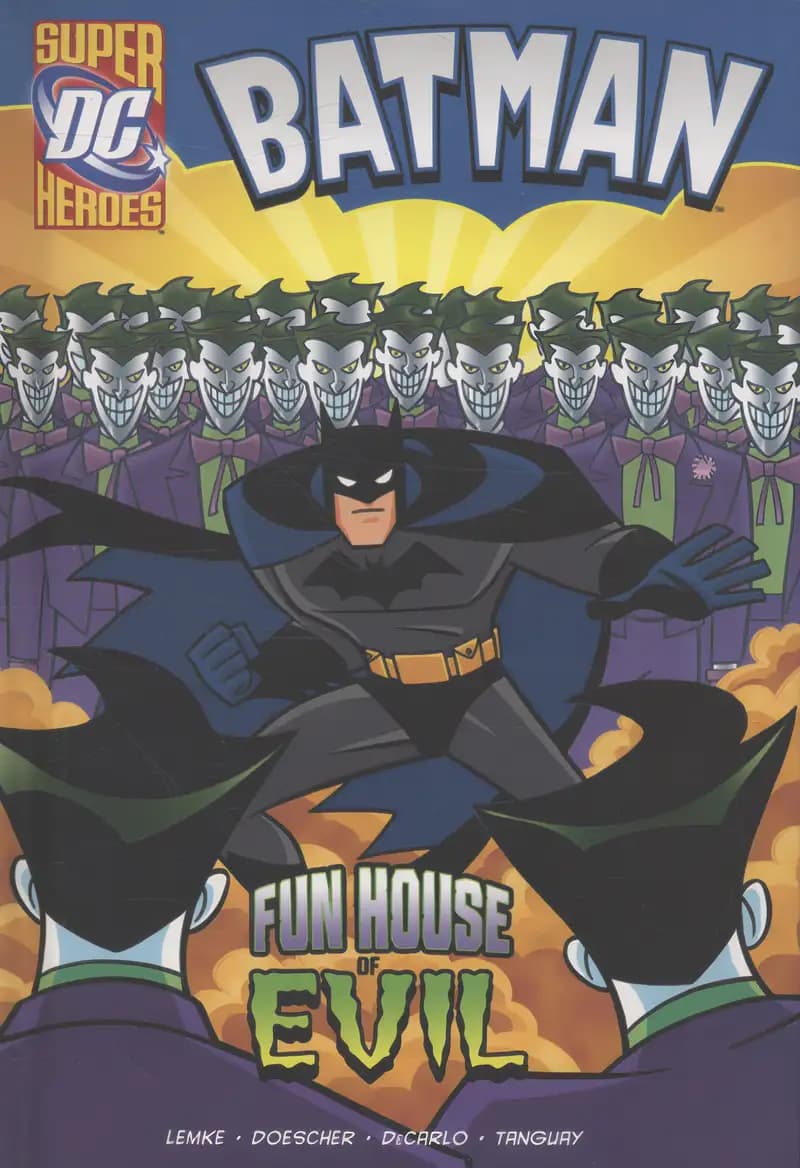
Batman: Fun House of Evil
DC Super Heroes: The Dark Knight Series
What’s inside...
Kid's favourite super hero comics have been transformed into easy-to-read chapter books featuring new stories with original art by DC illustrators. These books are colorful, attractive, and accessible for young readers. In one of the stories, the Joker escapes from prison and tricks Batman into following him into an old warehouse. The building has been remodeled into the Joker's funhouse, where Batman must dodge the Hall of Mirrors, outwit clown robots, and escape deadly amusement rides to ensure that the Joker doesn't have the last laugh.
Series reading
Non-Sequential
Age
8-11
Length
49 pages
Text complexity
Character compass
Batman
Robin
Joker
Discussion points
How do you think Batman feels when he faces challenges? What would you do if you were in his place?
What lessons can we learn about bravery and justice from Batman's actions in the story?
Why do you think the villains act the way they do? Can you think of ways they might solve their problems without causing harm?
What role do Batman's friends play in the story? How important is teamwork in solving problems?
Tip: Role play these questions
While discussing the story, emphasize the values of courage and righteousness displayed by Batman. Relate these to everyday situations your child might encounter.
Ask your child to predict what might happen next at crucial plot points to enhance their analytical thinking.
Encourage your child to express what they would have done differently if they were a character in the book, fostering a sense of empathy and decision-making.
Discuss the consequences of the villains' actions to teach the importance of good choices and the impacts of negative behavior.
Key lessons
Example Lesson: Understanding Right from Wrong
Explanation: In 'Batman: Fun House of Evil', Batman consistently chooses to do what is right, despite the many challenges and temptations posed by his adversaries. This portrayal helps instill a sense of morality.
Real-World Application: Children learn to make ethical decisions in their daily interactions with peers, choosing kindness and fairness over deceit and malice.
Example Lesson: Importance of Courage and Resilience
Explanation: Facing various villains, Batman displays courage and resilience, never giving up despite setbacks. This highlights the importance of perseverance.
Real-World Application: Kids are encouraged to exhibit resilience in the face of challenges at school or during social activities, understanding that perseverance often leads to success.
Example Lesson: Value of Intelligence and Preparedness
Explanation: Batman uses his intellect and gadgets to strategize against enemies, showcasing the power of preparation and intelligence.
Real-World Application: This teaches children the importance of studying and being prepared, whether it's for a school test or a sports match.
Example Lesson: Teamwork and Trust
Explanation: Throughout the story, Batman often relies on his allies for support and assistance, emphasizing the value of teamwork and trust in achieving common goals.
Real-World Application: Children learn to work cooperatively in group settings and trust in the abilities and contributions of others, whether in class projects or team sports.
Example Lesson: Consequences of Actions
Explanation: The repercussions faced by the villains in the story exemplify that negative actions have consequences, reinforcing accountability.
Real-World Application: This lesson helps children understand that their actions impact others and teaches them to think about the consequences before acting.