
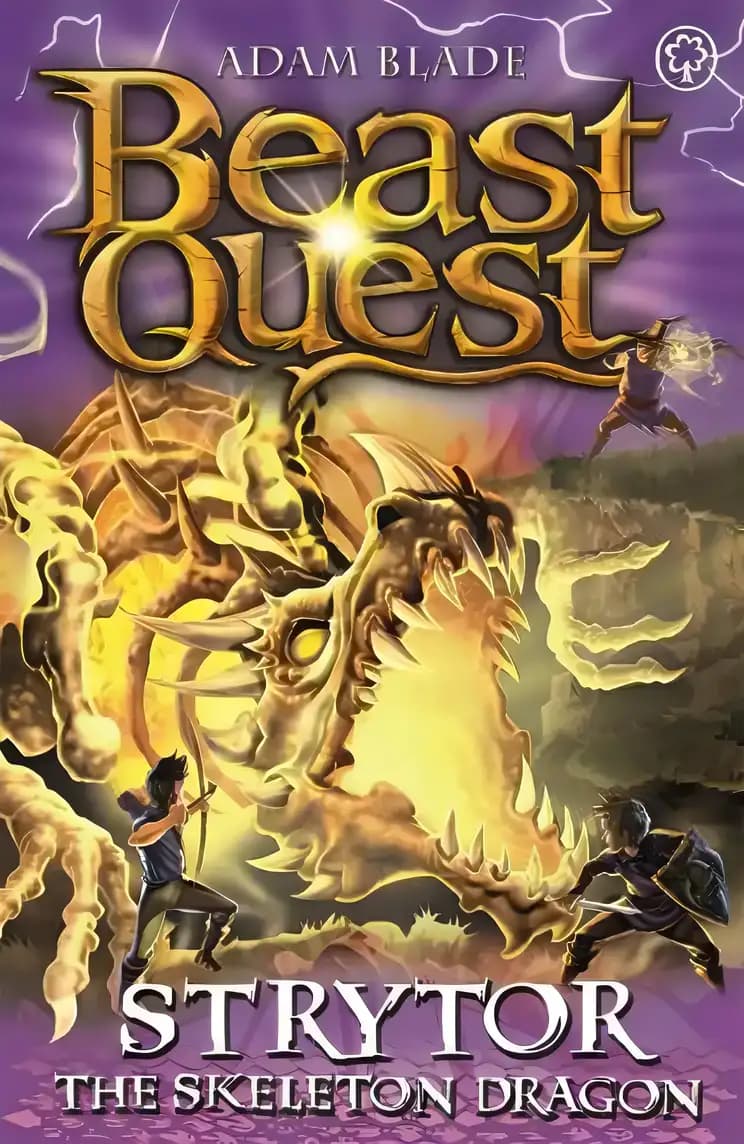
Beast Quest: Strytor the Skeleton Dragon
#102 in Beast Quest: New Blood Series
on Goodreads (60)
What’s inside...
In 'Beast Quest: Strytor the Skeleton Dragon,' Tom and his companion Elenna embark on a daring quest to defeat the menacing Strytor, a skeleton dragon guarding the Well of Power in Avantia. Alongside their magical beasts, they face numerous dangers and puzzles, ultimately confronting Strytor in an epic battle. With bravery and clever thinking, they strive to prevent the evil wizard Jezrin from becoming invincible, aiming to restore peace to the kingdom. The story combines action, fantasy, and lessons about bravery and friendship, and is part of a thrilling series recommended for young readers aged 7 and up.
Character compass
Tom
Elenna
Strytor The Skeleton Dragon
Discussion points
How did Tom’s bravery help him face the challenges posed by Strytor the Skeleton Dragon?
What would you have done differently if you were in Tom’s place during his adventures?
How do you think friendship and teamwork played a role in this story?
How do the different characters in the book show courage or fear?
What lessons can we take from Tom’s journey to apply in our own lives?
Tip: Role play these questions
Encourage your child to imagine themselves in the fantasy world of Avantia, stimulating creative thinking.
Discuss the moral challenges faced by the characters, linking them to everyday situations your child might encounter.
Use the vivid descriptions in the book to enhance your child's descriptive vocabulary.
Point out the problem-solving strategies used throughout the book, engaging in a conversation about critical thinking.
Share your own interpretations of the story’s themes to foster a deeper family connection and understanding.
Key lessons
Example Lesson: Courage in the face of adversity
Explanation: In 'Beast Quest: Strytor the Skeleton Dragon,' the protagonist demonstrates bravery by confronting challenges despite feeling fearful, showing that courage isn't about the absence of fear, but about acting in spite of it.
Real-World Application: Children can apply this when facing their own challenges, such as trying new activities or standing up for what is right, even when they are scared.
Example Lesson: The importance of perseverance
Explanation: Throughout the story, characters persist in their quest regardless of setbacks, emphasizing the value of perseverance towards achieving goals.
Real-World Application: This teaches children the significance of continuing efforts in their studies, hobbies, or relationships, even when progress seems slow or difficult.
Example Lesson: Teamwork and collaboration
Explanation: The characters often rely on teamwork to overcome obstacles, highlighting how collaboration can lead to success where going it alone might not.
Real-World Application: Children can learn to work cooperatively in group settings like school projects or sports, understanding that combining strengths with others can lead to greater achievements.
Example Lesson: Problem-solving skills
Explanation: As the characters encounter various challenges, they must think critically and creatively to find solutions, which showcases effective problem-solving.
Real-World Application: This encourages children to apply critical thinking in their daily life decisions and in solving academic or personal problems.
Example Lesson: Empathy and understanding
Explanation: Encounters with diverse characters and creatures teach the protagonist to understand different perspectives and show empathy, crucial for personal and social development.
Real-World Application: This lesson can help children appreciate the feelings and viewpoints of others in their community, fostering a more inclusive and supportive environment.