
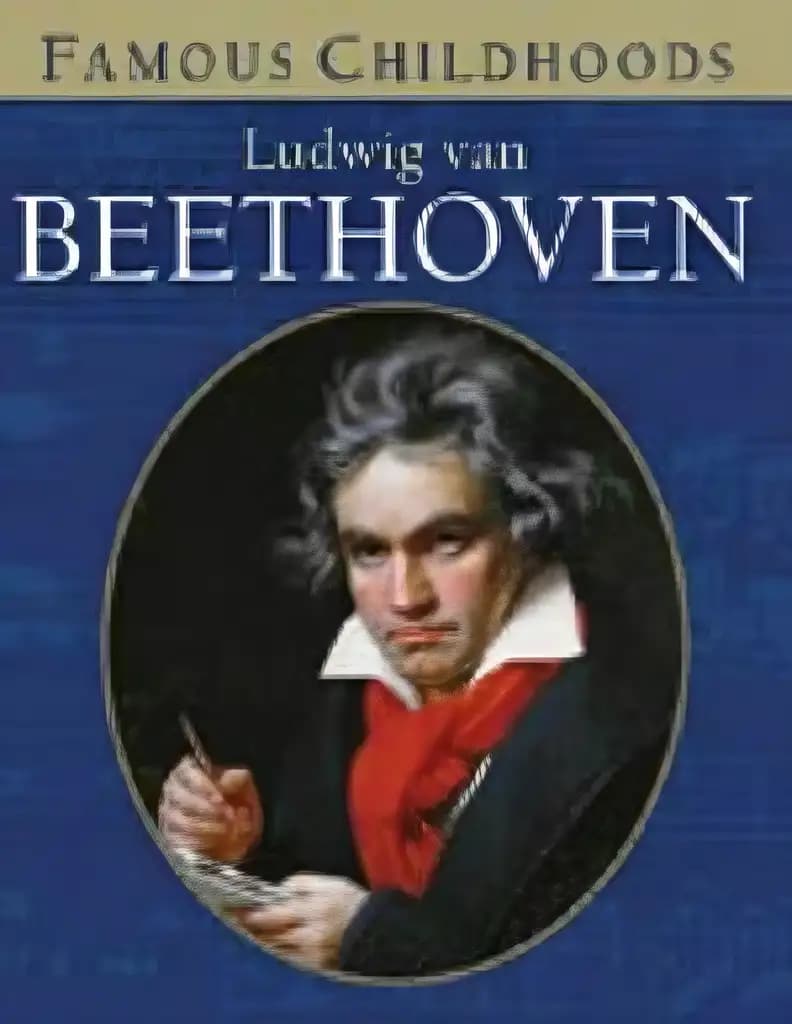
Beethoven
Famous childhoods Series
on Goodreads (1)
What’s inside...
This series explores the childhoods of celebrated composers like Mozart and Beethoven. It follows their careers from early musical works to their accomplished yet impoverished adult years. Features include a table of contents, glossary, and index.
Series reading
Non-Sequential
Age
4-5
Length
32 pages
Text complexity
Discussion points
What do you think made Beethoven continue to create music even when he faced challenges?
How do you feel when you listen to music? Does it change your mood or inspire you in any way?
Beethoven was a revolutionary artist in his time. What does it mean to be revolutionary, and can you think of someone today who you would consider revolutionary?
What qualities did Beethoven have that you admire or find interesting?
Tip: Role play these questions
Create a listening experience by playing some of Beethoven's compositions before or after reading the book to make the connection between his life and his work tangible. Ask your child how the music makes them feel and relate those feelings back to the stories of Beethoven’s life challenges and achievements discussed in the book. Encourage them to express their thoughts and feelings about overcoming personal challenges and following their passion, drawing parallels to Beethoven’s perseverance and dedication to music.
Key lessons
Example Lesson: Perseverance through adversity
Explanation: The book portrays Beethoven's journey, highlighting his struggle with hearing loss yet continuing to compose great music.
Real-World Application: Children learn the importance of determination and continuing to pursue their interests and goals, despite challenges they might face.
Example Lesson: The power of passion
Explanation: Beethoven's unwavering dedication to music, despite his disability, shows how passion can drive one's achievements.
Real-World Application: This can inspire children to discover and engage deeply with their own interests and talents, fostering a sense of fulfillment.
Example Lesson: Creativity as a form of expression
Explanation: The book illustrates how Beethoven used music as an outlet for expression, creating emotional and influential compositions.
Real-World Application: Children learn that they can use creative outlets like art, writing, or music to express their feelings and thoughts.
Example Lesson: Appreciating diversity and overcoming stereotypes
Explanation: By learning about Beethoven's challenges and successes, children see that great contributions can come from individuals with disabilities.
Real-World Application: This encourages kids to respect and value diverse abilities and perspectives in others around them.
Example Lesson: Historical awareness and appreciation for classical music
Explanation: Through the story of Beethoven, children are introduced to historical contexts and classical music, expanding their cultural knowledge.
Real-World Application: This can inspire a lifelong appreciation for music and history, enriching children's educational background and personal growth.