
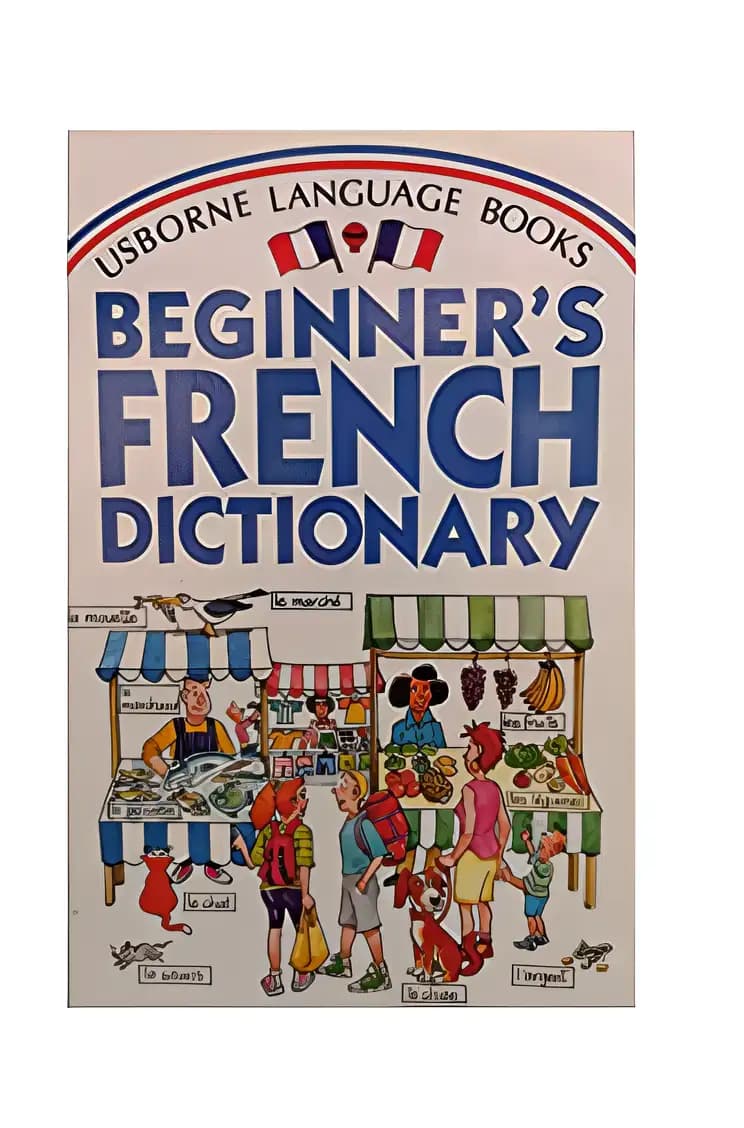
Beginner's French Dictionary
Usborne Beginners Dictionaries Series
on Goodreads (23)
What’s inside...
The 'Beginner's French Dictionary' by Helen Davies is an introductory language resource designed to help English speakers learn the basics of French vocabulary and phrases. It is structured to be accessible and user-friendly, with clear explanations and practical examples, organized thematically or alphabetically. The dictionary includes about 2,000 common words and expressions, pronunciation guides, cultural insights, and illustrations to aid in memorization. Additionally, learners can listen to native French pronunciations on the Usborne Quicklinks website, and the book includes a simple guide to French grammar and an English-French vocabulary list for easy reference.
Series reading
Non-Sequential
Age
9-12
Length
128 pages
Text complexity
Discussion points
What new French word did you learn today and what does it mean?
Can you think of a situation where you could use some of the French words we learned?
How do you think knowing these French words might help you in the future?
Which French word was the most fun to say, and why?
How do you think people feel when they can speak more than one language?
Tip: Role play these questions
Encourage your child to use the new words they learn in daily conversations, which can boost their memory and confidence in using the language.
Make learning interactive by creating flashcards of the words in the book and using them in a fun quiz format.
Share your own experiences or aspirations related to learning new languages to inspire and motivate your child.
Relate the words to familiar objects, actions, or emotions to help your child understand and remember them better.
Praise efforts, regardless of perfection, to foster a positive learning environment and encourage ongoing interest in language learning.
Key lessons
Example Lesson: Cultural Awareness
Explanation: The 'Beginner's French Dictionary' introduces young readers to French language and culture, enriching their understanding of a world beyond their immediate environment.
Real-World Application: Children will be better equipped to appreciate different cultures and engage respectfully with people from diverse backgrounds.
Example Lesson: Linguistic Skills
Explanation: Through engaging, easy-to-understand translations, children learn basic French vocabulary that forms the building block for language acquisition.
Real-World Application: Aiding communication in multilingual environments, whether in school, while traveling, or in future professional settings.
Example Lesson: Cognitive Development
Explanation: Learning a second language can enhance cognitive and memory skills in young children.
Real-World Application: This can lead to improved problem-solving skills and greater academic achievement across various subjects.
Example Lesson: Perseverance
Explanation: Mastering a new language like French requires practice and dedication. The dictionary format supports incremental learning, encouraging persistence.
Real-World Application: Children learn the value of consistent effort, which can be applied to other challenging tasks in school and life.
Example Lesson: Confidence Building
Explanation: As children grasp new words and phrases in French, they build self-confidence in their ability to learn and use foreign languages.
Real-World Application: This can motivate them to explore new learning opportunities and engage in conversations with native speakers or in classroom settings.