
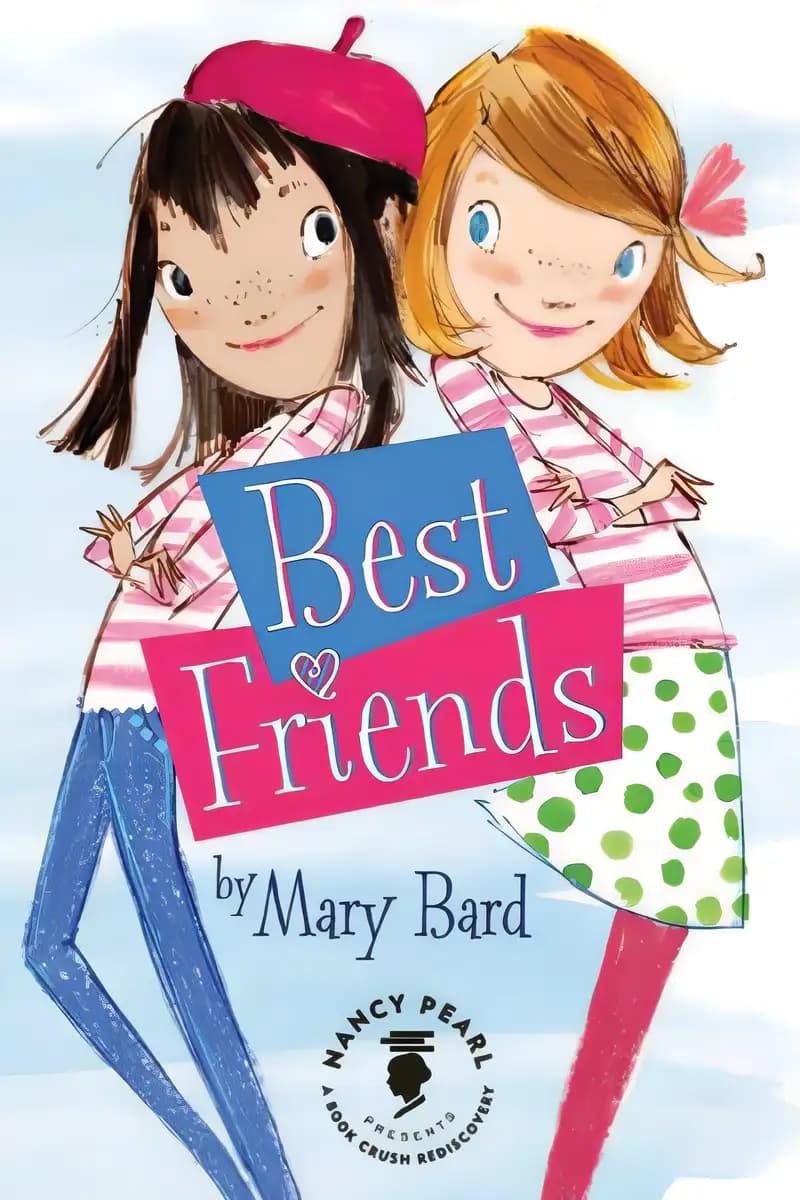
Best Friends
#1 of 4 in Best Friends Series
on Goodreads (131)
What’s inside...
Suzie Green has always dreamed of having a best friend to share her experiences and stand up to the Select Seven at school. Then, Co Co Langdon moves next door, and Suzie finally finds the friend she's been longing for. Co Co, who hails from France and has been homeschooled all her life, will face school for the first time in America. Together, the two girls navigate mean girls, cranky neighbors, boys, and the search for a missing neighborhood dog. Throughout one unforgettable school year, they discover the true meaning of friendship. First published in 1955, Best Friends captures the ups and downs of being eleven and finding your best friend.
Discussion points
What did you like most about the friendship between the characters in 'Best Friends'?
How did the friends in the book help each other?
Can you think of a time when a friend helped you like that?
What would you do if you were in a similar situation as the characters?
How do you think the story would change if there were no friends?
Tip: Role play these questions
Encourage your child to express their thoughts and feelings about the story. Listen actively without interrupting.
Relate the scenarios in the book to real-life situations your child might encounter, enhancing their connection to the story.
Ask follow-up questions based on your child's responses to the key questions, to delve deeper into their understanding and analysis of friendship dynamics.
Praise your child for their insights, reinforcing their confidence in expressing their ideas and opinions.
Key lessons
Example Lesson: The value of friendship
Explanation: In 'Best Friends', the story revolves around two characters who support and care for each other through various challenges, illustrating the importance of having a friend.
Real-World Application: Children can recognize and value the importance of supporting their friends in school or in play, building stronger emotional connections.
Example Lesson: Resolving conflicts
Explanation: The book shows instances where the friends have misunderstandings, but they learn to communicate and apologize, hence resolving their differences.
Real-World Application: This teaches children to handle disputes with their peers amicably, promoting a peaceful environment at school and home.
Example Lesson: Empathy and understanding
Explanation: Through the interactions between the characters, the book highlights how one friend tries to understand and feel what the other is going through.
Real-World Application: Children learn to be empathetic towards their peers or family members, fostering a nurturing community.
Example Lesson: Cooperation and teamwork
Explanation: The friends in the story often team up to solve problems or to undertake projects, showing the benefits of working together.
Real-World Application: This lesson can encourage children to collaborate in group activities or team sports, enhancing their social and cooperative skills.
Example Lesson: Celebrating differences
Explanation: Mary Bard’s 'Best Friends' showcases friends with different personalities and strengths, teaching children that diversity can strengthen a friendship.
Real-World Application: Children can learn to appreciate diverse traits within their own circle of friends, promoting inclusivity and respect for others.