
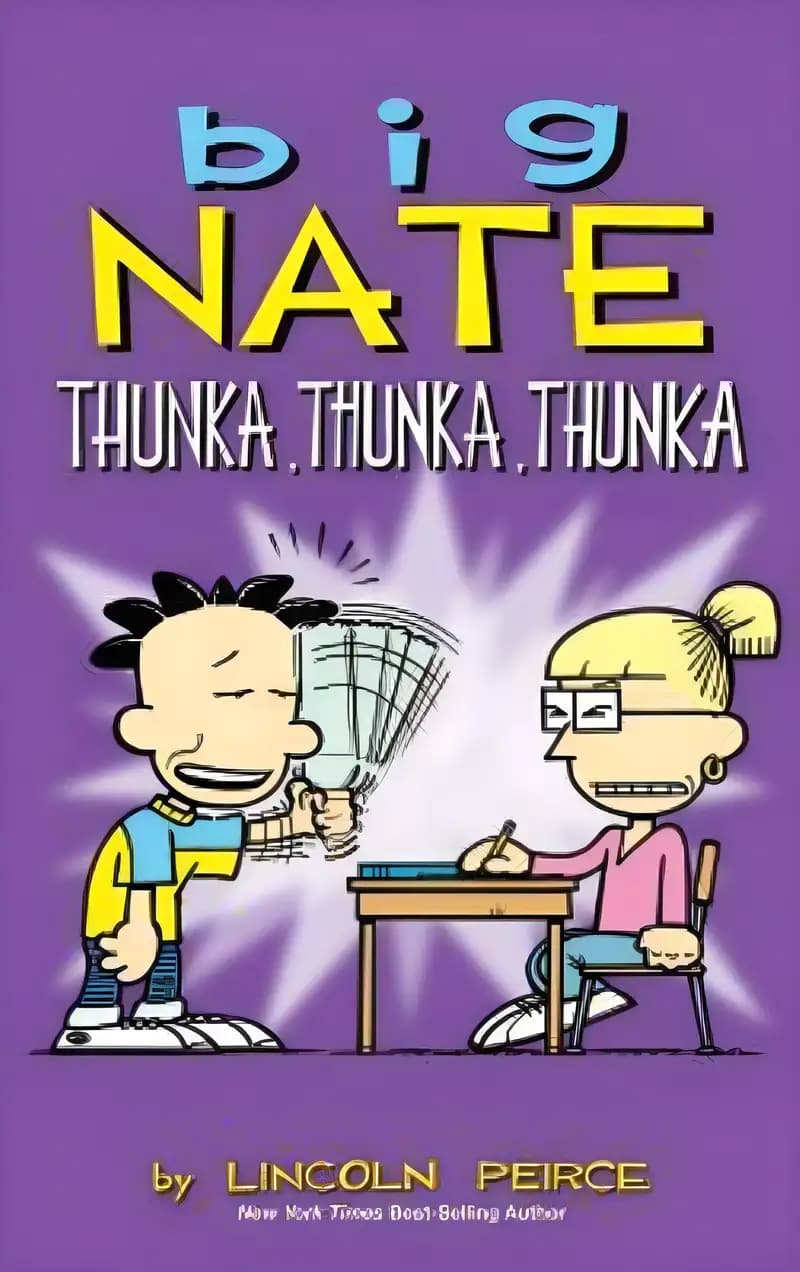
Big Nate: Thunka, Thunka, Thunka (Volume 14)
#15 of 31 in Big Nate Series
on Goodreads (3,334)
What’s inside...
Nate Wright, a sixth grader, faces various challenges including his baseball team receiving a disappointing name, the prospect of becoming a servant for a know-it-all classmate, Gina, and his pseudo-pet dog, Spitsy, falling for a cat. To cope, Nate discovers the therapeutic effect of tapping an empty soda bottle against his head to alleviate stress from his dealings with difficult adults and peers. Alongside, the antics of Nate, including playing forbidden games in the library and sneaking into the teachers' lounge, provide humor and light-hearted moments. 'Thunka, Thunka, Thunka' captures these experiences through engaging Big Nate comics that are perfect for relaxation and entertainment.
Character compass
Nate Wright
Teddy Ortiz
Francis Pope
Mrs. Clara Godfrey
Gina Hemphill-Toms
Discussion points
What do you think Nate was feeling when he faced challenges in the book? Can you relate to any of those feelings?
Why do you think friendship is important in the story? How do Nate and his friends help each other?
What lessons did Nate learn in this book? What would you have done differently if you were him?
How do the illustrations add to the story? Which illustration was your favorite and why?
If you could give Nate one piece of advice, what would it be?
Tip: Role play these questions
Make reading interactive by asking your child to predict what might happen next in the story. Discuss the outcomes and possibilities together.
Relate the themes of the book to your child’s experiences. For example, talk about times when they faced challenges and how they overcame them, similar to Nate.
Encourage your child to express their thoughts and feelings about the book, validating their feelings and perspectives to make the conversation more meaningful.
Use the illustrations in the book as talking points. Discuss the emotions conveyed through the artwork and ask your child to describe what they see.
After discussing the book, engage in a creative activity, like drawing a comic strip together about a new adventure for Nate, using the themes discussed.
Key lessons
Example Lesson: Responsibility
Explanation: In 'Big Nate: Thunka, Thunka, Thunka', Nate frequently finds himself in situations where he must take responsibility for his actions, such as dealing with the consequences of his pranks.
Real-World Application: Children learn the importance of being accountable for their actions and understanding that their choices have consequences both positive and negative.
Example Lesson: Resilience
Explanation: Throughout the book, Nate faces various challenges and setbacks but consistently demonstrates resilience by not giving up and trying again.
Real-World Application: This can inspire children to persevere through difficulties in their own lives, whether it's at school, in sports, or in relationships.
Example Lesson: Importance of friendship
Explanation: The story showcases various facets of friendships, as Nate navigates his relationships with his friends, illustrating both the joys and challenges.
Real-World Application: This emphasizes to children how to maintain healthy relationships and the value of having supportive friends in their lives.
Example Lesson: Creativity and imagination
Explanation: Nate's daydreams and creative endeavours are a central part of the story, highlighting how imagination can make everyday life more exciting and enjoyable.
Real-World Application: Children are encouraged to use their imagination in problem-solving and in expressing themselves creatively, enhancing their cognitive and emotional development.
Example Lesson: Empathy
Explanation: As Nate interacts with different characters, he learns to understand and share the feelings of others, promoting empathy.
Real-World Application: This lesson helps children understand the importance of considering other people’s feelings and perspectives, fostering a more inclusive and understanding behavior.