
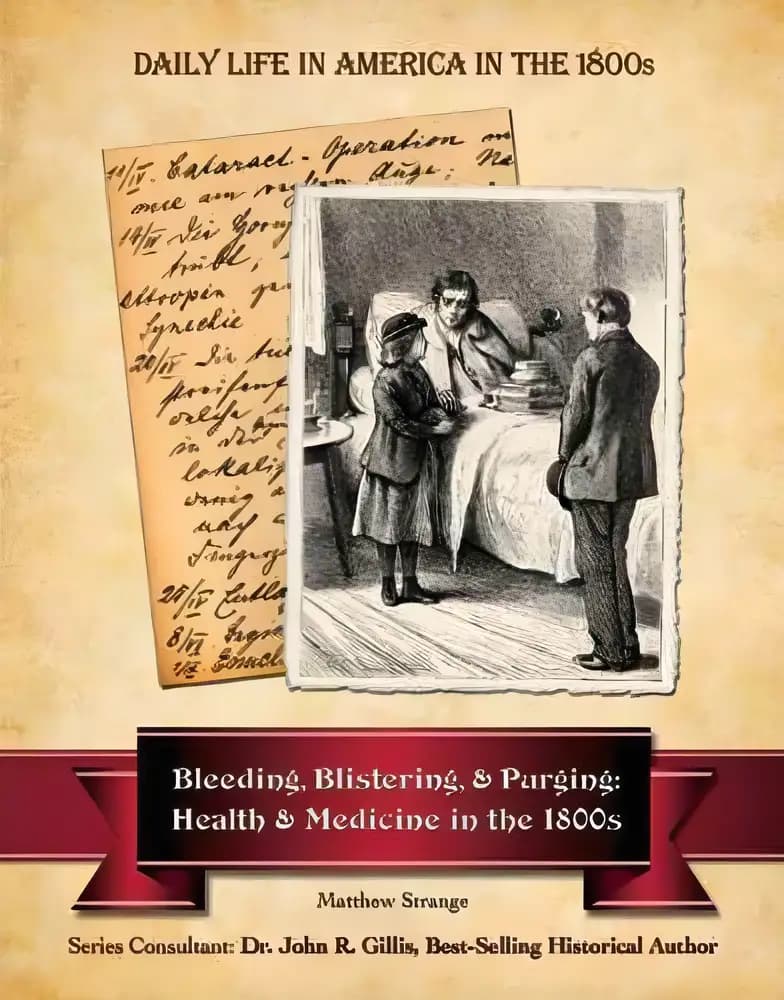
Bleeding, Blistering, and Purging: Health and Medicine in the 1800s (Daily Life in America in the 1800s)
Daily Life In America In The 1800s Series
on Goodreads (9)
What’s inside...
Bleeding, Blistering, and Purging: Health and Medicine in the 1800s by Matthew Strange provides a detailed look into the medical practices and health beliefs of 19th-century America. The book explores the common treatments of the time, such as bloodletting, the use of blisters, and purgatives, which were based on the now-discredited theory of the four humors. It also examines the state of medical knowledge, the role of doctors and other health practitioners, and the impact of these practices on daily life. Through personal anecdotes, medical records, and historical analysis, Strange paints a vivid picture of the often harsh and unscientific methods that were standard in an era before the advent of modern medicine. The book serves as an informative resource on the evolution of healthcare and the cultural context that shaped the treatments of the time.
Series reading
Non-Sequential
Age
11-12
Length
64 pages
Text complexity
Discussion points
How do you think medical practices from the 1800s are different from today?
Why do you think people believed in these methods during the 1800s?
What impact do you think these medical practices had on people's everyday lives?
Can you imagine how you would have reacted to these treatments if you lived in the 1800s?
What have we learned from the past that helps us improve medical practices today?
Tip: Role play these questions
Begin the conversation by asking what your child already knows about medicine and health care. Share your own experiences with medical practices to create a personal connection. Encourage empathy by asking them to consider how individuals might have felt experiencing these medical treatments in the past. Discuss the importance of progress and learning in the medical field. Highlight the relevance of history in understanding and appreciating modern science and healthcare.
Key lessons
Example Lesson: Importance of gratitude for modern medicine
Explanation: The book details the harsh medical practices of the 1800s, making readers appreciate the advancements in today's healthcare.
Real-World Application: Children can learn to be grateful for the medical resources available today and understand the importance of healthcare development.
Example Lesson: Understanding historical context
Explanation: By exploring health and medicine in the 1800s, children see how societal beliefs and knowledge shaped medical practices of the time.
Real-World Application: This lesson helps children analyze how historical context influences current practices and encourages critical thinking about how progress is made.
Example Lesson: Resilience in the face of adversity
Explanation: Characters in the book often face daunting medical challenges with limited resources, showcasing human resilience.
Real-World Application: Children can learn the value of perseverance and resilience when facing their own challenges, whether big or small.
Example Lesson: Empathy for suffering
Explanation: The book portrays the pain and struggle of people in the 1800s dealing with medical issues, fostering a sense of empathy.
Real-World Application: This can encourage children to be more empathetic and considerate towards others who are going through health issues.
Example Lesson: Value of scientific inquiry and skepticism
Explanation: The text shows how medical theories were questioned and evolved, emphasizing the importance of questioning and scientific investigation.
Real-World Application: Children learn the importance of skepticism and research, encouraging them to question what they know and seek evidence.