
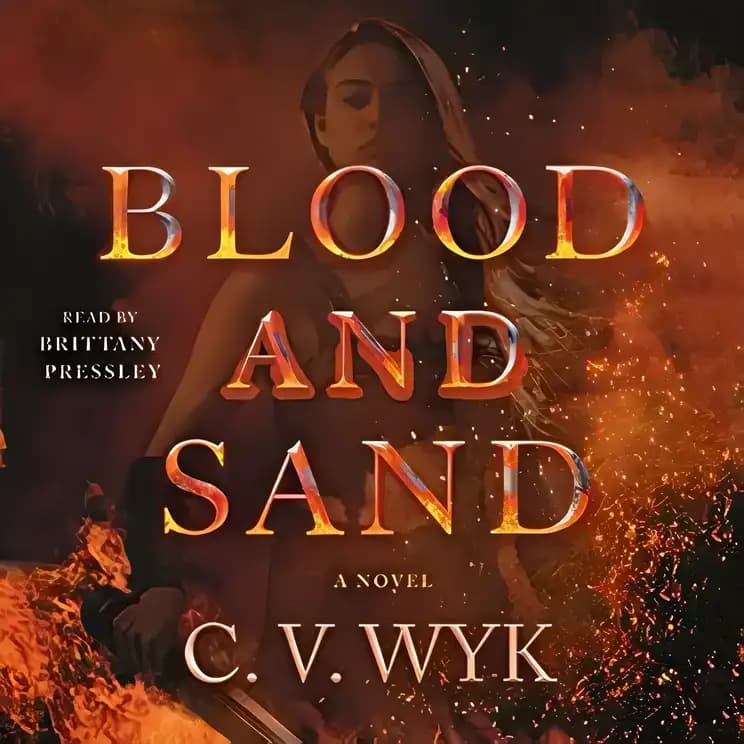
Blood and Sand: A Novel
#1 in Blood and Sand Series
What’s inside...
Blood and Sand is a gripping tale set in ancient Rome, following 17-year-old warrior princess Attia and a distinguished gladiator, Xanthus. Originally a queen destined to lead Thrace, Attia finds herself enslaved and given to Xanthus, a formidable gladiator. Despite their circumstances, they form a bond which ignites a rebellion threatening the Roman Republic and sparking the legend of Spartacus. This compelling story of courage, resilience, and defiance is perfect for fans of strong female protagonists in historical fiction. The journey continues in the sequel, Fire and Ash, to be released in 2019.
Character compass
Attia
Sabina
Xanthus
Timeus
Discussion points
How do you think Attia felt when she was taken as a slave? What would you do in her situation?
What does the relationship between Attia and Xanthus show us about friendship and loyalty?
Why do you think Attia fights in the arena, despite the dangers involved? What drives her actions throughout the story?
How do the characters in the book define freedom? What does freedom mean to you?
Discuss the role of power and control in the book. How do different characters react to their circumstances?
Tip: Role play these questions
Use open-ended questions that foster an analytical dialogue about the characters’ feelings and decisions.
Relate the themes of freedom and control in the book to real-world contexts which the child might be familiar with, enhancing comprehension.
Encourage your child to consider what they would do differently if they were in the characters' shoes, fostering empathy and critical thinking.
Key lessons
Example Lesson: Resilience in adversity
Explanation: The protagonist, Attia, showcases immense courage and determination despite her status as a slave. Her journey is filled with challenges which she navigates with resilience.
Real-World Application: Children can learn to face difficult situations with bravery and not to give up easily, understanding that perseverance can lead to overcoming obstacles in their lives.
Example Lesson: Value of friendship and loyalty
Explanation: Throughout the novel, Attia forms deep bonds with other characters, highlighting the importance of trust and loyalty in relationships.
Real-World Application: This teaches children the importance of nurturing friendships and being reliable friends in their own lives, helping them build strong, supportive social networks.
Example Lesson: Justice and standing up for what is right
Explanation: Attia fights against the injustices of her enslavement and stands up for the oppressed, teaching a lesson in fairness and justice.
Real-World Application: Children can learn the significance of standing up against wrongdoing and advocating for fairness, whether in the playground or classroom.
Example Lesson: Strategic thinking and problem-solving
Explanation: The protagonist often uses strategic thinking to navigate complex situations, demonstrating clever problem-solving skills.
Real-World Application: This can inspire children to think critically and develop solutions to their own problems, enhancing their decision-making skills.
Example Lesson: Understanding and embracing diverse cultures
Explanation: Set in ancient Rome with a mix of historical and fictional elements, the story provides exposure to different cultures and ways of life.
Real-World Application: Children can learn the importance of cultural diversity and the value of respecting and learning from different cultural perspectives.