
What’s inside...
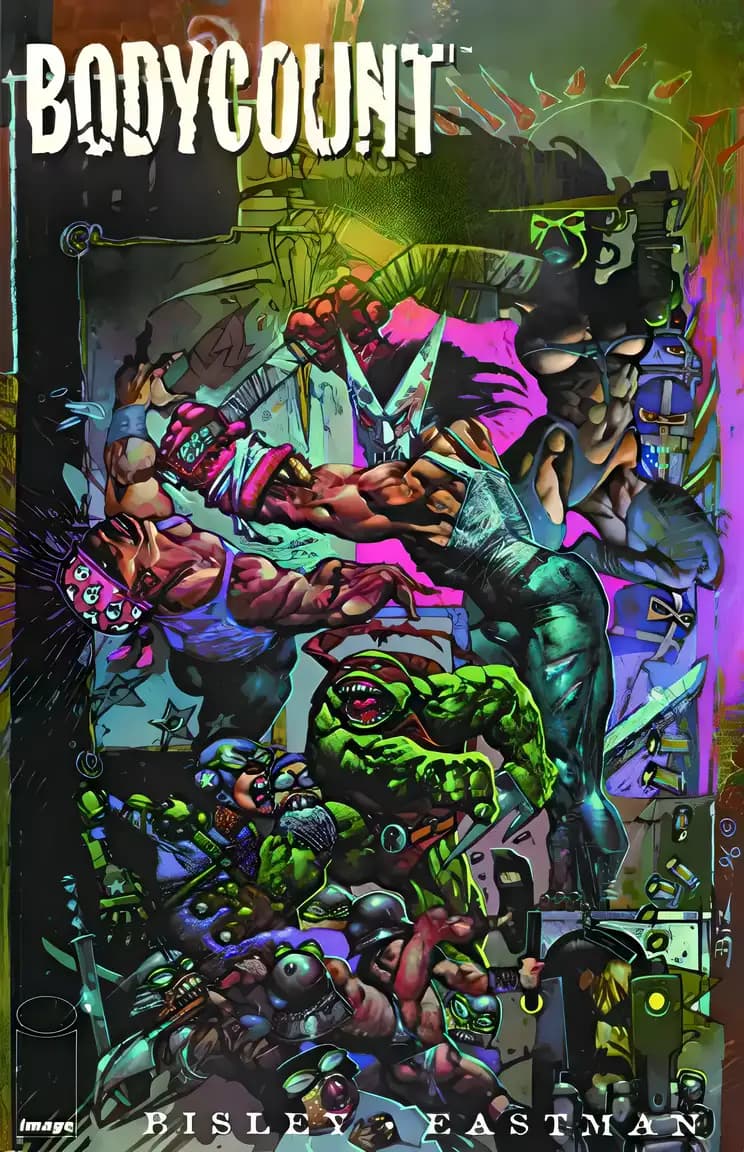
1st printing. Collects Bodycount (1996 Image) #1-4. Written by Kevin Eastman. Art by Simon Bisley and Kevin Eastman. Starring Casey Jones and Raphael from the pages of Teenage Mutant Ninja Turtles. Softcover, 110 pages, full color. Mature Readers
Series reading
Non-Sequential
Age
13-16
Length
112 pages
Text complexity
Character compass
Casey Jones
Raphael
Midnight
Johnny Woo
Discussion points
How did the characters' actions affect their relationships with others in the story?
What are some ways the characters could have solved their problems differently?
What did you learn about how our choices can impact others?
How do you feel about the decisions made by the protagonist?
What could be one lesson we can take away from this story?
Tip: Role play these questions
Listen attentively and validate your child's feelings and thoughts as they express their views on the story.
Encourage your child to think about how the characters' actions might relate to their own life experiences.
Discuss the moral and ethical aspects of the characters' decisions to enhance critical thinking.
Use examples from the book to discuss the importance of responsibility and making thoughtful choices.
After discussing, encourage your child to think of alternative endings based on different choices the characters might have made.
Key lessons
Example Lesson: The importance of teamwork
Explanation: The characters in the book collaborate to overcome obstacles.
Real-World Application: Children can apply this lesson by working together with peers in school projects or sports.
Example Lesson: Respecting differences
Explanation: The story showcases characters with diverse backgrounds learning to appreciate each other's unique traits.
Real-World Application: This helps children understand the value of diversity and encourages them to be inclusive in their interactions.
Example Lesson: Responsibility
Explanation: One of the key characters learns the importance of taking responsibility for their actions.
Real-World Application: Children can learn to own up to their mistakes and understand the consequences of their actions in their daily life.
Example Lesson: Problem-solving
Explanation: Throughout the book, characters face challenges that they solve using creative thinking.
Real-World Application: This promotes critical thinking skills in children, which they can use in academic and personal situations.