
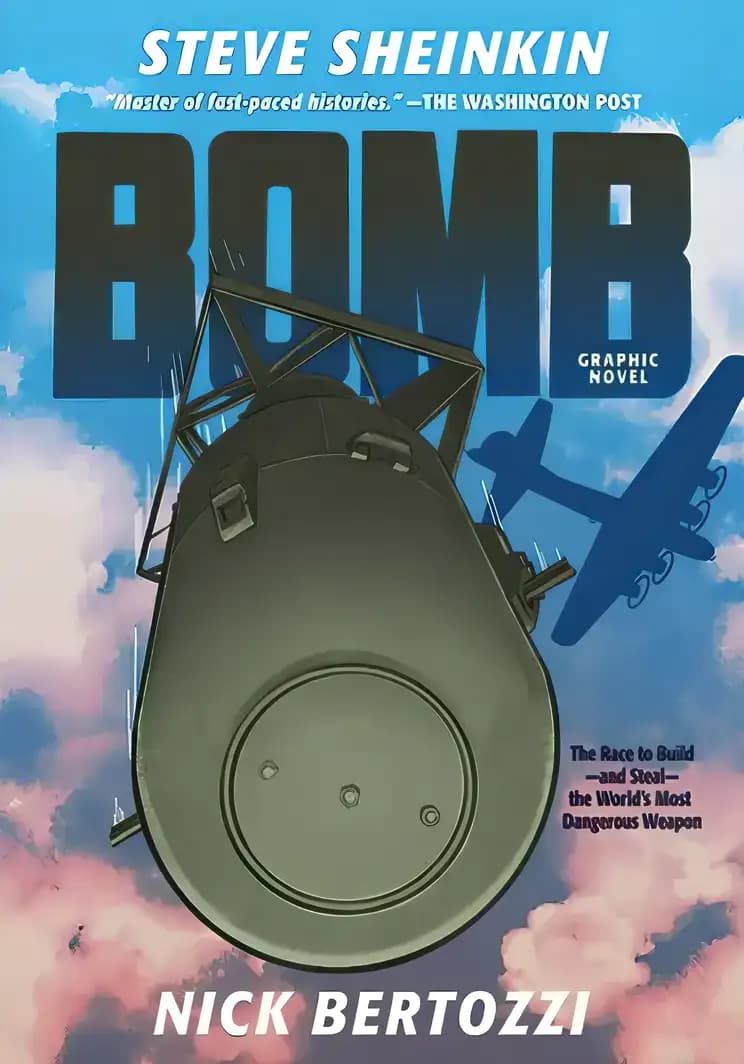
Bomb (Graphic Novel)
What’s inside...
A riveting graphic novel adaptation of the award-winning nonfiction book, Bomb, tells the true story of the atomic bomb's creation. This gripping tale spans three continents, involving Soviet spies, Norwegian commando forces, and brilliant scientists led by J. Robert Oppenheimer. The story delves into the risk-taking, deceit, and genius that gave birth to the world's most formidable weapon, sparking the arms race and the Cold War.
Age
10-14
Length
256 pages
Text complexity
Character compass
Robert Oppenheimer
Knut Haukelid
Leslie R. Groves
Ted Hall
Klaus Fuchs
Harry Gold
Discussion points
How did the actions of the scientists and spies in the book make you feel about the creation and use of the atomic bomb?
What are some of the ethical dilemmas faced by the characters, and what would you have done in their situation?
How does the book show the impact of war on science and vice versa?
What role do you think teamwork played in the efforts described in the book?
If you were to write another chapter in this story, what would it be about?
Tip: Role play these questions
Encourage your child to express their opinions about the book’s events, even if they have mixed feelings. This promotes critical thinking.
Ask your child to draw connections between the historical events described in the book and current events.
Discuss the various perspectives of different characters to help your child understand differing viewpoints and the complexity of moral issues.
Use a globe or map to locate the places mentioned in the book to give your child a geographical context of the events.
Create a timeline together of the key events from the book to help sequence the events and understand their historical impact.
Key lessons
Example Lesson: The importance of ethical decision-making
Explanation: The narrative explores the complex decisions involved in the development and use of the atomic bomb, highlighting the moral dilemmas faced by scientists.
Real-World Application: Children can apply this lesson by learning to consider the consequences of their actions and making choices that align with their values and the well-being of others.
Example Lesson: The value of teamwork and collaboration
Explanation: The book illustrates how scientists and military personnel worked together to achieve a common goal, showcasing the power of collaboration.
Real-World Application: This can teach children the importance of working with others to achieve goals, whether in school projects, sports teams, or family activities.
Example Lesson: The impact of historical events on the world
Explanation: By detailing the events leading up to the creation of the atomic bomb and its aftermath, the book provides insights into significant historical changes.
Real-World Application: Children can learn to connect historical events to current global conditions and understand their lasting impacts on today's world.
Example Lesson: Critical thinking and problem-solving
Explanation: The characters in the story demonstrate critical thinking in overcoming scientific challenges and strategic dilemmas.
Real-World Application: This lesson encourages children to develop their problem-solving skills and to think critically when faced with difficult decisions or problems in their daily lives.