
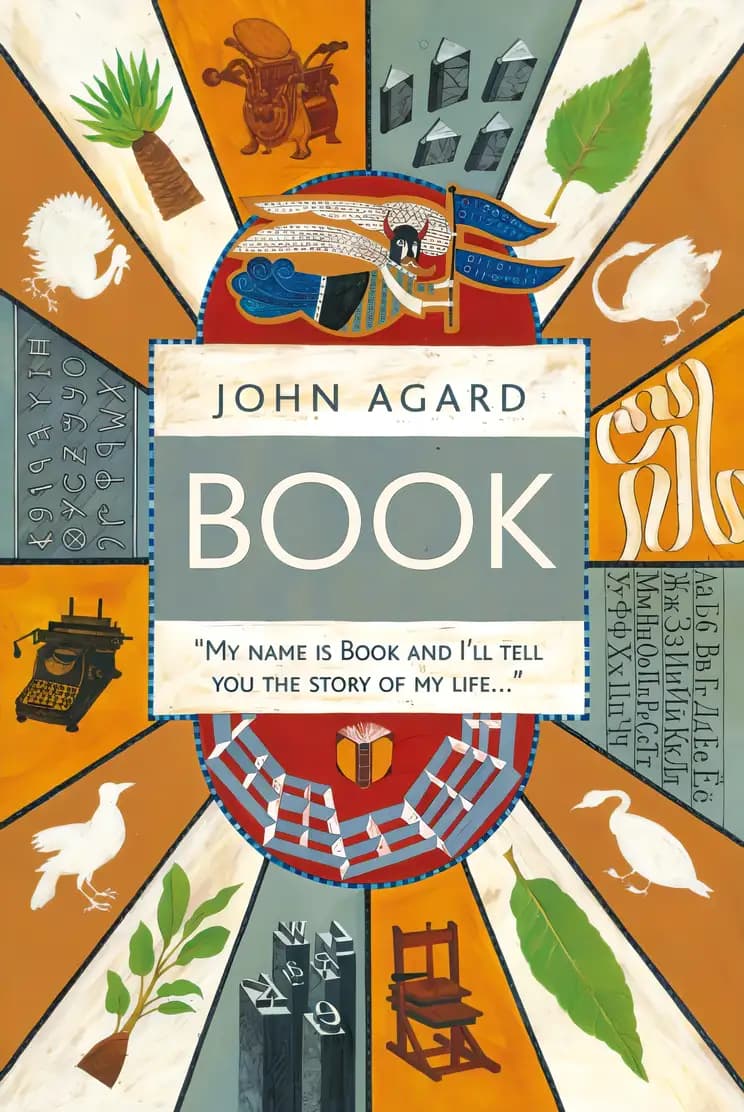
Book: My Autobiography
on Goodreads (796)
What’s inside...
This is the story of books narrated by the character Book, who traces his origins from oral storytelling and clay tablets, through different mediums like papyrus, parchment, and paper, to becoming a scroll with a spine. The story progresses to the illumination by monks in medieval monasteries, the transformative invention of the printing press, and the evolution to paperbacks and e-books in the 20th century.
Age
10-14
Length
144 pages
Text complexity
Character compass
Book
Discussion points
What do you think are some reasons why books are important in our lives?
If you were to write your autobiography, what are some stories you would include?
How do you think books feel when they are read or left on a shelf?
Can you think of any ways that books have changed over time, like how they are made or what stories they tell?
Why do you think the author chose to write from the perspective of a book in 'Book: My Autobiography'?
Tip: Role play these questions
Start by sharing your own favorite book and its personal impact, setting an example of connection with literature. Encourage empathy by asking your child to imagine the feelings and experiences of a book. Link themes from the book to your child's own experiences with reading or libraries. Keep the conversation light and enjoyable, allowing your child to guide the discussion with their thoughts and reactions. Celebrate your child's responses to nurture their confidence in expressing ideas.
Key lessons
Example Lesson: The importance of books in human history
Explanation: Through a witty and engaging narrative, the book personifies itself as 'Book' and shares its journey and evolution alongside humans throughout history.
Real-World Application: Children can appreciate the significance of books in acquiring knowledge and understanding different cultures, thereby fostering a respect for books and learning.
Example Lesson: Understanding and respecting different perspectives
Explanation: The story from the book's perspective offers a fresh viewpoint, different from human narratives, encouraging readers to consider alternative viewpoints in storytelling and information.
Real-World Application: This can help children develop empathy and a broader understanding, allowing them to respect and listen to different opinions and stories in their daily interactions.
Example Lesson: The evolution of communication
Explanation: The book discusses its transformations through various eras—from scrolls to print to digital forms—highlighting the advancements in communication methods.
Real-World Application: Children can learn about the progress in human communication methods, inspiring them to embrace technology while respecting traditional forms of knowledge like books.
Example Lesson: The impact of censorship and freedom of expression
Explanation: The autobiography touches upon periods where books were banned or censored, emphasizing the value of freedom of expression and the dangers of censorship.
Real-World Application: This discussion can lead children to value their own voice and understand the importance of free expression, encouraging them to express their thoughts and stand up against censorship.