
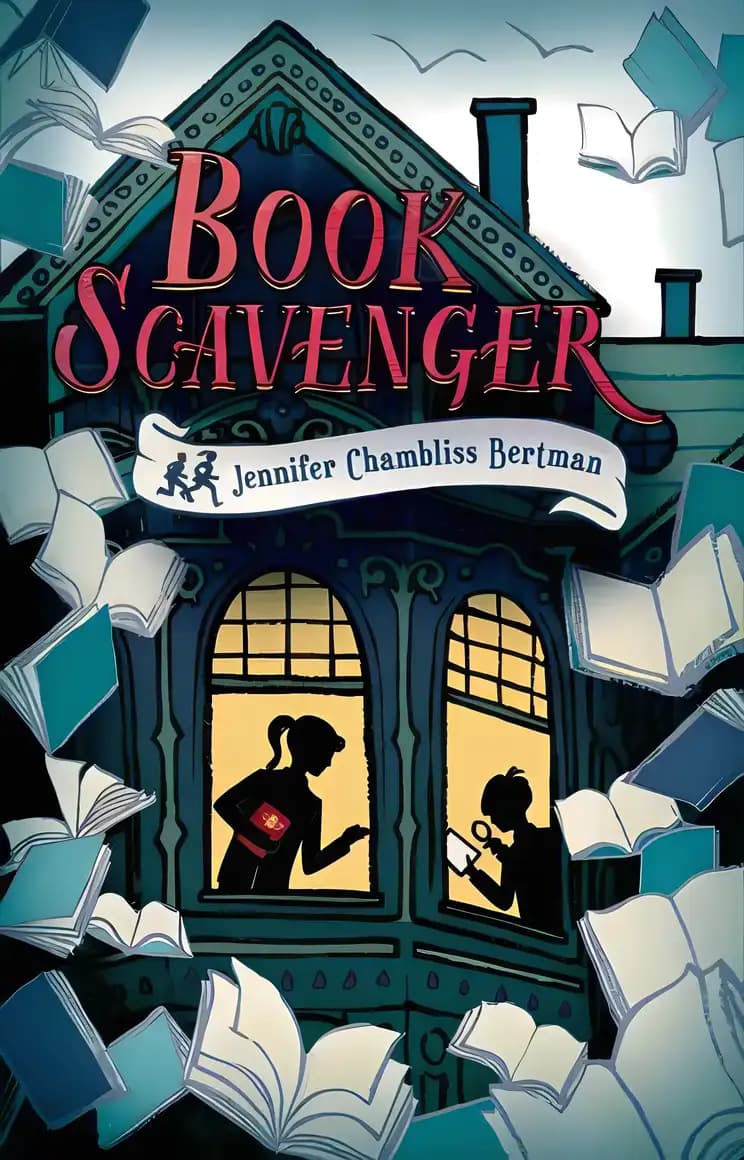
Book Scavenger
#1 in The Book Scavenger series
on Goodreads (16,593)
What’s inside...
A hidden book. A found cipher. A game begins . . . .
Twelve-year-old Emily is on the move again. Her family is relocating to San Francisco, home of her literary idol: Garrison Griswold, creator of the online sensation Book Scavenger, a game where books are hidden all over the country and clues to find them are revealed through puzzles. But Emily soon learns that Griswold has been attacked and is in a coma, and no one knows anything about the epic new game he had been poised to launch. Then Emily and her new friend James discover an odd book, which they come to believe is from Griswold and leads to a valuable prize. But there are others on the hunt for this book, and Emily and James must race to solve the puzzles Griswold left behind before Griswold's attackers make them their next target.
Why read this book
- Engages kids with thrilling treasure hunting adventure.
- Strengthens critical thinking through puzzle-solving narrative.
- Features relatable characters promoting friendship values.
- Combines learning with fun, enhancing reader engagement.
Character compass
Emily Crane
James
Mr. Quisling
Clyde
Barry
Discussion points
What would you do if you found a mysterious book that led to a treasure hunt?
How did Emily's relationship with James change throughout the story, and what do you think made their friendship strong?
Why do you think the author chose books and puzzles as central elements of this adventure?
If you could create a book scavenger hunt, what kind of puzzles would you include and why?
How do you think solving puzzles and deciphering codes can help you in other areas of your life?
Tip: Role play these questions
Start the conversation with your child by sharing your own thoughts about the importance of friendship and teamwork.
Encourage your child to think creatively by asking them to imagine their own scavenger hunt based around their favorite book.
Help your child draw connections between the themes in the book and their own life experiences, such as problem solving or handling unexpected challenges.
Discuss the significance of perseverance as shown by the characters, and ask your child about a time they had to persevere to accomplish a goal.
Praise your child’s responses to foster confidence and encourage deeper thinking about the book’s themes.
Key lessons
Example Lesson: Importance of Teamwork
Explanation: Throughout 'Book Scavenger', the characters must collaborate to solve puzzles and face challenges. They learn to rely on each other's strengths and work together effectively.
Real-World Application: Children can apply this lesson by engaging in team activities in school or at play, learning to value each member's contribution and understanding that collective effort often leads to success.
Example Lesson: Problem Solving and Critical Thinking
Explanation: The plot revolves around deciphering complex puzzles, which encourages readers to think critically and creatively alongside the characters.
Real-World Application: In real life, kids can utilize these skills in academic settings like math or science projects, or social situations that require thoughtful solutions.
Example Lesson: Perseverance
Explanation: The protagonist of 'Book Scavenger' faces numerous setbacks in her quest, yet she persists and remains determined throughout the story.
Real-World Application: This teaches children the value of persistence in overcoming obstacles, whether in completing challenging homework, learning a new skill, or resolving conflicts with peers.
Example Lesson: Importance of Literacy and Learning
Explanation: The game in the book revolves around finding and understanding literary clues, which highlights the fun and adventure in reading and education.
Real-World Application: Children are encouraged to explore the joy of reading and continuous learning, seeing them as lifelong adventures that extend beyond the classroom.
Example Lesson: Empathy and Understanding
Explanation: As characters in 'Book Scavenger' come from diverse backgrounds and have various personal struggles, the story promotes understanding and empathy among them.
Real-World Application: Kids learn to appreciate and respect differences among people in their own communities and schools, fostering inclusivity and compassion.