
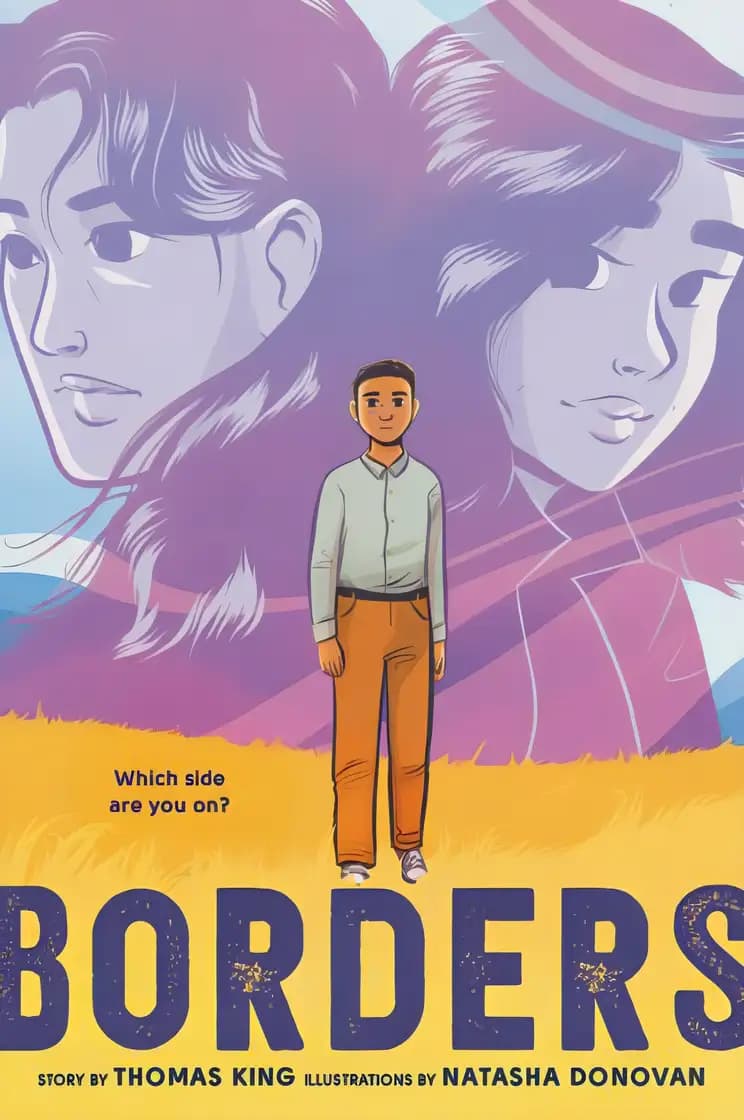
Borders
What’s inside...
From celebrated Indigenous author Thomas King and award-winning Métis artist Natasha Donovan comes a powerful graphic novel about a family caught between nations. Borders is a masterfully told story of a boy and his mother whose road trip is thwarted at the border when they identify their citizenship as Blackfoot. Refusing to identify as either American or Canadian first bars their entry into the US, and then their return into Canada. In the limbo between countries, they find power in their connection to their identity and to each other. Borders explores nationhood from an Indigenous perspective and resonates deeply with themes of identity, justice, and belonging.
Age
8-12
Length
192 pages
Text complexity
Character compass
Mother
The Boy (Narrator)
U.S. Border Guard
Discussion points
Why do you think the mother insists on identifying as Blackfoot, even when it creates challenges at the border?
How do the actions of the border guards affect the mother and son? What does this tell us about the importance of identity?
What are some ways that the characters show strength and resilience throughout the story?
Can you think of a time when you had to stand up for something you believe in, like the mother does in the book?
Tip: Role play these questions
Use pauses after each question to give your child time to think and formulate their thoughts. This shows that their opinions are valued.
Relate themes from the book to real-life situations that your child might encounter, enhancing their connection to the story and its characters.
Encourage your child to express how they might feel in situations similar to those faced by the characters, fostering empathy and a deeper understanding of the narrative.
Celebrate your child’s responses, whether or not they align with the book’s themes, to build their confidence in expressing their views.
Key lessons
Example Lesson: Identity and Self-Acceptance
Explanation: In 'Borders', the protagonist and their mother proudly identify themselves as Blackfoot, despite external pressures to conform to broader national identities.
Real-World Application: Children learn the importance of embracing their own cultural and personal identity, which can boost confidence and self-esteem in diverse social settings.
Example Lesson: Resilience in the Face of Adversity
Explanation: The mother's steadfastness at the border, despite inconvenience and pressure to identify as Canadian or American, exemplifies resilience.
Real-World Application: This teaches children the value of standing firm in their beliefs and principles, even when faced with challenges or opposition.
Example Lesson: Empathy and Understanding
Explanation: The story underscores the challenges faced by indigenous communities, encouraging readers to understand and empathize with different cultural perspectives.
Real-World Application: Children learn to appreciate and respect cultural diversity, fostering a more inclusive attitude towards people from different backgrounds.
Example Lesson: Critical Thinking about Identity and Borders
Explanation: The narrative provokes thought about the arbitrary nature of borders and the broader implications for identity and belonging.
Real-World Application: Encourages children to think critically about geographical and cultural boundaries and to form their own informed opinions about identity.