
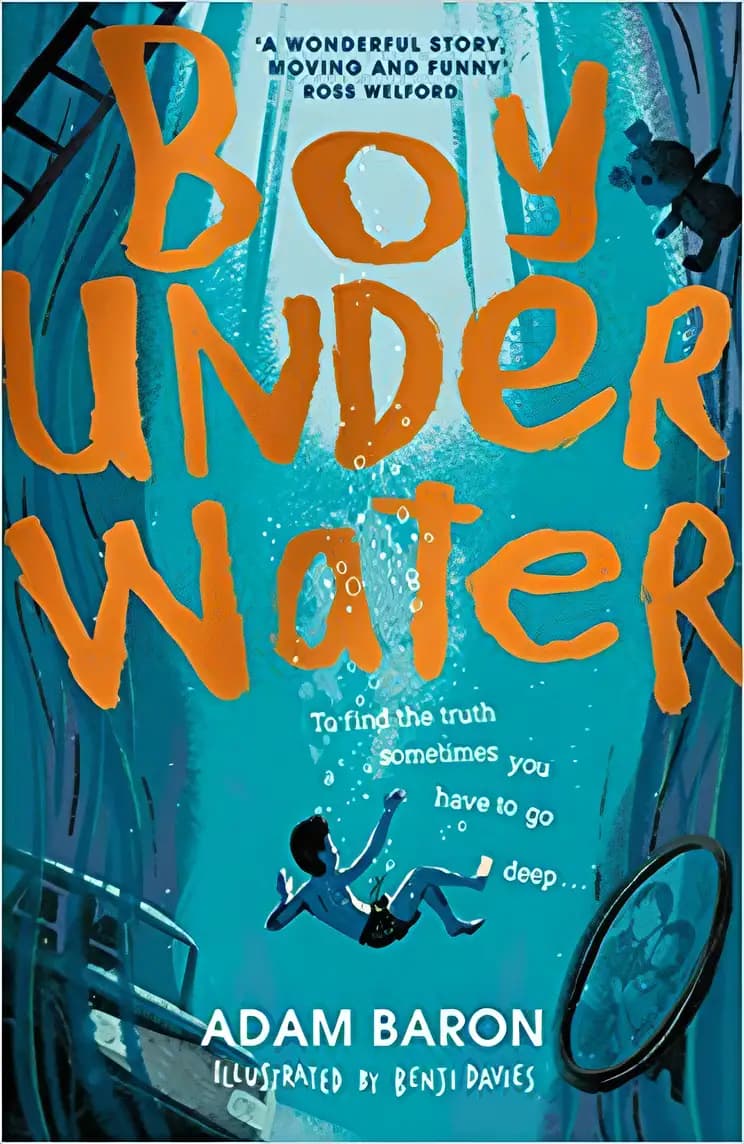
Boy Underwater
Cymbeline Igloo Series
What’s inside...
Boy Underwater is a humorous yet poignant story about a boy named Cymbeline who has never been swimming, and his first school swimming lesson leads to an unexpected accident that reveals a family mystery. With the help of his friends, Cymbeline works to uncover the secrets that the grown-ups aren't sharing, all while dealing with normal childhood challenges. The book is filled with both laughter and heartbreak, and it emphasizes the importance of friendship and determination.
Series reading
Non-Sequential
Age
9-12
Length
256 pages
Text complexity
Character compass
Cymbeline Igloo
Veronique Chang
Harriet Igloo
Discussion points
How did Cymbeline's experiences in the story make you feel? Can you think of a time when you felt similar?
Why do you think it's important for Cymbeline to learn about his past? How does understanding our history help us?
What role do Cymbeline's friends play in the story? How do your friends help you in difficult times?
What does courage mean to you? How did Cymbeline show courage, and how can you apply that in your own life?
Tip: Role play these questions
Encourage your child to express their feelings about the book by using open-ended questions that promote deeper thinking.
Listen actively to your child’s responses without interrupting, to show that their thoughts and opinions are valued.
Connect the themes of the book to real-life situations your child might encounter, to help them relate to the story more closely.
Discuss the actions of various characters and ask your child what they might have done differently in the same situations.
Key lessons
Example Lesson: Understanding and managing emotions
Explanation: In 'Boy Underwater', the protagonist, Cymbeline, navigates complex emotions following a significant family revelation. This storyline offers a platform to explore themes of self-awareness and emotional resilience.
Real-World Application: Children can learn to identify their own emotions and understand that it's okay to feel them deeply. Teaching emotional resilience helps them cope effectively with their own life changes and challenges.
Example Lesson: The importance of family and support systems
Explanation: Throughout the book, Cymbeline learns the value of his family and friends as they support him through his personal struggles. This theme underscores the stability and security that close relationships provide.
Real-World Application: Children can appreciate and nurture their relationships with parents, siblings, and friends, understanding how these bonds can offer support during difficult times.
Example Lesson: Empathy and understanding others
Explanation: As characters in the book face various challenges, there are many instances that showcase the importance of empathy. Cymbeline’s journey includes learning to see things from others' perspectives.
Real-World Application: This lesson can encourage children to practice empathy in real life, enhancing their ability to connect with others and embrace differing viewpoints.
Example Lesson: Courage and facing fears
Explanation: Cymbeline shows immense courage when uncovering truths about his family. The book illustrates how bravery can lead to personal growth and often, resolution.
Real-World Application: Children learn the importance of confronting their fears and the benefits that can come from doing so, which can be applied in facing their own fears or challenges at school or in other activities.
Example Lesson: The impact of secrets
Explanation: The narrative explores the repercussions of keeping secrets within a family. It highlights how secrets can affect relationships and individual well-being.
Real-World Application: This can help kids understand the value of open communication and honesty in maintaining healthy relationships both in family and with peers.