
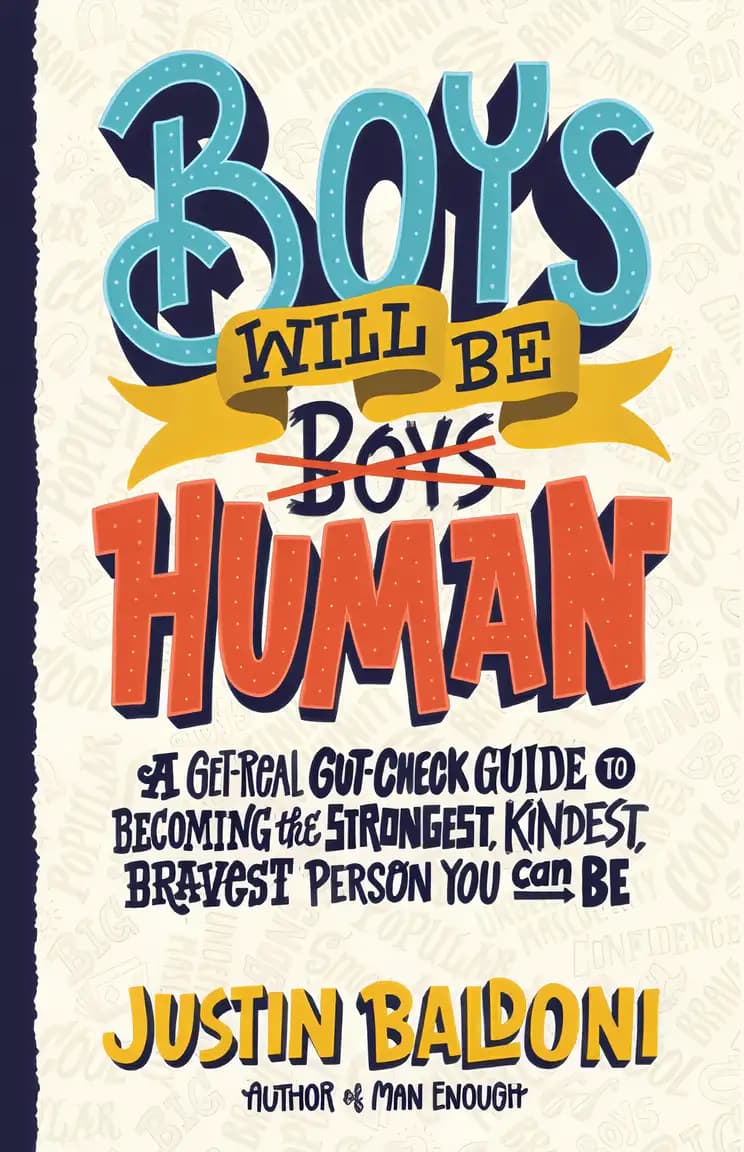
Boys Will be Human
on Goodreads (456)
What’s inside...
In 'Boys Will be Human,' Justin Baldoni explores the challenges and societal expectations that boys face while growing up. He delves into the concept of traditional masculinity and its limitations, advocating for a more inclusive and compassionate definition of what it means to be a man. Through personal anecdotes, research, and stories, Baldoni encourages boys and men to embrace vulnerability, emotional expression, and genuine human connection. The book aims to redefine masculinity and empower boys to be their authentic selves, free from the constraints of gender norms and stereotypes. Highly designed and filled with activities, sidebars, and inspirational quotes, this book serves as a social-emotional learning tool for parents and educators to initiate conversations about masculinity with boys. It is a real-talk, self-esteem-building guidebook where Baldoni emphasizes the importance of unlearning the unwritten rules of the 'boys' club' and embracing the feelings and fears. This New York Times bestseller promises raw and surprising insights into masculinity, urging boys to become the smartest, bravest, and strongest humans they can be.
Age
10-13
Length
304 pages
Text complexity
Discussion points
How did the stories in 'Boys Will be Human' make you feel about expressing your own emotions?
What do you think it means to be 'strong'? How do the characters in the book show strength?
Can you share a time when you helped a friend feel better, just like in the book?
Why is it important to be kind and understanding to everyone, even if they are different from us?
What did you learn from the book that you would like to apply in your daily life?
Tip: Role play these questions
Create a comfortable and quiet space for reading and discussion, showing that both are valuable activities.
Show genuine interest in their responses; ask follow-up questions that prompt deeper thinking and personal reflection.
Share your own experiences related to the book's themes to model open emotional expression.
Encourage your child to draw or write about a scene they felt was significant to deepen their connection with the narrative.
Praise their insights and understanding to boost their confidence in expressing their thoughts and feelings.
Key lessons
Example Lesson: Embracing Vulnerability
Explanation: The story encourages boys to express their emotions freely, debunking the stereotype that boys must always be tough.
Real-World Application: Boys can learn that it's okay to cry or share their feelings, which can improve their emotional intelligence and interpersonal relationships.
Example Lesson: Importance of Empathy
Explanation: Characters in the book demonstrate understanding and support for others' feelings and perspectives.
Real-World Application: Children can learn to understand and respect differences among peers, promoting inclusivity and reducing bullying.
Example Lesson: Breaking Gender Norms
Explanation: The book highlights various characters who defy traditional male stereotypes by engaging in diverse activities.
Real-World Application: It encourages boys to pursue their interests freely, whether it's dancing, cooking, or sports, fostering a sense of self-confidence and authenticity.
Example Lesson: Respect for Others
Explanation: Through various scenarios, the book promotes treating everyone with kindness and respect regardless of differences.
Real-World Application: Children can apply this lesson by practicing respectful interactions and embracing diversity in their communities.
Example Lesson: Self-Acceptance
Explanation: The narrative supports the idea that all boys are unique and should be proud of who they are.
Real-World Application: This lesson helps children develop a positive self-image and resilience against peer pressure and societal expectations.