
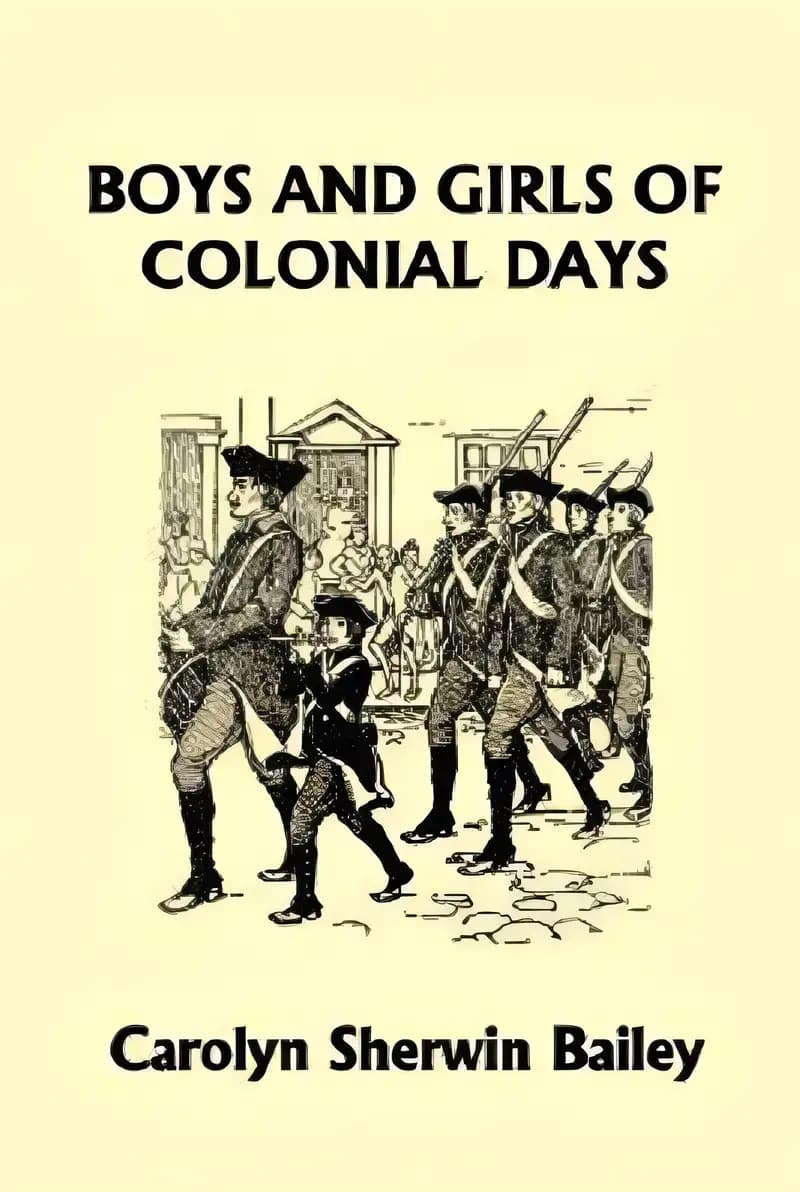
Boys and Girls of Colonial Days
not part of a series
What’s inside...
An engaging collection of stories for the younger child, introducing him to activities and occupations of boys and girls in the colonial era. Focuses on children who responded with courage and resourcefulness when faced with unexpected circumstances and whose efforts played a key role in the safeguarding of their families and their communities. Famous personages of the time, including Benjamin Franklin and George Washington, figure in several of the stories. Dozens of detailed black and white illustrations complement the text. Suitable for ages 7 and up.
Series reading
Non-Sequential
Age
8-12
Length
152 pages
Text complexity
Discussion points
What differences and similarities do you notice between your life and the lives of children in colonial days?
Why do you think the children in the book had those specific chores and responsibilities?
What feelings do you think you would have if you were living in colonial times?
How do the stories in the book show the importance of community and teamwork?
What have you learned about how history and culture shape the way people live?
Tip: Role play these questions
Use props or pictures from the colonial period to make the historical context more tangible for the child.
Encourage the child to compare their daily routine with the routines of the children in the book to spark deeper thinking and engagement.
Ask the child how they might solve a problem using only the tools and resources from the colonial days to foster creative thinking.
Discuss the moral lessons in the stories and how those lessons might apply to the child's own life to create personal connections with the content.
Create a mini-project or artwork based on their favorite story to extend learning beyond reading.
Key lessons
Example Lesson: Resilience and perseverance
Explanation: The stories highlight children of colonial days overcoming difficulties and showing determination, such as in 'The Soap Making Granny' where Granny overcomes adversity to make soap successfully.
Real-World Application: Children can learn to persist through challenges in their own lives, whether in their studies, sports, or personal projects.
Example Lesson: Resourcefulness and creativity
Explanation: Characters in the book often use their ingenuity to solve problems, exemplified in 'The Bully of the Barnyard' where the young protagonist devises a clever plan to deal with a troublesome animal.
Real-World Application: This encourages children to think creatively in solving problems they encounter, such as finding ways to share toys or resolving disputes with siblings.
Example Lesson: Understanding historical contexts
Explanation: The book provides insight into the lifestyle and challenges of the colonial era, making history relatable through the eyes of children from that time.
Real-World Application: This can help children appreciate and respect historical differences, and better understand the history they learn at school.
Example Lesson: The value of hard work
Explanation: Many stories, like 'The Iron Stove', emphasize the importance of hard work and diligence as the children help their families and communities.
Real-World Application: Children can apply this lesson by helping out at home, being diligent in their homework, and putting effort into their duties and responsibilities.