
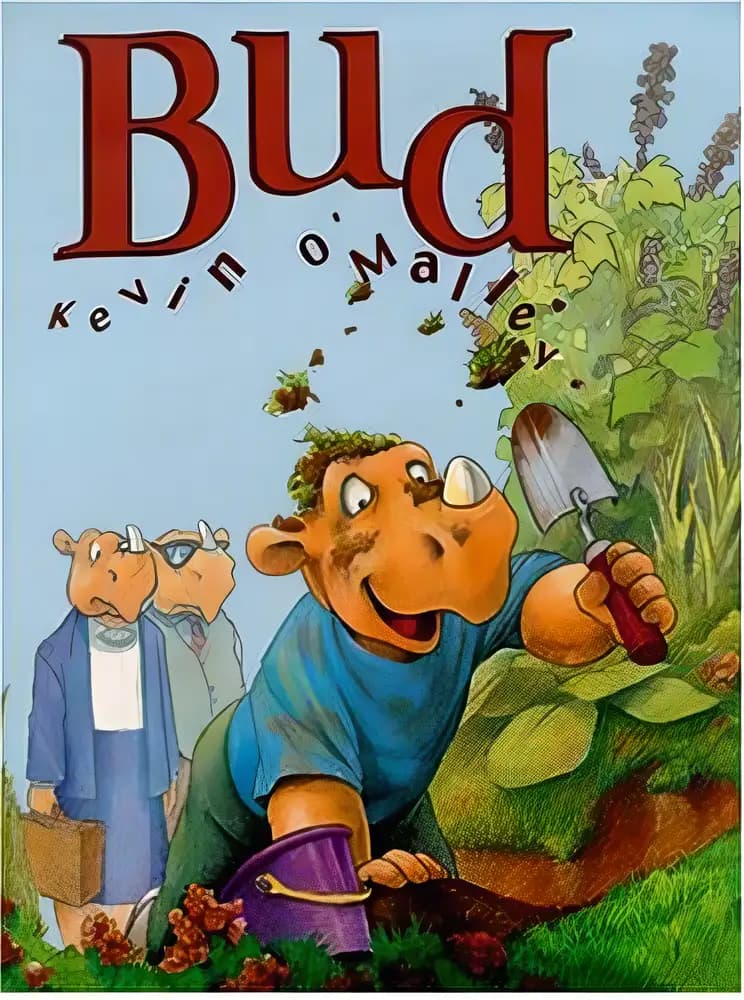
Bud
What’s inside...
Bud Sweet-William's fondness for the messy pastime of gardening dismays his orderly parents, especially when they are expecting his grandfather for a visit.
Age
5-8
Length
32 pages
Text complexity
Character compass
Bud Caldwell
Steady Eddie
Miss Thomas
Lefty Lewis
Herman E. Calloway
Discussion points
What do you think Bud was feeling when he faced challenges in the story?
How did Bud’s friends help him overcome his difficulties?
Can you think of a time when you felt like Bud and what you did to feel better?
What is the most important lesson Bud learned during his adventures?
If you could give Bud one piece of advice, what would it be?
Tip: Role play these questions
Encourage your child to express their feelings about Bud’s journey, relating it to their own experiences.
Discuss the importance of friendship and teamwork as shown in the book, asking your child about their friends and how they help each other.
Highlight Bud’s problem-solving skills, and motivate your child to think about how they can apply similar strategies in their own life.
After reading, use role-play to let your child act out different scenarios from the book, reinforcing the lessons learned.
End your discussion by asking your child how they think the story could continue, or what Bud might do next, to foster creativity and anticipation.
Key lessons
Example Lesson: Importance of perseverance
Explanation: In 'Bud,' the main character faces various challenges but continues to strive towards his goals, showing resilience and determination.
Real-World Application: Children can learn to keep trying even when things are difficult, whether it's solving a tough puzzle or learning a new skill.
Example Lesson: Value of friendship
Explanation: Throughout the story, Bud receives support and encouragement from his friends, highlighting the importance of strong, supportive relationships.
Real-World Application: This teaches children the significance of building and maintaining friendships, helping them in social interactions and teamwork.
Example Lesson: Learning from mistakes
Explanation: Bud makes several mistakes as he navigates his adventures, but each error teaches him an important lesson, emphasizing the learning process.
Real-World Application: Children are encouraged to view mistakes as learning opportunities, fostering a growth mindset that values progress over perfection.
Example Lesson: Creativity and imagination
Explanation: Bud often uses his imagination to solve problems, showing how creativity can lead to innovative solutions.
Real-World Application: Encourages children to use their imaginations in problem-solving, enhancing their creative thinking skills which are crucial in academic and everyday challenges.
Example Lesson: Courage to face fears
Explanation: Bud confronts his fears in the story, demonstrating bravery and personal growth.
Real-World Application: This lesson helps children understand the importance of facing fears and the personal growth that comes from stepping outside one's comfort zone.