
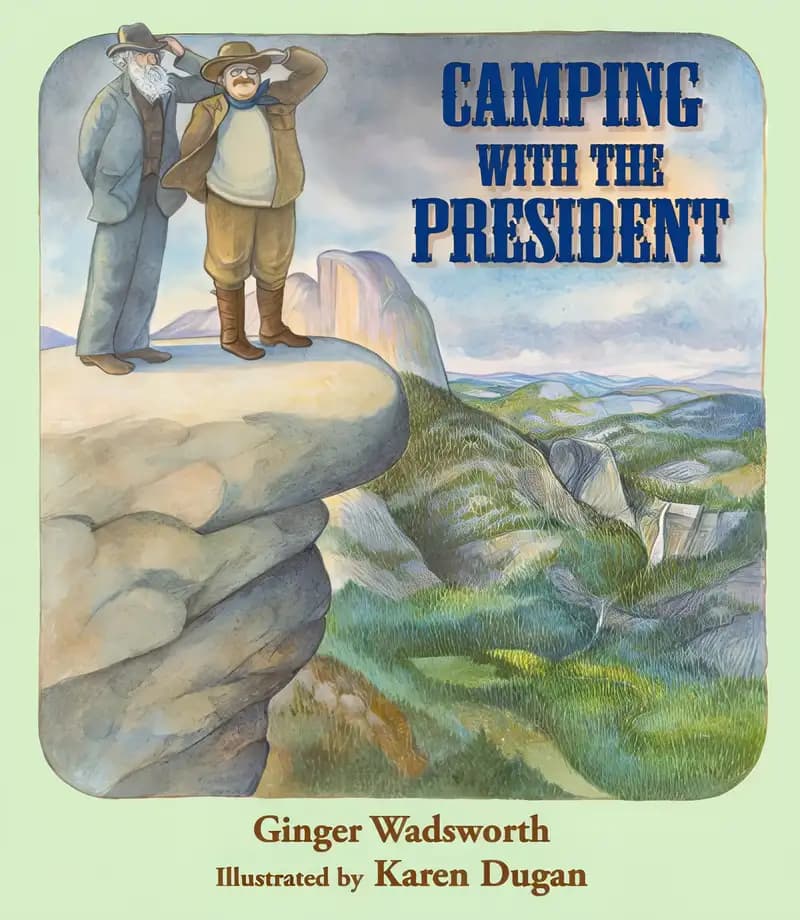
Camping with the President
What’s inside...
A camping trip with John Muir affects Theodore Roosevelt's decisions on conservation. Imagine a U.S. president on a camping trip. It seems unlikely today, but in May 1903 President Theodore Roosevelt dismissed his Secret Service men to go camping with John Muir, the world-famous naturalist. For three glorious nights and four days in California's Yosemite National Park, the two men talked about birds, giant sequoia trees, glaciers, as well as the importance of preserving wilderness for future generations. They slept under the stars, built blazing campfires, and enjoyed the beauty and the uniqueness of the area. Setting aside new national parks and monuments became one of the cornerstones of Roosevelt's presidency and was a direct result of this camping trip. Author Ginger Wadsworth and illustrator Karen Dugan carefully researched this true story, a CRA Eureka! Nonfiction Children's Silver Honor Book, relying on primary documents and working closely with experts in the field.
Age
7-10
Length
32 pages
Text complexity
Character compass
Theodore Roosevelt
John Muir
Discussion points
What do you think it would be like to go camping with a president? What activities would you do together?
How do you think the president felt about nature and conservation? Why is it important to protect nature?
What was your favorite part of the camping trip described in the book and why?
If you were to plan a camping trip, what are some things you would want to do to help preserve the environment?
How do you think spending time outdoors can help us understand the world better?
Tip: Role play these questions
Start the conversation by sharing your own camping experiences or desires to explore nature to create a personal connection. Encourage your child to imagine their ideal camping trip, integrating ideas of conservation and environmental respect. Ask open-ended questions to prompt deeper thinking about the roles of leaders in environmental advocacy. Conclude with a discussion about how they can make a difference in their own community.
Key lessons
Example Lesson: Environmental Stewardship
Explanation: The story illustrates the deep respect and care for nature that President Theodore Roosevelt and naturalist John Muir shared during their camping trip in Yosemite. Through their conversations and actions, they demonstrate the importance of preserving natural landscapes.
Real-World Application: Children can apply this lesson by engaging in activities that help protect the environment, such as recycling, conserving water, or participating in local clean-up days.
Example Lesson: Historical Appreciation
Explanation: The book provides insights into the historical significance of Yosemite and the origins of the National Parks system. It offers a glimpse into early conservation efforts and the roles influential figures played in them.
Real-World Application: This lesson encourages children to explore and appreciate historical sites in their own communities or learn more about the history of their local environment.
Example Lesson: Importance of Friendship and Collaboration
Explanation: The interactions between Roosevelt and Muir highlight the power of friendship and working together towards a common goal, in this case, the conservation of American wilderness.
Real-World Application: Children can learn to collaborate with others, be it in school projects or community service, understanding that teamwork can lead to achieving significant goals.
Example Lesson: Adventure and Exploration
Explanation: The camping trip taken by Roosevelt and Muir showcases the joy and educational value of exploring new places and experiencing the great outdoors.
Real-World Application: This encourages children to be curious and adventurous, to safely explore the natural world around them, and to learn from these hands-on experiences.
Example Lesson: Leadership and Vision
Explanation: President Roosevelt's visionary actions towards conservation, inspired by his trip and discussions with John Muir, exemplify leadership qualities like foresight and dedication.
Real-World Application: This can inspire children to take initiative in leadership roles in small group settings or community tasks, showing commitment towards positive change.