
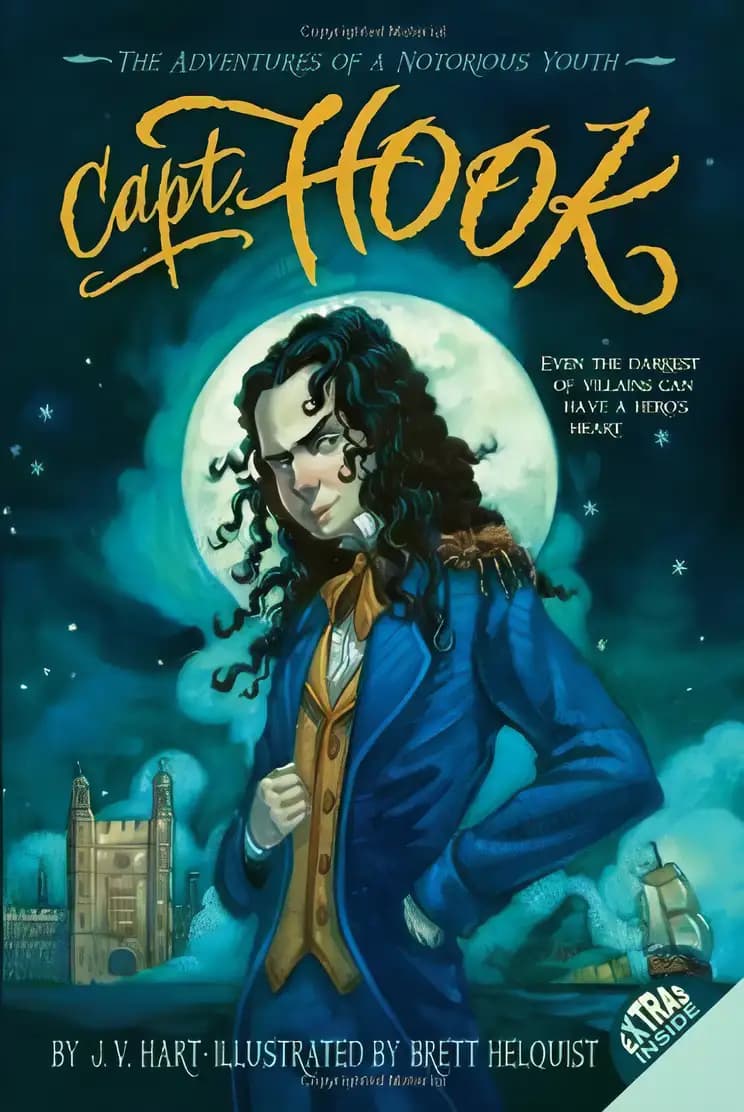
Capt. Hook: The Adventures of a Notorious Youth
What’s inside...
With his long black curls, a shadowy family tree, and an affinity for pet spiders, James Matthew bears little resemblance to his starched-collar, blue-blooded peers at Eton. Dubbed King Jas., he stops at nothing to become the most notorious underclassman in the prestigious school's history. For James, sword fighting, falling in love with an Ottoman Sultana, and challenging the Queen of England are all in a day's skullduggery. But when he sets sail on a ship with a mysterious mission, King Jas.' dream of discovering a magical island quickly turns into an unimaginable nightmare. Screenwriter J. V. Hart traces the evolution of J. M. Barrie's classic villain from an eccentric outcast to the scourge of Neverland.
Age
11-12
Length
368 pages
Text complexity
Character compass
James Matthew (Hook)
Ananova
Roger "Jolly Roger" Peter Davies
James Hook
Discussion points
How do you think Capt. Hook felt when he was faced with challenges? Can you relate to his emotions?
What choices did Capt. Hook make that you agree or disagree with? Why?
The story is set in a fantastical world. How do you think this setting influenced the characters’ actions?
What can we learn from Capt. Hook's experiences about friendship and loyalty?
If you were in Capt. Hook’s shoes, how would you have handled some of the situations differently?
Tip: Role play these questions
Encourage your child to express their thoughts and feelings about the book, reminding them that there’s no right or wrong answer.
Draw parallels between Capt. Hook’s adventures and real-life scenarios your child might encounter, to deepen their understanding of the story’s themes.
Ask your child to imagine alternative endings or different choices the characters could have made, to foster creative thinking.
Discuss the motives behind characters’ actions, which can help your child develop empathy and insight into human behavior.
Highlight the moral dilemmas present in the story and ask your child what they would do in similar circumstances, to encourage ethical reasoning.
Key lessons
Example Lesson: Resilience in the face of adversity
Explanation: The protagonist, young James Hook, faces numerous challenges and setbacks throughout the story, showcasing his ability to persist and adapt.
Real-World Application: Children can learn the importance of persevering through their own challenges, whether they're struggling with school work or navigating social issues.
Example Lesson: The value of friendship
Explanation: James Hook forms significant relationships that play a crucial role in his adventures, highlighting the importance of trust and cooperation.
Real-World Application: This teaches children the importance of building and maintaining friendships, and how collaboration can help overcome obstacles.
Example Lesson: Understanding consequences
Explanation: Throughout the book, James Hook’s decisions lead to various consequences, both good and bad, which demonstrates the cause-and-effect nature of choices.
Real-World Application: Children can apply this understanding by thinking through their decisions in everyday life, considering the potential outcomes before acting.
Example Lesson: Leadership skills
Explanation: James often finds himself in leadership positions, providing a platform to display decision-making and responsibility.
Real-World Application: This can inspire children to take initiative in group settings, practice making decisions, and learn to lead by example in their interactions.
Example Lesson: Coping with loss
Explanation: James experiences personal loss, and his journey through grief and acceptance is a profound theme in the book.
Real-World Application: Children can learn that it is normal to feel sad or upset about losing something or someone important, and that healing is a part of life.